In the long sweep of Earth’s deep past, there are moments that feel like distant dawns — subtle at first, unnoticed in the vast canvas of time, yet gradually illuminating an entirely new world. One such moment, a new study suggests, may have occurred around 455 million years ago, when the first whisper of green life on land began to transform the planet in ways that would echo through eons.
For decades, scientists have pieced together fragments of ancient life to understand when and how plants first ventured beyond water’s edge. Traditional views placed the major colonization of land by vegetation much later, nearer to 420 million years ago. But the new research, drawing on global marine sediment chemistry, finds compelling evidence that early land plants began spreading across continents earlier than once thought, leaving chemical footprints in ancient seabeds that tell a story of change and growth.
The researchers behind this discovery turned to a powerful proxy in the geological record — the ratio of organic carbon to total phosphorus (Corg/Ptotal) in marine siliciclastic sediments. Terrestrial plants produce organic matter rich in carbon relative to phosphorus, a signature markedly different from that of marine algae. As plants proliferated on land, their carbon-rich detritus was washed into the oceans, buried in seafloor muds, and preserved through deep time. Around 455 million years ago, scientists observed a sharp rise in this ratio across sediments from different global environments — a clue that land-derived organic carbon was filling the seas.
This geochemical shift suggests that landscapes once barren or dominated by microbial mats were becoming increasingly carpeted by primitive plants — likely small, bryophyte-like organisms spreading across ancient soils. Their photosynthesis — a process that captures sunlight, draws down carbon dioxide, and releases oxygen — would have begun altering Earth’s atmosphere, nudging the planet’s oxidation and climate feedbacks toward new equilibria.
But the effects may have reached even further. As plant life took hold, it likely accelerated the weathering of rocks, releasing nutrients and drawing down greenhouse gases. Some scientists propose that these changes helped cool the planet and may have interacted with global events such as the Late Ordovician glaciation and mass extinction, deepening environmental shifts that reshaped marine ecosystems.
In this view, the arrival of extensive vegetation on land was not a lone evolutionary milestone but part of a biogeochemical cascade, linking biological innovation to atmospheric transformation and climate dynamics. Over time, the footholds established by early terrestrial plants would widen into the forests and fields we know today — verdant landscapes that both shape and are shaped by the cycles of carbon, water, and life.
As researchers continue to refine their methods and explore ancient sediments, this revised timeline invites us to rethink a foundational chapter in Earth’s history. It reminds us that life’s influence stretches far beyond organisms themselves — that even the quiet emergence of humble plants can leave a lasting imprint on the world’s chemistry and climate, long before the age of dinosaurs or the rise of humans.
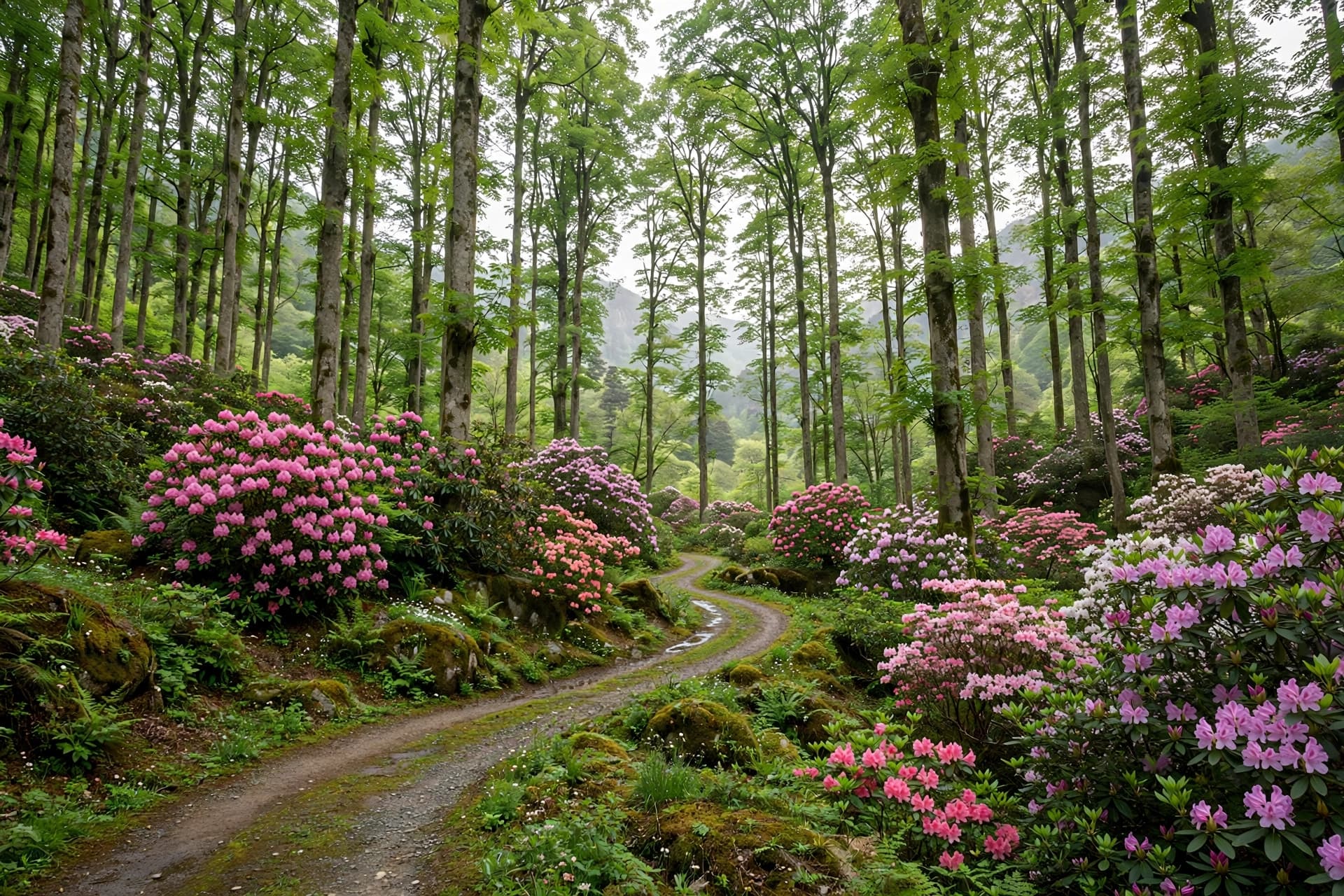
AI Image Disclaimer Graphics are AI-generated and intended for representation, not reality.
Sources Based on Source Check Xinhua (coverage of the study) China Daily (report on land plant expansion evidence) Nature Ecology & Evolution (journal where the research was published) Scientific American / Science referenced background on plant impact Geological and biogeochemical research summaries
Published by Banx Network. This article is part of the Banx decentralized media programme, powered by the BXE token on the XRP Ledger.