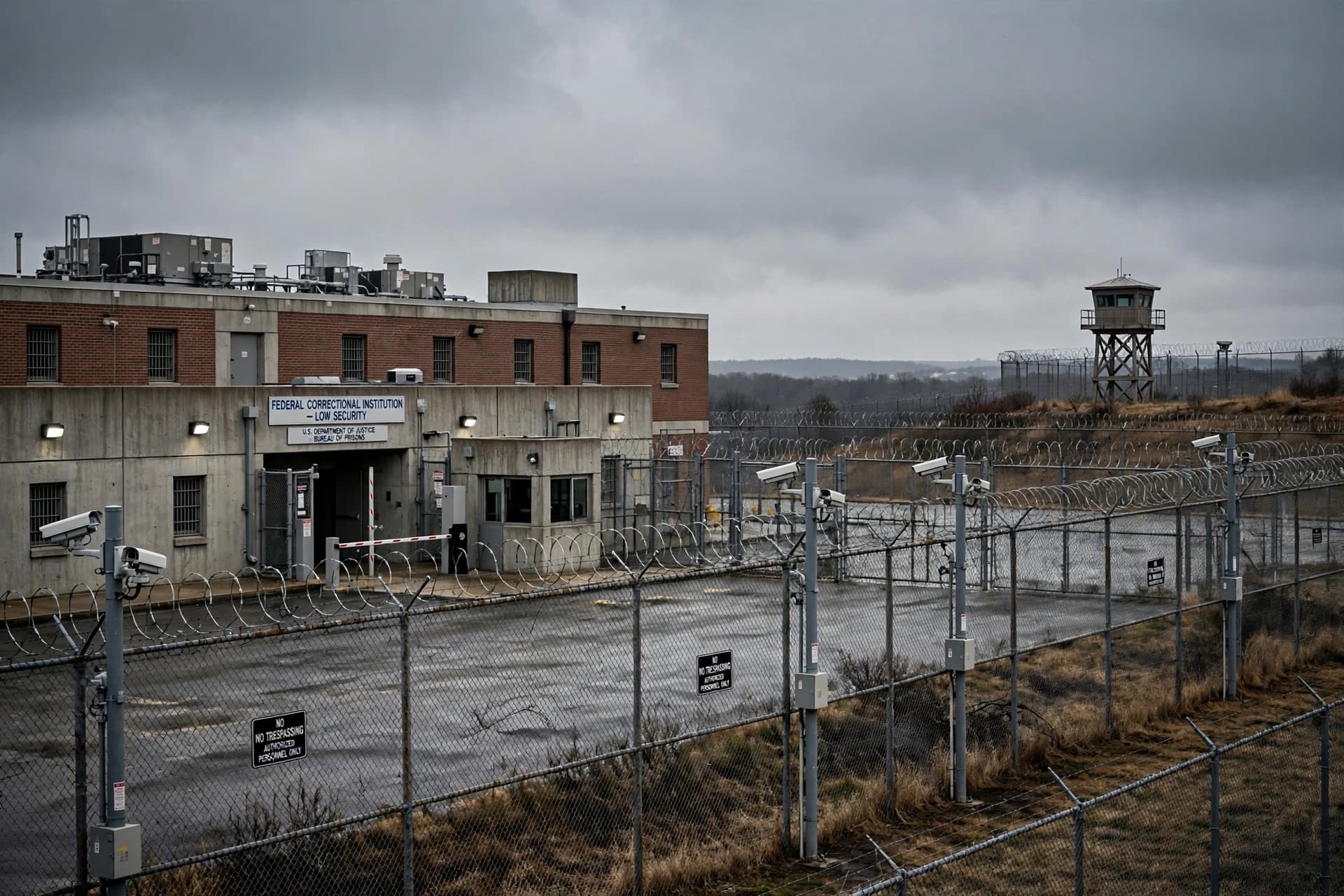
There are trajectories that bend toward darkness early and never straighten, and the case of Abdulrahman El Bahnasawy is one of them. A young man from Mississauga, Ontario, who once plotted to bomb Times Square and shoot crowds at concert venues in the name of ISIS, has now been sentenced to an additional fifty years in an American prison for stabbing two correctional officers with a weapon fashioned from a steel desk. He will serve those fifty years consecutively with the forty he was already serving, a combined ninety years behind bars for a life that has been defined, at every turn, by violence .
The attack occurred on December 7, 2020, at U.S. Penitentiary Allenwood in Pennsylvania. El Bahnasawy, then twenty-two, stabbed one officer in the head and face, causing injuries that required the removal of his eye. When a second officer tried to intervene, he stabbed her in the hand . After he was subdued, officers found a note in his sock that read: "This is a terrorist attack for the Islamic State." A pledge of allegiance to ISIS was taped inside a locker in his cell .
El Bahnasawy pleaded guilty in November 2025 to multiple counts, including assault with intent to commit murder, possession of contraband, and providing material support to ISIS . The Justice Department announced the sentence on Monday, with Assistant Attorney General for National Security John A. Eisenberg stating that the sentence would ensure El Bahnasawy "remains in prison, where he can do much less harm, for a very long time" .
His original sentence stemmed from a 2016 plot that was intercepted before it could be carried out. El Bahnasawy had traveled from Canada to New York, secured a cabin for building explosives, and mapped out bomb locations on the subway system. An undercover FBI agent infiltrated the group, and he was arrested in May 2016 . He pleaded guilty that October and was sentenced two years later.
There is a defense that has been offered, and it deserves mention even if it does not excuse. El Bahnasawy's attorney, Andy Frisch, blamed the prison attack on his client's longstanding mental health problems, claiming diagnoses including schizophrenia and psychotic disorders. He told the New York Post that the man's parents had repeatedly emailed prison officials about the medication and treatment he needed, and that those emails were ignored . Frisch said he hopes the sentence prompts reconsideration of how the United States manages mentally ill inmates .
This is not a story that resolves neatly into a lesson. A young man radicalized, a plot thwarted, a prison attack that blinded an officer, a sentence that ensures he will likely die behind bars. The note in his sock was a declaration, and the court treated it as one. Whether the mental illness described by his lawyer shaped that declaration, or existed alongside it, is a question the sentence does not answer. It only closes another door.
AI Image Disclaimer: The images in this article are AI-generated and are for illustrative purposes only.
Sources: CTV News, U.S. Department of Justice (via cited reports), New York Post, Vancouver Sun
Published by Banx Network. This article is part of the Banx decentralized media programme, powered by the BXE token on the XRP Ledger.