
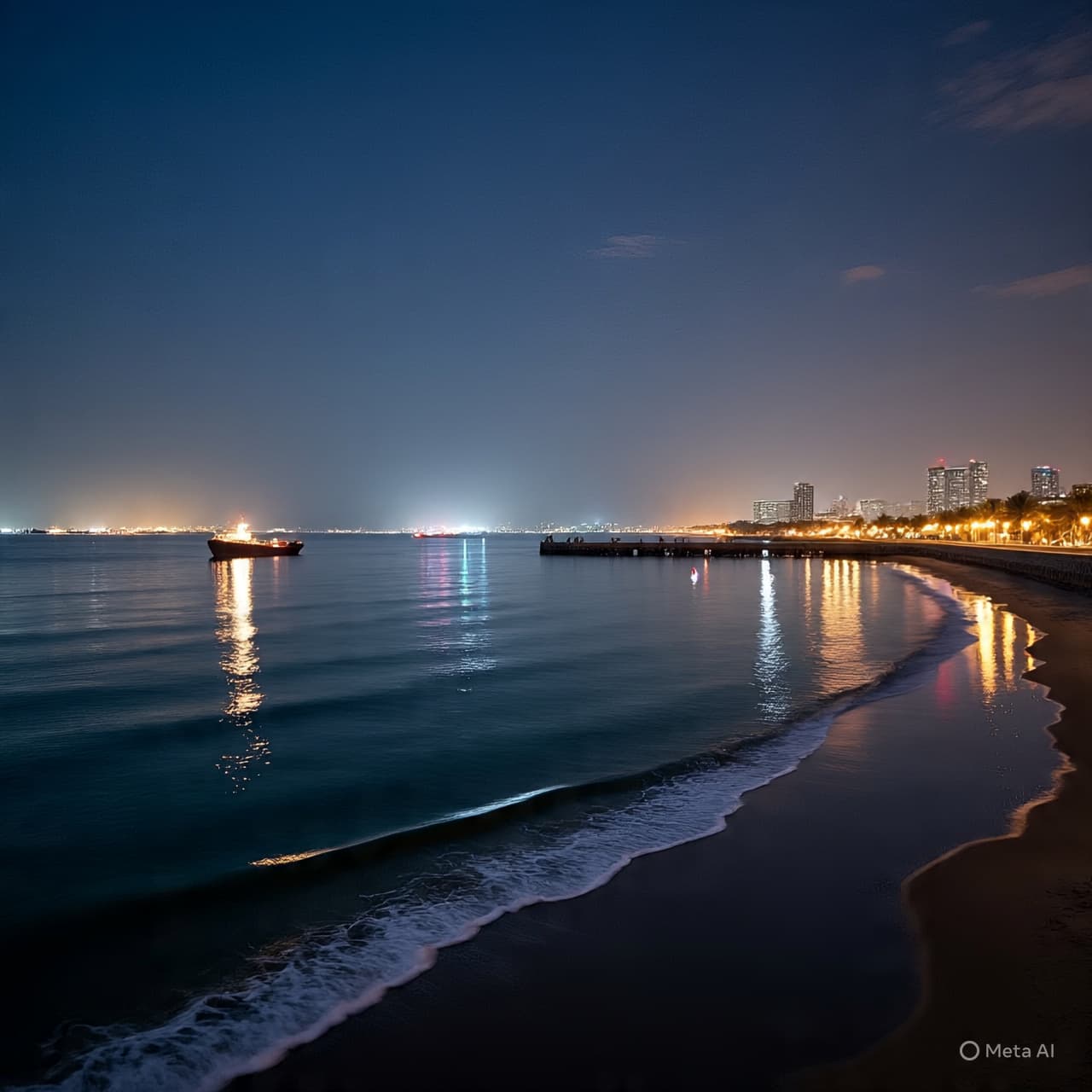
The Gulf at night often feels like a place suspended between stillness and motion — where sea air drifts over glass towers, and the lights of distant tankers flicker like stars upon the water. Yet in this season of unease, that calm veneer masks a more anxious rhythm beneath. Across the Arabian Peninsula, where oil fields meet sea lanes and alliances have long defined stability, the world’s latest confrontation has placed these nations in the most precarious position imaginable: trapped between the power of the United States and the fury of Iran.
What began as a confrontation of words and limited strikes has now evolved into a crisis that bleeds into airspace, trade routes, and the uneasy routines of daily life. The Gulf states — proud of their modern skylines and cautious diplomacy — now face the risk of becoming unwilling participants in a conflict they neither invited nor control. Their skies have grown restless with the hum of aircraft, their waters more crowded with warships, their nights punctuated by the quiet alertness that follows every distant explosion.
For decades, the countries along these shores — Saudi Arabia, the United Arab Emirates, Qatar, Bahrain, Kuwait, and Oman — have built their futures upon balance. They hosted American forces while maintaining channels of dialogue with Tehran; they traded in oil, diplomacy, and discretion. That balance, always fragile, now feels like glass under strain. Every new missile launch or retaliatory strike raises the same questions whispered in ministerial halls and desert towns alike: how much longer can neutrality hold, and what price will safety demand?
In Abu Dhabi and Doha, officials speak with careful restraint, reaffirming commitments to regional stability and dialogue even as their militaries stand on alert. In Riyadh, where oil exports trace the heartbeat of the global economy, the stakes rise with each disruption of tanker routes through the Strait of Hormuz. The Gulf’s prosperity, once a testament to the peace it maintained, now exposes its vulnerability — an intricate web of global trade stretched thin beneath the weight of unpredictable fire.
The dilemma facing Gulf leaders is one of proximity. To align too closely with Washington risks Iranian retaliation and domestic unease; to distance from it invites questions of loyalty and protection. Between these poles lies a narrow corridor of cautious diplomacy — a policy not of avoidance, but of endurance. Statements of neutrality, calls for restraint, and appeals to international law have become the shared language of survival.
Yet beyond the strategies and communiqués lies a quieter anxiety. The people of the Gulf — citizens and expatriates alike — now live within a geography that has become a corridor of tension. Flights are delayed, cargo routes diverted, and the faint rumble of military patrols echoes through cities that only months ago spoke of growth, tourism, and global ambition. The fear is not of occupation or invasion, but of being pulled into a cycle of retaliation whose logic no longer obeys diplomacy.
As evening returns to the Gulf, the horizon blurs into mist and heat, and life continues with deliberate grace — shopkeepers closing shutters, prayer calls floating through the air, ships moving steadily toward the horizon. Yet beneath that routine, there lingers the knowledge that the region’s fate may hinge not on its own decisions, but on choices made far beyond its borders. For now, the Gulf waits, balanced between two forces whose struggle threatens to consume the calm it has so carefully built.
AI Image Disclaimer Illustrations were created using AI tools and are conceptual representations.
Sources (Media Names Only) Reuters The Guardian Al Jazeera Associated Press Financial Times
Published by Banx Network. This article is part of the Banx decentralized media programme, powered by the BXE token on the XRP Ledger.


