There are moments in astronomy when science seems to borrow a page from myth — when the cold mathematics of the cosmos briefly glow with narrative light. Recently, researchers studying a pair of merging supermassive black holes chose names not from catalog numbers or technical shorthand, but from the sweeping landscapes of J.R.R. Tolkien’s imagination. In a quiet nod to epic journeys and distant realms, these cosmic giants were named after locations from The Lord of the Rings.
At the center of a distant galaxy, two supermassive black holes are locked in a slow, spiraling embrace. Over millions of years, their gravitational pull has drawn them closer, bending surrounding gas and light into turbulent patterns. Such mergers are among the most powerful events in the universe, releasing enormous energy and eventually sending gravitational waves rippling through spacetime.
The research team, whose findings were published in the journal , identified this rare system using advanced optical and radio observations. The pair represents one of the clearest examples yet of supermassive black holes in the late stages of merging — a phase that is notoriously difficult to observe directly.
Rather than assigning a sterile alphanumeric label, scientists opted for names inspired by locations from . The decision was not whimsical alone; it reflected the dramatic nature of the system. Just as beacons once signaled alliances across Tolkien’s fictional Middle-earth, these black holes may one day emit gravitational waves detectable across the cosmos — signals that could illuminate new chapters in astrophysics.
Supermassive black hole mergers are thought to be common in the history of galaxies. When galaxies collide, their central black holes begin a long gravitational dance. Yet catching them in the act, before they fully combine into one, requires both timing and technological precision. Observatories capable of high-resolution imaging and spectroscopic analysis have only recently made such detections more frequent.
The system’s Tolkien-inspired naming has resonated beyond academic circles. While astronomy often leans toward formality, the tradition of drawing from mythology and literature runs deep. Constellations themselves are rooted in ancient storytelling. By invoking literary geography, the researchers subtly bridge imagination and observation — reminding us that the language of discovery need not be divorced from wonder.
Future gravitational wave observatories may eventually detect the spacetime ripples produced when this pair finally merges. Instruments like the planned space-based mission are expected to observe the lower-frequency gravitational waves emitted by supermassive black hole binaries. When that day arrives, the names drawn from Tolkien’s world may feel less symbolic and more prophetic.
For now, the two black holes continue their slow approach, unseen by the naked eye but mapped by careful instrumentation. Their story unfolds not in pages but in photons and gravity — a reminder that even in the vastness of space, humanity’s cultural imagination still finds a place.
The research team emphasized that the naming carries no formal astronomical designation, but rather serves as an accessible reference point. Observations will continue, as scientists refine estimates of the pair’s mass, separation, and eventual merger timeline. What remains certain is that the beacons, metaphorically speaking, have indeed been lit — not across Middle-earth, but across the universe.
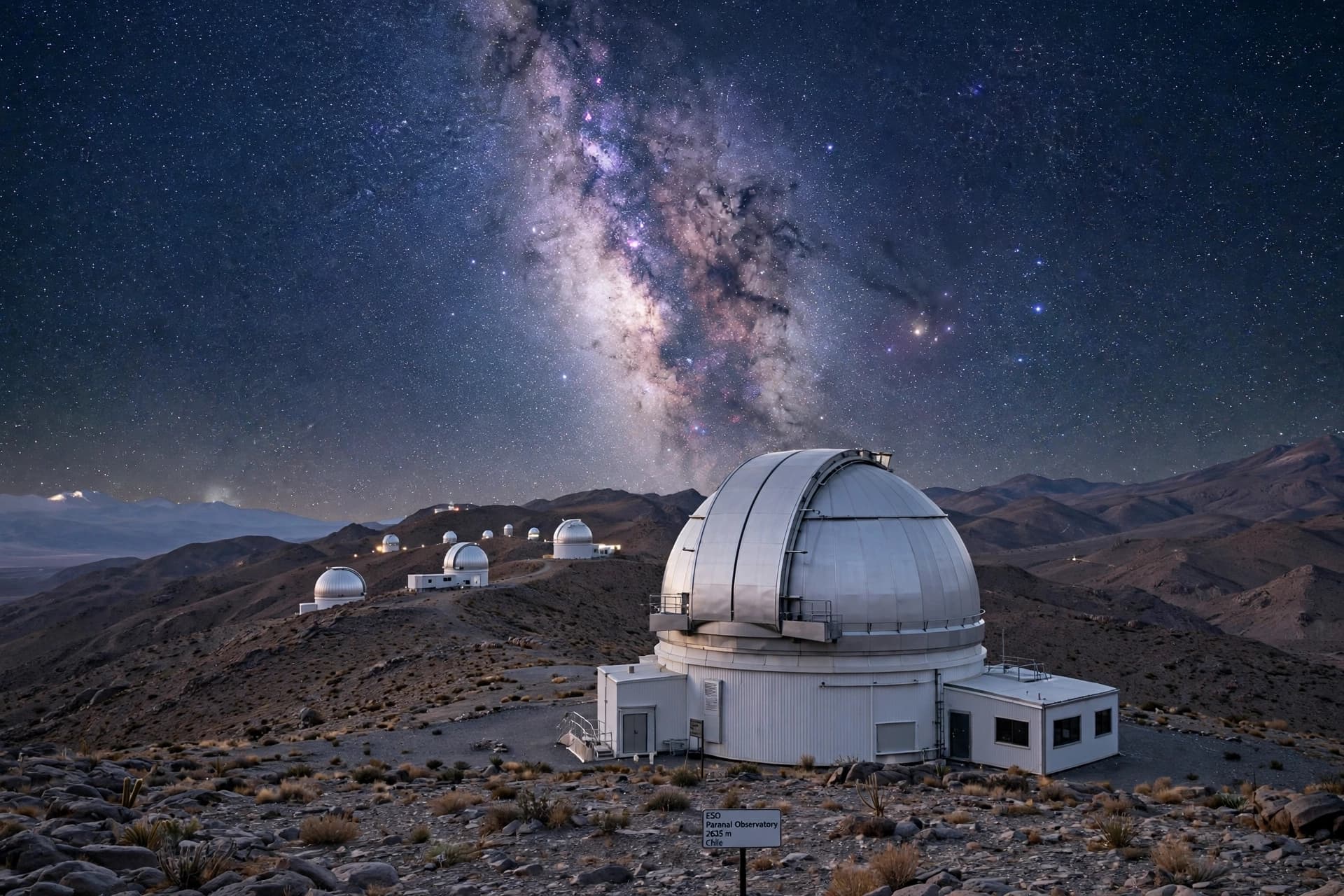
AI Image Disclaimer Graphics are AI-generated and intended for representation, not reality.
Source Check Credible coverage and scientific references for this story include:
Reuters BBC News Space.com The Guardian Monthly Notices of the Royal Astronomical Society
Published by Banx Network. This article is part of the Banx decentralized media programme, powered by the BXE token on the XRP Ledger.