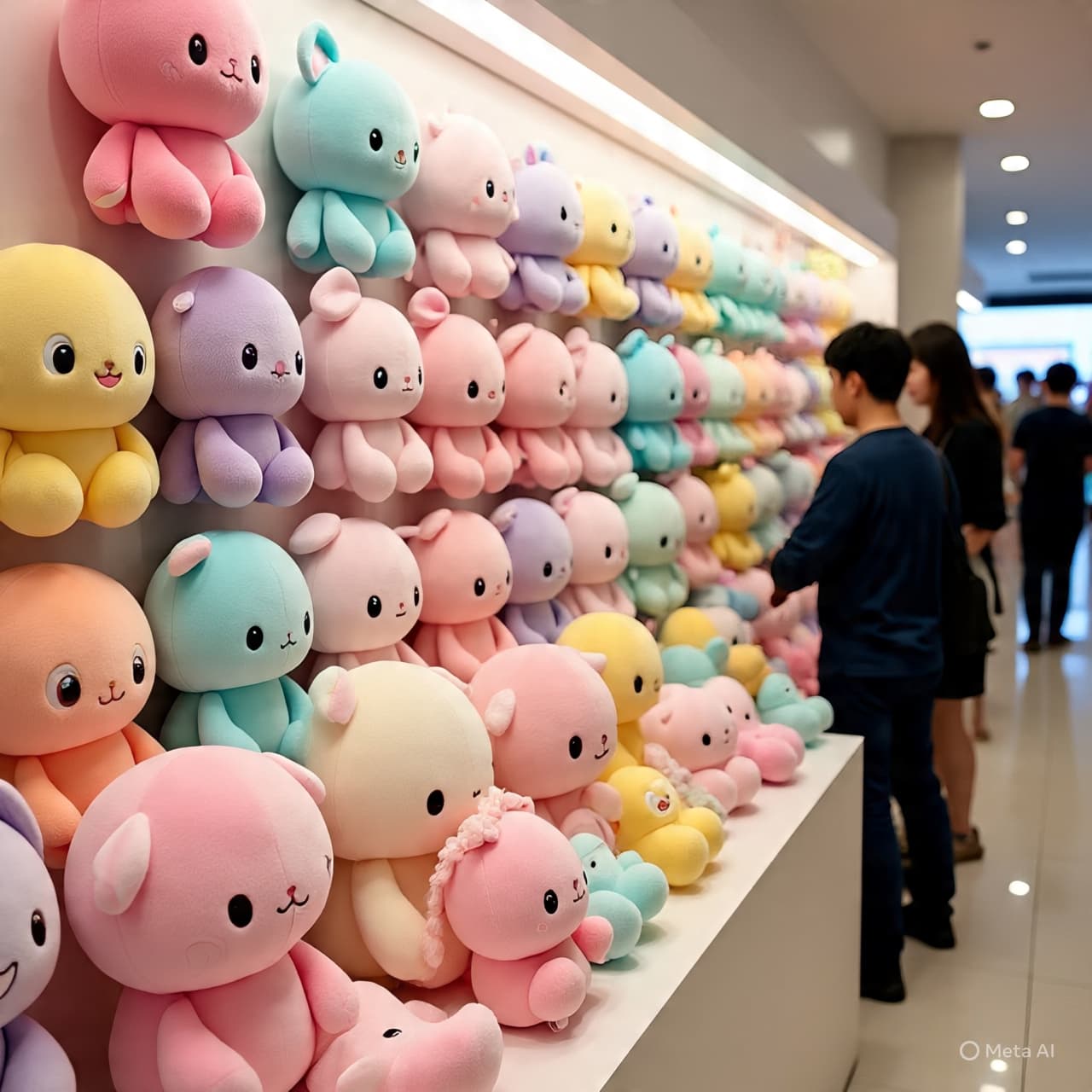
In the quiet hum of a bustling city, where subways rattle and screens glow into the late hours, a soft aubergine with tiny feet and a smile can feel like a whisper of warmth — unexpected, gentle, and strangely profound. This is where the story of Jellycat’s plush toys in China begins: not in the cacophony of main markets, but in the reflective spaces of personal routines and emotional seeking.
Once a brand known mostly in boutique toy corners of London, Jellycat’s whimsical “Amuseables” — plush objects modeled after food, familiar items, and odd companions — have slipped into the daily rhythms of many young Chinese adults. What might have been a simple gingerbread‑house toy on a shelf became, for fans in Guangzhou, Beijing, and Shanghai, much more than merchandise; it became company in long lockdowns, a ritual of comfort amid uncertainties at work and life.
Originally stocked for children, the plush toys rooted themselves deeply in China’s youth culture partly because the market opened early — as far back as the mid‑2010s — and partly because Jellycat’s offerings struck a chord with a generation navigating pressure with softness. Analysts note that amid economic slowdowns and shifting social expectations, young adults began to look for tactile, huggable items — something tangible in a world dominated by digital chatter.
Social media played its part. On platforms like RedNote and Xiaohongshu, fans shared photos of their “companions,” carried them on commutes, or gently squeezed them at their desks. A plush aubergine came to be nicknamed “the boss,” its image splashed across memes that wryly reflected adult exhaustion and humor. Behind many posts was a gentle acknowledgment: this was more than a toy; it was a shared language of sentiment.
Behind the scenes, Jellycat’s strategy dovetailed with this cultural embrace. Limited‑edition releases, localized plush designs, and pop‑up experiences in cities invited curiosity and urgency, turning shopping trips into treasure hunts. Meanwhile, sales figures tell a remarkable growth story: revenue surged significantly, with China emerging as one of the fastest‑growing markets for the brand.
Yet the phenomenon isn’t purely economic. Toy market analysts point out that as adults increasingly view soft toys as lifestyle and emotional companions, collectable plushes cross boundaries between childhood nostalgia and modern comfort culture. In this light, Jellycat’s plushies — cuddly, quirky, and visually simple — have become symbols of an age that seeks connection in small, tangible joys.
In a world of rising living costs and evolving social expectations, these toys offer an uncomplicated solace in the palm of a hand — a reminder that sometimes, softness can speak volumes.
AI Image Disclaimer “Illustrations were produced with AI and serve as conceptual depictions.”
Sources AOL / Yahoo, CNBC, China Daily, Daxue Consulting, Journal of Undergraduate Social Science and Technology.
Published by Banx Network. This article is part of the Banx decentralized media programme, powered by the BXE token on the XRP Ledger.