The shoreline of Dubai often glows at night, a line of light tracing the curve of the sea as if the horizon itself were outlined in gold. Palm-shaped islands rest quietly in the water, designed as places of leisure and architecture, where glass towers reflect sun and tide in equal measure. In such settings, life usually moves with measured elegance — arrivals, departures, conversations beneath chandeliers — a steady rhythm shaped by hospitality and design.
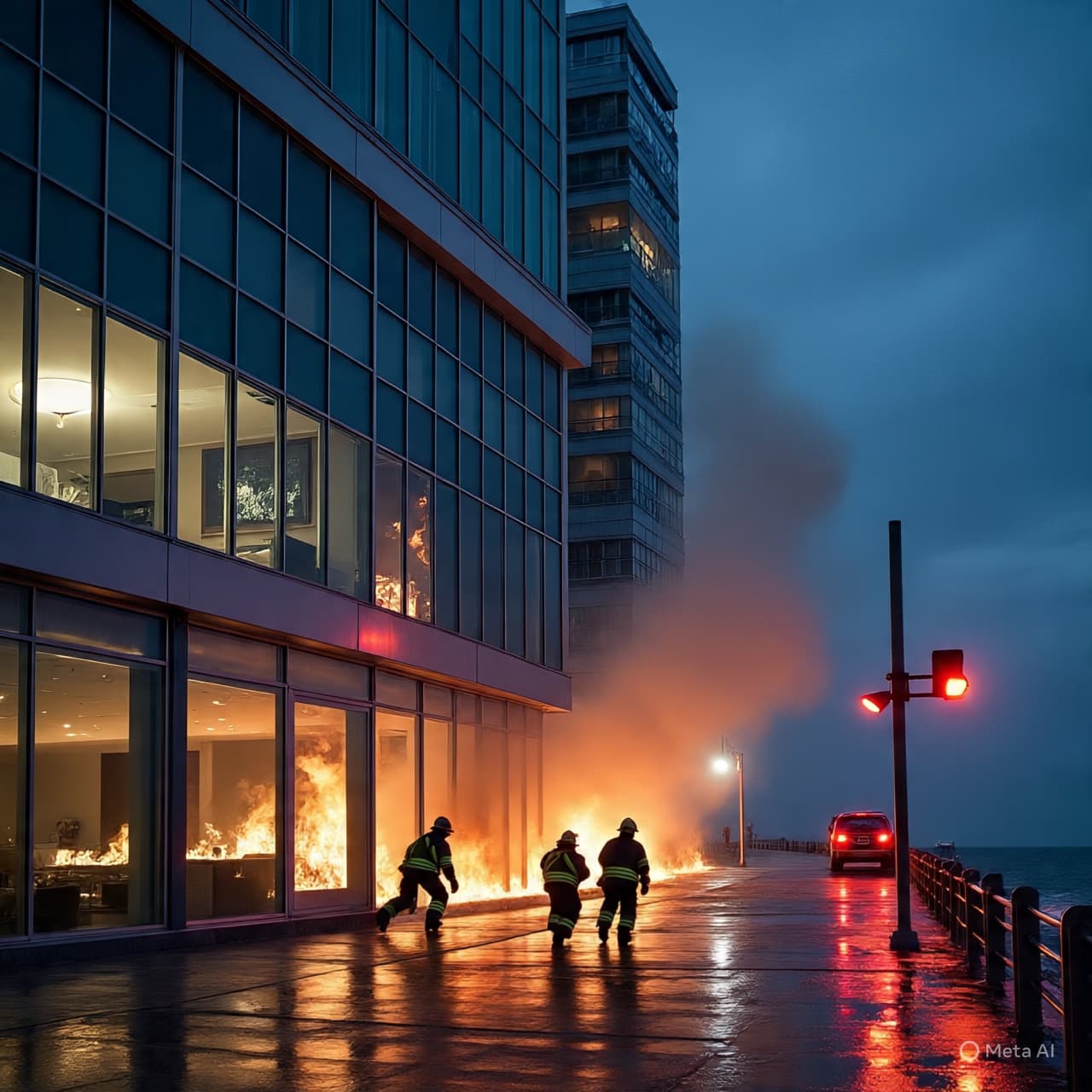
That rhythm shifted abruptly when reports emerged of a fire at Fairmont The Palm, located on the iconic The Palm Jumeirah. According to early accounts, the blaze was described by some sources as following an alleged missile-related incident, though official confirmations regarding the cause remain limited. Emergency services responded quickly, and images circulating in media showed flames and smoke rising against the backdrop of the coastal skyline.
The hotel sits within Dubai, part of the broader framework of the United Arab Emirates — a nation known for its dense concentration of international visitors, commercial hubs, and architectural landmarks. In this context, any disruption to a prominent hospitality site carries not only local implications but also symbolic weight, given the city’s global identity as a center of tourism and trade.
Authorities moved to assess the situation, deploying firefighting teams to contain the flames and secure surrounding areas. In incidents of this nature, responders typically work in coordinated phases — isolating affected sections, preventing structural spread, and ensuring guest safety. Details regarding injuries, structural damage, and the precise origin of the fire have been subject to ongoing review as officials gather verified information.
The Palm Jumeirah, visible from above as a geometric island shaped like a palm tree, is home to residences, resorts, and restaurants that line its fronds. Its design emphasizes exclusivity and visual symmetry, making it one of Dubai’s most recognized developments. Within such an environment, emergency events can appear especially stark, contrasting sharply with the carefully curated calm that defines much of the area’s daily life.
As news spread, residents and observers followed updates through official statements and local media. In modern cities, information travels alongside the incident itself, carried through digital channels that inform guests, staff, and neighboring establishments in real time. Authorities generally provide further clarification once investigations determine cause, scope, and impact.
For now, the emphasis remains on containment, safety, and assessment. Hospitality staff coordinate with emergency teams, while local officials review structural integrity and security protocols. The incident underscores how even in destinations associated with stability and luxury, unexpected events can briefly alter the skyline and the public mood.
When the smoke eventually clears and investigations conclude, attention will turn to recovery and reassurance. The story will likely continue through updates on restoration, operational status, and preventive measures. In a city built on rapid response and forward movement, such moments often become chapters — documented, addressed, and folded into the ongoing narrative of urban life along the Gulf.
AI Image Disclaimer Visuals are AI-generated and intended as conceptual representations, not actual photographs of the event.
Sources Reuters Associated Press BBC News The National (UAE) Gulf News
Published by Banx Network. This article is part of the Banx decentralized media programme, powered by the BXE token on the XRP Ledger.