
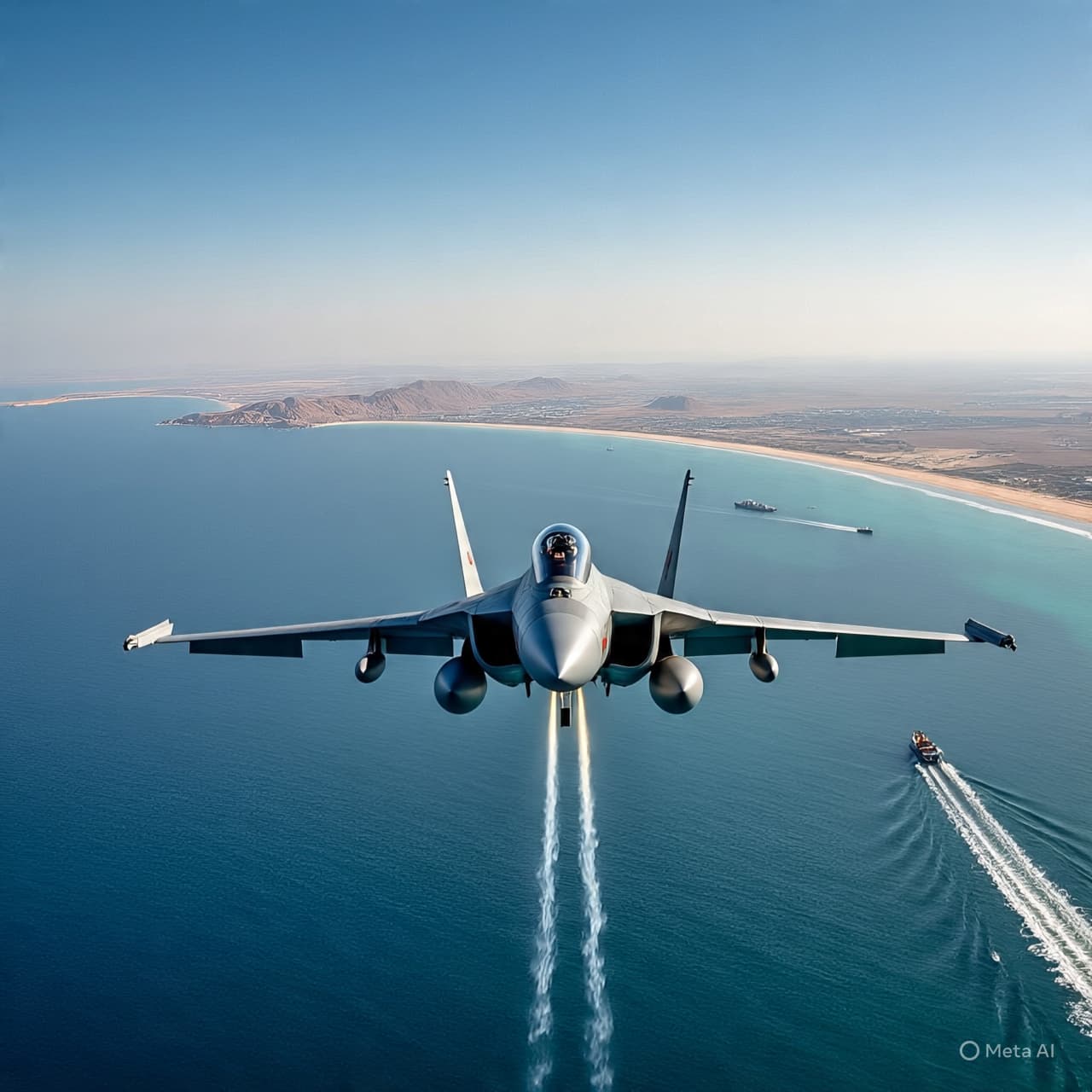
In the Persian Gulf, where the horizon is often dotted with slow-moving tankers and the sea carries the quiet rhythm of global trade, Kharg Island sits with quiet significance. The island is not large, nor heavily populated, yet for decades it has served as one of Iran’s most vital energy gateways—an export hub where pipelines meet the sea and oil shipments begin their long journey to distant markets.
For much of its history, Kharg has existed in a kind of strategic stillness, known more to energy analysts and shipping companies than to the wider public. But in moments of geopolitical tension, even quiet places can suddenly take on enormous importance.
That stillness was broken when U.S. President Donald Trump announced that American forces had launched a strike on the island. According to his statement, the operation targeted military installations and succeeded in eliminating “every military target” on the strategic outpost. The attack, he said, was carefully limited to military sites and did not strike the island’s oil infrastructure.
The distinction carried weight. Kharg Island functions as the central artery of Iran’s crude oil exports, handling a large portion of the country’s shipments to international buyers. Storage tanks, loading terminals, and pipelines form a vast industrial network that connects inland oil fields to the waters of the Gulf, where tankers queue offshore before departing toward Asia and other global markets.
By leaving the export facilities untouched, the strike appeared designed to deliver a military message without immediately disrupting global energy supply. At the same time, the statement included a warning: if Iran or its allies attempt to interfere with shipping through the Strait of Hormuz, the restraint shown toward oil infrastructure might not remain in place.
The warning echoes the delicate geography of the region. Only a short distance from Kharg Island lies one of the world’s most important maritime chokepoints. The Strait of Hormuz channels a large share of global oil shipments through a narrow corridor between Iran and the Arabian Peninsula. Any threat to that passage can quickly ripple through energy markets, shipping routes, and diplomatic relations far beyond the Gulf.
Analysts say the strike signals an intensification of a broader confrontation unfolding across the Middle East. Military tensions involving Iran, Israel, and the United States have grown in recent weeks, expanding beyond isolated incidents into a more complex regional standoff. Each development adds new uncertainty to a region where energy infrastructure, trade routes, and military strategy often overlap.
Iranian officials have warned that attacks on critical national assets could provoke retaliation against energy facilities linked to the United States or its allies. Such warnings reflect a familiar pattern in the Gulf, where oil infrastructure—pipelines, terminals, refineries—has long been viewed not only as economic lifelines but also as strategic pressure points in times of conflict.
Despite the strike, reports indicate that Kharg Island’s oil export system remains operational. Tankers continue to anchor offshore, and shipments have not been halted. Yet the moment has drawn new attention to the island, highlighting how closely the world’s energy networks are tied to geopolitical stability.
For decades, Kharg Island has served as a quiet logistical hub, its industrial skyline rising above the Gulf while ships moved steadily through its ports. But the strike has placed it firmly within the narrative of a widening conflict—one where resources, trade routes, and strategic warnings increasingly shape the course of events.
Across the Gulf’s calm waters, tankers still depart on their long voyages. Yet the presence of warplanes and military statements now lingers in the background, a reminder that the island’s role in the global energy system places it at the crossroads of commerce and conflict.
AI-generated illustrations are used to visually represent the subject and are not real photographs.
Sources
Reuters
The Guardian
Associated Press
Bloomberg
Al Jazeera
Published by Banx Network. This article is part of the Banx decentralized media programme, powered by the BXE token on the XRP Ledger.
.jpg&w=3840&q=75 "US Declares Drought Disaster for Parts of Puerto Rico as Dry Conditions Persist")

