The International Space Station (ISS) has long served as a laboratory in the sky, a place where humanity tests the limits of endurance and innovation. As we look toward the Moon and Mars, the lessons learned in low Earth orbit become increasingly vital. NASA has recently unveiled new research conducted on the ISS that promises to aid future deep space missions. This progress invites reflection on the incremental nature of exploration and the value of preparing today for the journeys of tomorrow. It is a story of bridging the gap between the known and the unknown.
The research focuses on critical areas such as life support systems, radiation protection, and human physiology. Understanding how the body adapts to microgravity helps scientists develop countermeasures for long-duration flights. Health is the foundation of exploration. Resilience is engineered.
One key area is water recycling and air purification. Technologies tested on the ISS are being refined to ensure astronauts can survive independently on distant worlds where resupply is impossible. Sustainability ensures survival. Efficiency saves resources.
Another focus is on growing food in space. Experiments with plant growth chambers offer hope for fresh nutrition during extended missions, reducing reliance on packaged meals. Nature nourishes even in voids. Agriculture adapts to extremes.
These advancements are not just for astronauts; they have applications on Earth as well. Improved recycling systems and medical monitoring tools can benefit remote communities and healthcare facilities. Space tech serves home. Innovation crosses boundaries.
As NASA prepares for the Artemis missions and eventual Mars colonization, the ISS remains a crucial testing ground. Each experiment brings us closer to becoming a multi-planetary species. Dreams require data. Preparation enables progress.
NASA has highlighted new research from the International Space Station aimed at supporting future Moon and Mars missions, focusing on life support and human health. The findings are crucial for deep space exploration. The hope is for successful application in upcoming lunar and Martian expeditions.
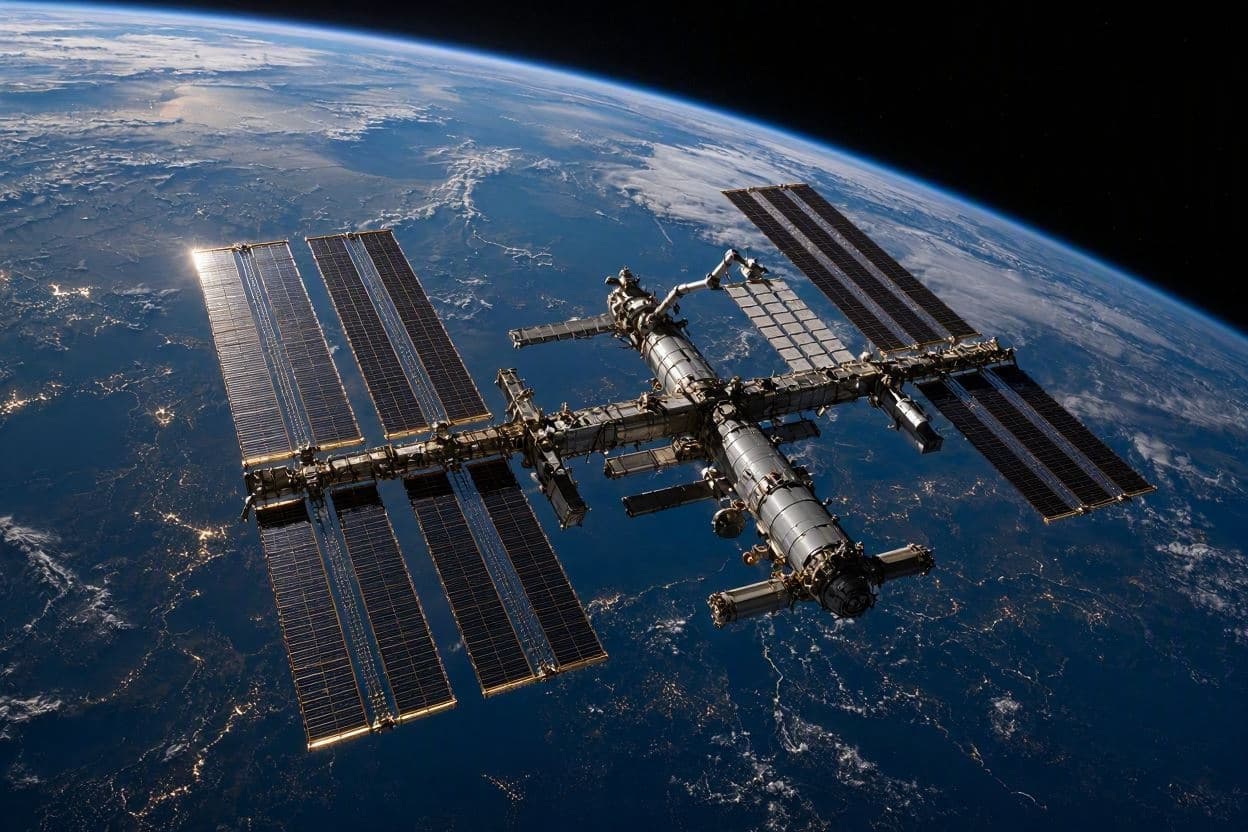
AI Image Disclaimer: The images provided are AI-generated to visually represent the space exploration and technological aspects of the story.
Sources: NASA.gov Space.com Scientific American
Published by Banx Network. This article is part of the Banx decentralized media programme, powered by the BXE token on the XRP Ledger.