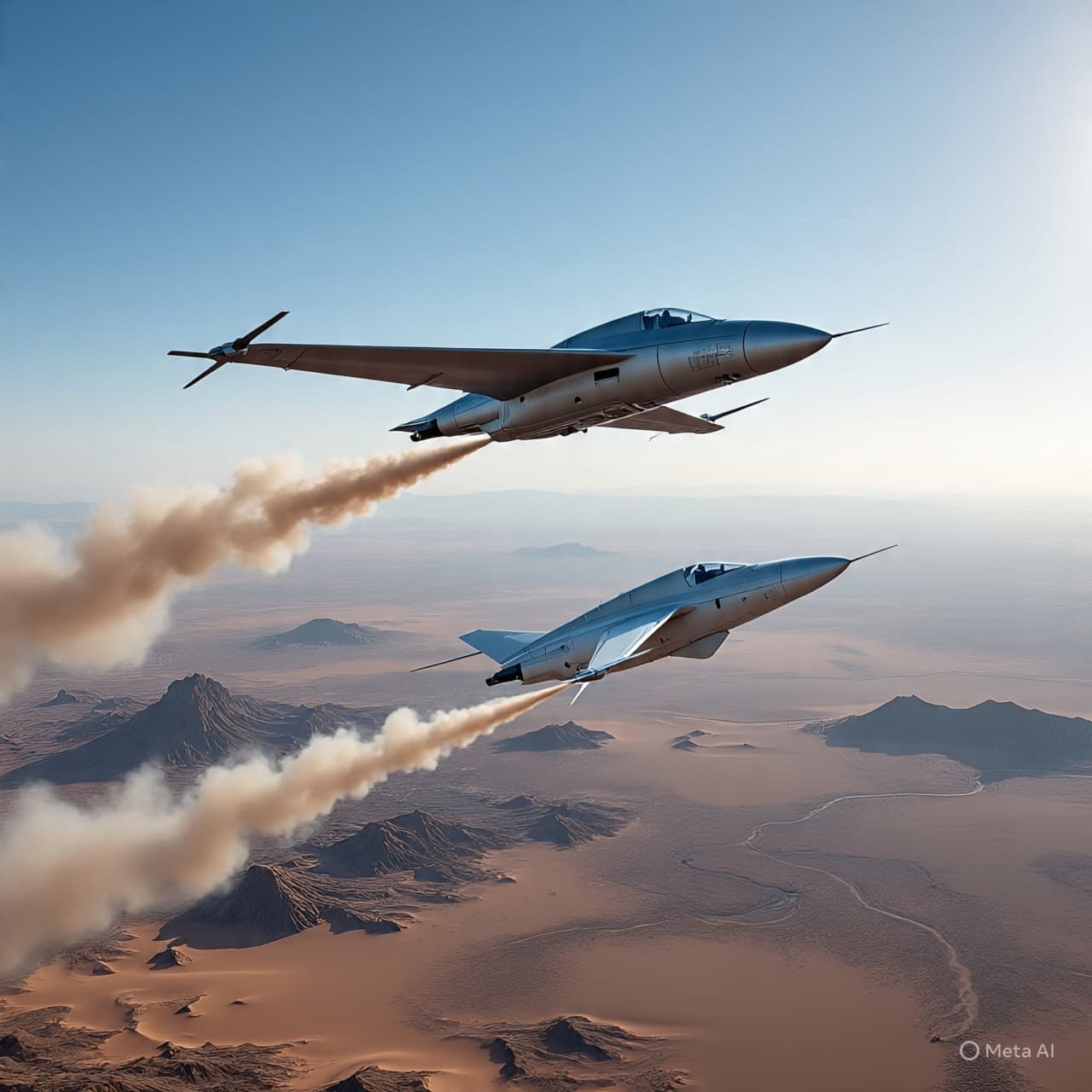
Sometimes the lessons of one battlefield travel farther than the soldiers who first learned them. They move quietly, carried through research labs, military briefings, and late-night strategy meetings. What begins as a survival tactic in one war can slowly transform into a blueprint for another.
That quiet migration of ideas is now visible in the skies far from Eastern Europe.
In recent days, the United States has begun deploying counter-drone technologies and interceptor drones that were refined during the war in Ukraine. The systems, originally developed to counter waves of Iranian-designed Shahed drones used by Russia against Ukrainian cities, are now being sent to the Middle East to defend against similar attacks launched by Iran and its regional forces.
The development reflects a striking symmetry in modern warfare. A weapon first produced by Iran, then widely used by Russia against Ukraine, has helped shape the defensive technologies now being used by the United States against Iran itself.
American officials say the systems being deployed include interceptor drones capable of flying directly toward incoming hostile drones and destroying them mid-air. Unlike large missile defenses such as Patriot or THAAD systems, which can cost millions of dollars per launch, these drone-on-drone interceptors are designed to be far cheaper and more flexible.
The logic behind the shift is both technological and economic. Iranian attack drones are relatively inexpensive and can be launched in large numbers, creating what military planners describe as a “cost imbalance.” Shooting down a drone worth tens of thousands of dollars with a missile worth millions quickly becomes unsustainable.
To address that imbalance, engineers and military planners have looked closely at Ukraine’s battlefield innovations. Ukrainian forces, after years of defending against drone swarms, developed low-cost interceptor drones and tactics capable of neutralizing large numbers of incoming aircraft.
Some of the American systems now being sent to the Middle East have already logged extensive operational experience in Ukraine, where they were used to intercept hundreds of attack drones during Russian bombardments.
One such system, known as Merops, uses a propeller-driven interceptor drone that can identify, pursue, and strike incoming unmanned aircraft. Equipped with artificial intelligence navigation systems, it can operate even when electronic communications are jammed—an increasingly common feature of modern warfare.
Military planners say the platform offers another advantage: mobility. The system can be transported in relatively small vehicles and deployed quickly near vulnerable infrastructure or military bases.
The urgency behind the deployment reflects the growing threat posed by Iranian drone attacks across the Middle East. In recent weeks, waves of drones and missiles have targeted U.S. facilities and allied locations throughout the Gulf region.
Officials acknowledge that traditional air-defense systems are not always optimized to detect small drones, which can appear on radar similarly to birds or civilian aircraft. As a result, specialized counter-drone technology has become a priority for protecting military installations and civilian infrastructure.
The cooperation between the United States and Ukraine highlights another dimension of modern conflict: knowledge sharing. Ukrainian engineers and military specialists have gained extensive experience defending against Iranian-designed drones during Russia’s invasion, making their expertise valuable in addressing similar threats elsewhere.
Ukrainian President Volodymyr Zelenskyy has confirmed that the United States requested assistance and technical insight from Kyiv in countering Iranian drones in the Middle East.
For defense analysts, the moment underscores how warfare in the twenty-first century increasingly revolves around unmanned systems. Drones are not only weapons but also teachers, revealing vulnerabilities and inspiring new forms of defense.
A conflict in one region can reshape military thinking across the world within months.
In the skies above Ukraine, drone warfare became a daily reality years ago. Now, as similar technologies spread into the Middle East, the lessons learned there are traveling thousands of miles, reshaping how militaries prepare for the battles ahead.
For the moment, American officials say the new counter-drone systems will be deployed to strengthen defenses and protect personnel across the region.
Whether they succeed in quieting the growing swarm of drones in the Middle Eastern skies remains a question that only time—and the next wave of technology—will answer.
AI Image Disclaimer Visuals are created with AI tools and are not real photographs.
Source Check Credible mainstream / niche media covering this development:
PBS NewsHour Business Insider DefenseScoop Al Jazeera The Wall Street Journal
Published by Banx Network. This article is part of the Banx decentralized media programme, powered by the BXE token on the XRP Ledger.