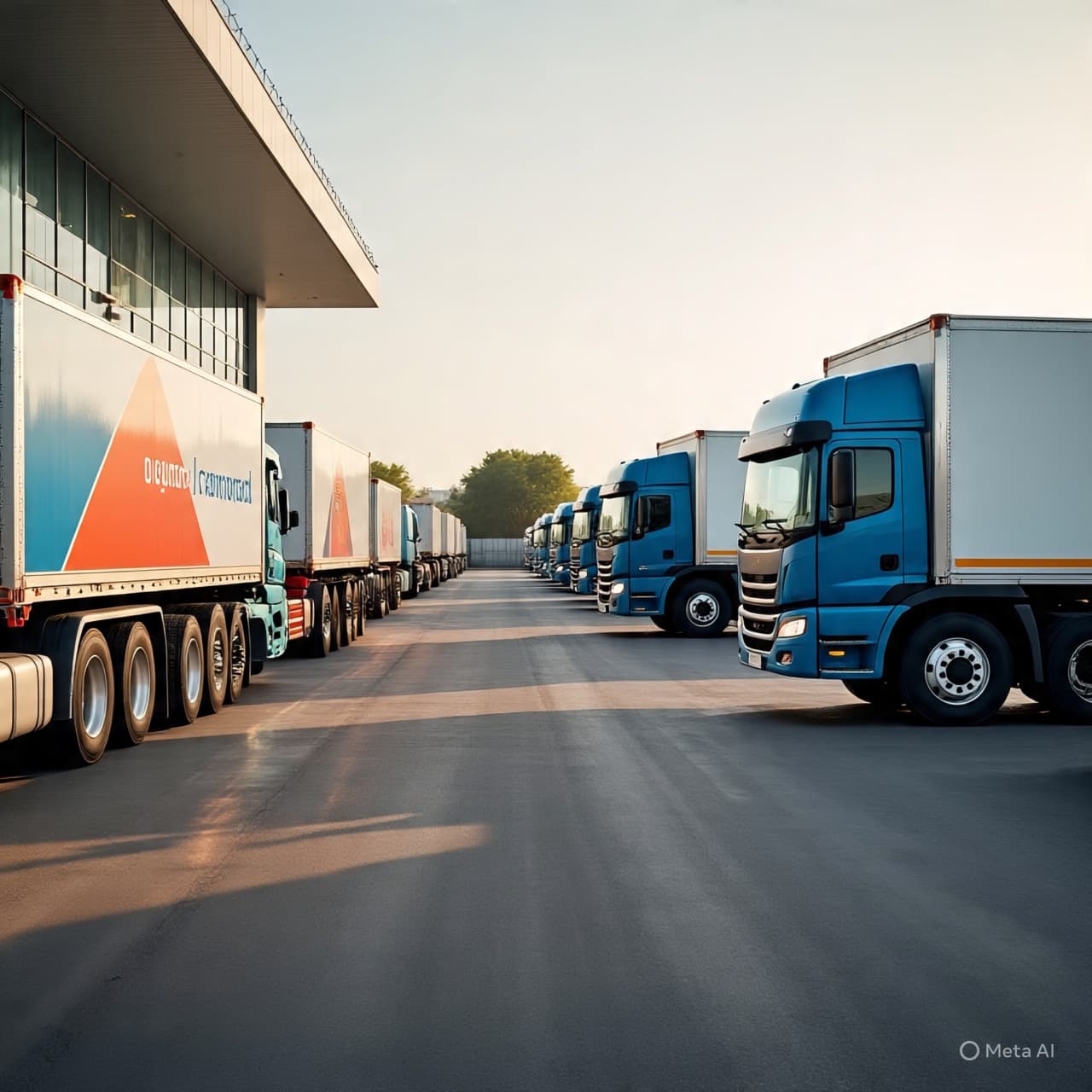
Markets sometimes move on earnings, sometimes on data, and sometimes on something less tangible — a story that gathers momentum before it fully takes shape. This week, that story carried an unlikely cast: a former karaoke company, a surge in artificial intelligence enthusiasm, and a ripple that extended into logistics stocks now caught in what traders are calling the “AI scare trade.”
According to reporting from and , a company once known primarily for karaoke-related technology has repositioned itself around artificial intelligence tools aimed at freight optimization and digital logistics scaling. The pivot — bold in branding and ambitious in scope — appears to have unsettled parts of the transportation sector, where investors are increasingly sensitive to disruption narratives.
Coverage by and suggests that the reaction was not solely about fundamentals, but about perception. When a smaller, rebranded firm signals intent to deploy AI platforms capable of optimizing routes, compressing brokerage margins, or automating load matching, markets often extrapolate rapidly. The fear is not that change has already occurred, but that it could accelerate.
The term “AI scare trade,” referenced in commentary cited by , reflects a broader pattern. Across industries, stocks perceived as vulnerable to automation have experienced sudden volatility when new AI entrants emerge. Logistics and freight companies, long accustomed to cyclical swings in demand and fuel costs, now face a different variable: algorithmic competition.
For established trucking and shipping operators, digital platforms are not new. Over the past decade, firms have invested in route optimization software, predictive demand models, and automated dispatch systems. What feels different today is the branding and scale of AI deployment — and the speed with which capital markets price in hypothetical disruption.
Investors appear to be weighing two competing ideas. On one hand, AI could enhance efficiency, reduce empty miles, and improve cost management across the supply chain. On the other, increased transparency and automation could pressure traditional brokerage spreads and challenge legacy business models.
The former karaoke company’s pivot underscores a wider truth in today’s market: transformation narratives can travel quickly. A corporate rebranding toward AI, even from an unexpected origin, may be enough to shift sentiment across an entire sector.
In straightforward terms, logistics and freight stocks declined amid concerns that a former karaoke-focused company’s AI freight initiative could intensify competition and compress margins. Analysts continue to assess whether the reaction reflects structural change or short-term market sensitivity.
AI Image Disclaimer Graphics are AI-generated and intended for representation, not reality.
Sources (Media Names Only)
Reuters Bloomberg CNBC The Wall Street Journal Financial Times
Published by Banx Network. This article is part of the Banx decentralized media programme, powered by the BXE token on the XRP Ledger.