
There are expanses of water where the horizon seems to stretch without beginning or end — oceans that carry the salt of distant winds and the slow hush of waves meeting shore. In these places, the motion of tides and the drift of currents speak in a language that is older than borders and deeper than charts. The South China Sea is one such realm — part myth, part artery of global exchange — where history and hope move in tandem, and where every ripple carries both new promise and old residue.
In recent days, the quiet surface of this sea has been layered with talk of presence and preparation. Along its shimmering lanes, where ships trace paths that account for nearly a quarter of the world’s maritime trade, nations watch and weigh their interests against the sweep of events. The United States, mindful of its enduring ties to allies and partners in Southeast Asia, has sought to maintain its edge in these waters — an edge honed through decades of engagement, alliance, and strategic stewardship.
That edge is not merely measured in steel hulls or the echo of sonar beneath the waves. It is shaped by cooperation and shared understanding with countries whose coastlines meet the sea’s embrace. In recent dialogues in Manila, Washington and Manila reaffirmed a commitment to collective defense and regional security, underscoring the bonds that tie the United States to the Philippines and other partners whose histories are woven with both colonial pasts and sovereign futures. In this region, where treaties have been etched into the landscape of diplomacy, both sides have emphasized vigilance and preparedness, speaking gently yet firmly about the necessity of keeping sea lanes open and unobstructed.
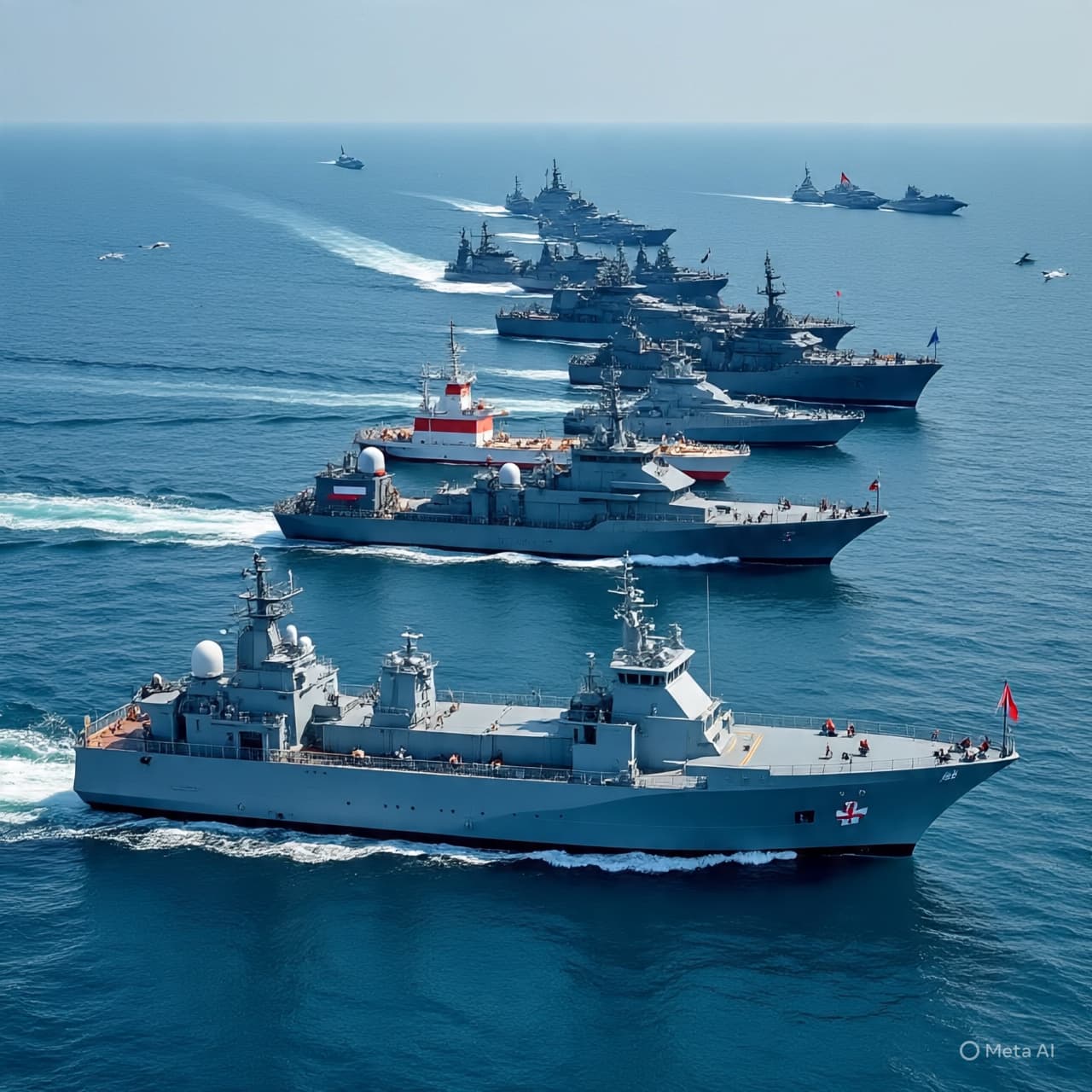
At the same time, the refrain of cooperation finds expression not solely in words but in presence at sea. Advanced missile and unmanned systems are being positioned with care in allied territories, part of broader efforts to enhance readiness and to reassure those whose waters lie closest to the contested expanse. Joint maritime drills alongside partner navies — Australia’s vessels threading through formation with U.S. and Philippine ships — reflect a shared cadence, a choreography of cooperation in the face of rising uncertainties deep below the tranquil surface.
Yet these measures do not unfold in isolation. Across the waves, other capitals watch with equal contemplation. The South China Sea’s intricate geography — with reefs and shoals that rise like scattered jewels at low tide — has been the stage for encounters and assertions, some smooth and others sharp against the hulls of vessels navigating these waters. Past incidents, such as confrontations near the Second Thomas Shoal, remind observers that beneath the poetry of dawn and dusk lies a mosaic of unresolved claims and overlapping sovereignties that continue to shape the motion of maritime life.
In this fluid balance, the weight of history sits beside the necessity of tomorrow’s cooperation. The U.S. seeks to uphold principles of freedom of navigation and the peaceful resolution of disputes, guided by longstanding frameworks that champion both stability and law. For its part, Washington’s engagement — from strategic dialogues to targeted deployments — is a testament not only to its immediate interests but to a broader sense of shared stake in a region whose rhythms extend far beyond any single shore.
As sunlight dips toward the sea and stars begin their slow rotation above, the waters hold their quiet surface, masking the undercurrents of strategy and solidarity that ebb and flow beneath. In these spaces between dusk and hope, the measure of America’s edge is not solely in presence but in the steady, careful cultivation of ties that, like the tide itself, move with time’s patient motion.
Looking at recent developments in the broader Indo‑Pacific context, the United States is working with allies to reinforce deterrence and security in the South China Sea amid ongoing tensions with China. Washington and Manila have reaffirmed their commitment to collective defense and agreed to increase the presence of advanced defense systems in the Philippines to enhance readiness and interoperability. Joint maritime activities with allied forces aim to preserve freedom of navigation and a peaceful regional order.
AI Image Disclaimer
Visuals are AI-generated and serve as conceptual representations.
Sources (Media Names Only)
Reuters The Washington Post Associated Press Focus Taiwan Philippine Star
Published by Banx Network. This article is part of the Banx decentralized media programme, powered by the BXE token on the XRP Ledger.


