
Key Highlights
- Recent months have seen Mali's military leadership shift towards Russian partnerships.
- Despite increased security presence, militant attacks continue to escalate.
- The situation reflects a complex struggle for control in the Sahel region.
Mali's landscape, particularly in the Sahel, is marked by a stark contrast between the promise of stability and the harsh reality of ongoing violence. In recent months, the military leadership, which came to power through a series of coups, has sought to stabilize the country by forging new alliances, notably with Russian-linked personnel. This shift is seen as a departure from previous international partnerships, aiming to create a new security framework amidst a backdrop of persistent insurgency.
The presence of these foreign forces, often associated with the Wagner Group, was initially framed as a necessary step to restore order in a nation plagued by violence. However, reports indicate that militant groups have continued to launch coordinated attacks, even in areas believed to be under tighter control. This unsettling trend raises questions about the effectiveness of the new security arrangements and the true extent of control exercised by the Malian authorities.
The dynamics of the Sahel region are complex, with armed groups exhibiting a remarkable ability to adapt to changing circumstances. Their movements often blur the lines between geographic and strategic boundaries, creating a situation where violence feels less like isolated incidents and more like a continuous struggle for power. For communities on the ground, this translates into a lived experience marked by uncertainty, where daily routines unfold against a backdrop of distant gunfire and the presence of armed convoys.
Malian authorities assert that their approach reflects a commitment to sovereignty and an independent course of action. The involvement of Russian-linked forces is officially described as a partnership aimed at bolstering national defense. However, international observers have raised concerns about the implications of these arrangements, particularly as violence persists across various regions of the country.
Recent attacks have highlighted the limitations of any singular solution to the security crisis. Incidents where militants have successfully infiltrated strategic locations despite the heightened security presence underscore the ongoing contest for power. This dynamic reveals that control is not solely determined by formal structures but also by the ability to exploit existing vulnerabilities.
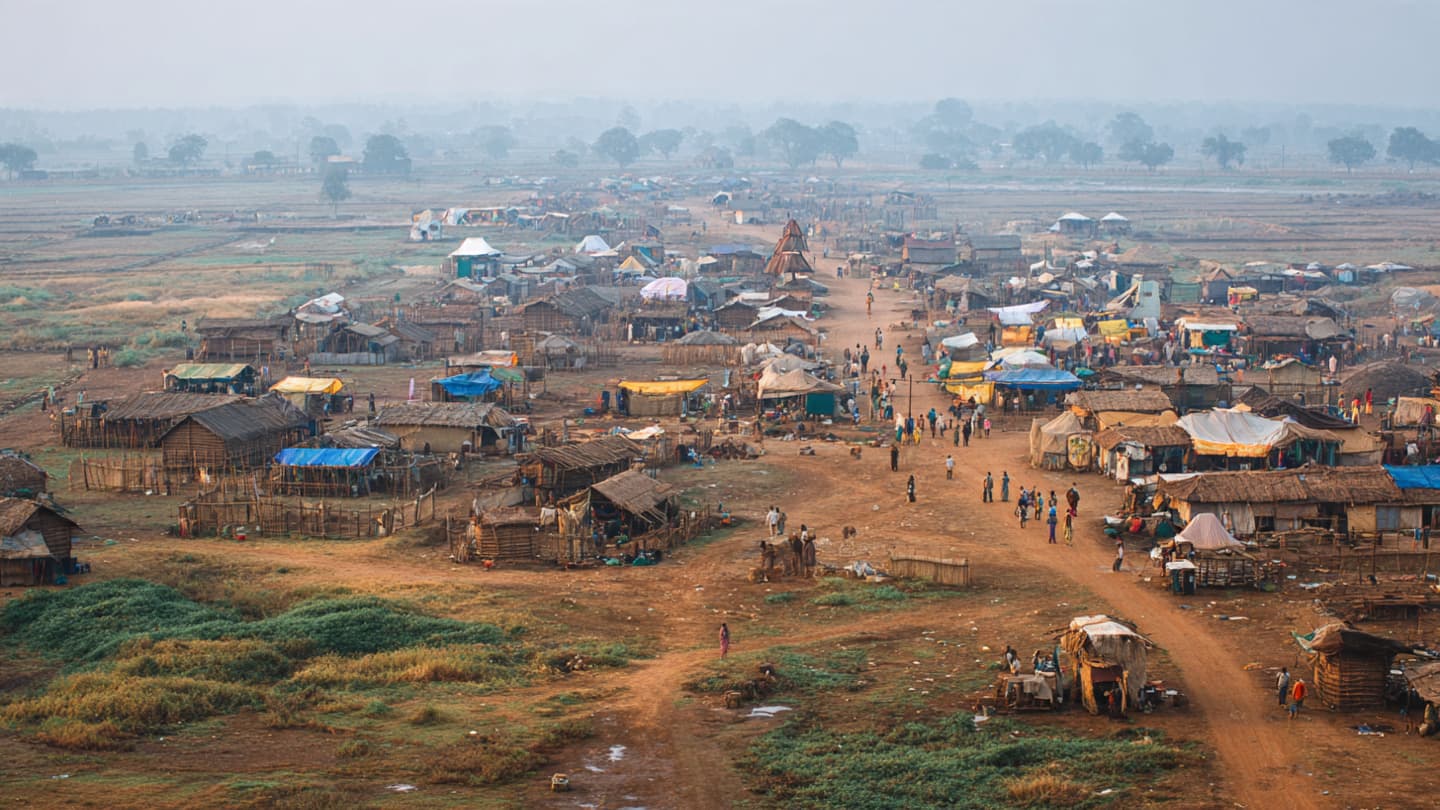
As the sun rises over the Sahel, the landscape may appear unchanged from a distance—vast and quiet. Yet, for those living in the region, the reality is far more complex. The lines of authority and resistance are continually being redrawn, shaping a narrative that defies easy resolution. The balance between control and challenge remains precarious, with both sides vying for dominance in a landscape marked by uncertainty.
In this context, the question of what stability truly means in Mali becomes increasingly pertinent. As alliances shift and threats evolve, the Malian junta's reliance on its chosen partners will be tested against the enduring capacity of militant groups to strike. The struggle for security in Mali is far from over, and the implications of these developments will resonate throughout the Sahel region for the foreseeable future.
Published by Banx Network. This article is part of the Banx decentralized media programme, powered by the BXE token on the XRP Ledger.



