
Key Highlights
- CDC's internal challenges raise public health concerns.
- Moss spores survive nine months in space and regenerate on Earth.
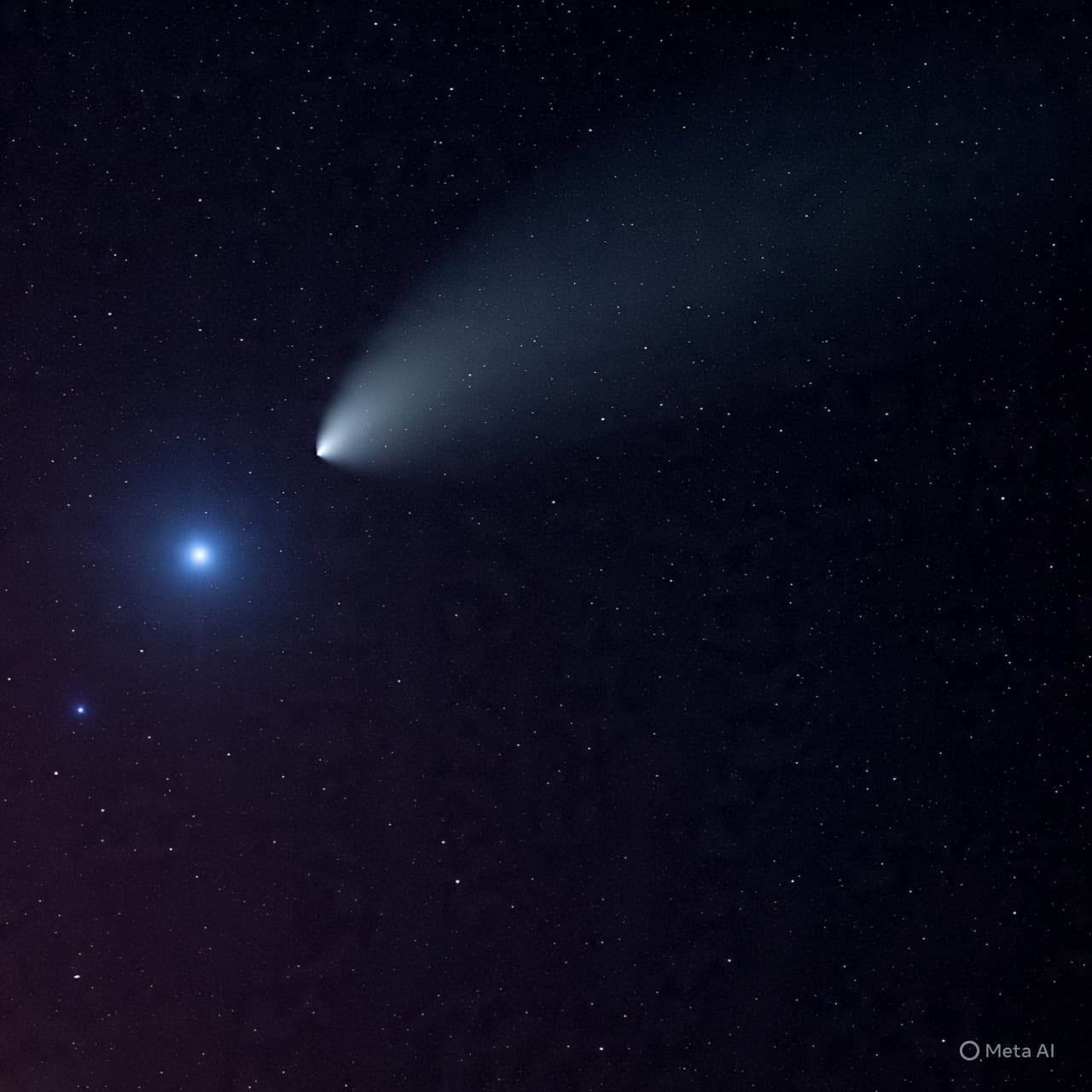
- Interstellar comet 3I/ATLAS offers insights into cosmic materials.
In the gentle drift between night and morning, the world often reveals its most subtle lessons. Today, that lesson arrives through a triad of stories — one rooted in human institutions, one planted in the resilience of life, and one carried across the cosmos on a passing comet. They seem unconnected at first glance, yet together they sketch a portrait of fragility, endurance, and wonder.
The murmurs rising from the Centers for Disease Control and Prevention evoke the sound of a house shifting on uncertain foundations. Former officials describe a landscape of disarray, where scientific rigor feels diminished and internal direction blurred. Their reflections suggest an agency searching for steadiness at a moment when public trust is easily shaken. This turmoil reminds us that even the most established institutions can drift off course, not through a single dramatic turn but through many small, accumulating fractures.
In contrast, a different type of endurance emerges from the International Space Station, where moss spores were left to their fate for nine long months. In this hostile environment, where cold emptiness clings and ultraviolet radiation slices without mercy, these spores were expected to perish. Yet, upon their return to Earth, many awakened and sprouted anew. This quiet persistence of life whispers a gentle truth: it does not require ideal conditions to persevere; sometimes it simply requires time, patience, and the faintest possibility.
Far beyond these stories of human unease and biological resilience, another traveler makes its brief appearance. The interstellar comet 3I/ATLAS drifts into view like a visitor who has crossed a desert of stars. Newly released images capture its pale tail against the ink-black canvas of space — a reminder that not all stories begin here, and not all wonders belong to us. Its icy structure carries the memory of other solar systems, other eras, and other silences. As it sweeps past, it asks no questions and gives no answers, yet it leaves us with the feeling of standing at a window that opens onto a much larger room.
Together, these threads form a tapestry: a struggling agency revealing the fragility of human systems, a moss showing the surprising breadth of life’s tenacity, and an interstellar comet nudging our gaze outward. They move at different scales — institutional, biological, cosmic — but they all remind us that the world is always in motion, always unfolding in ways that challenge our expectations.
In a calm, straightforward reflection to close: the CDC faces internal instability that has raised concerns among public-health experts. Experiments aboard the International Space Station confirm that moss spores can survive nine months in the vacuum of space and still regenerate on Earth. NASA’s latest images of the interstellar comet 3I/ATLAS offer new insights into materials arriving from beyond our solar system. These stories, together, mark another day in the ever-shifting landscape of science.
Published by Banx Network. This article is part of the Banx decentralized media programme, powered by the BXE token on the XRP Ledger.



