
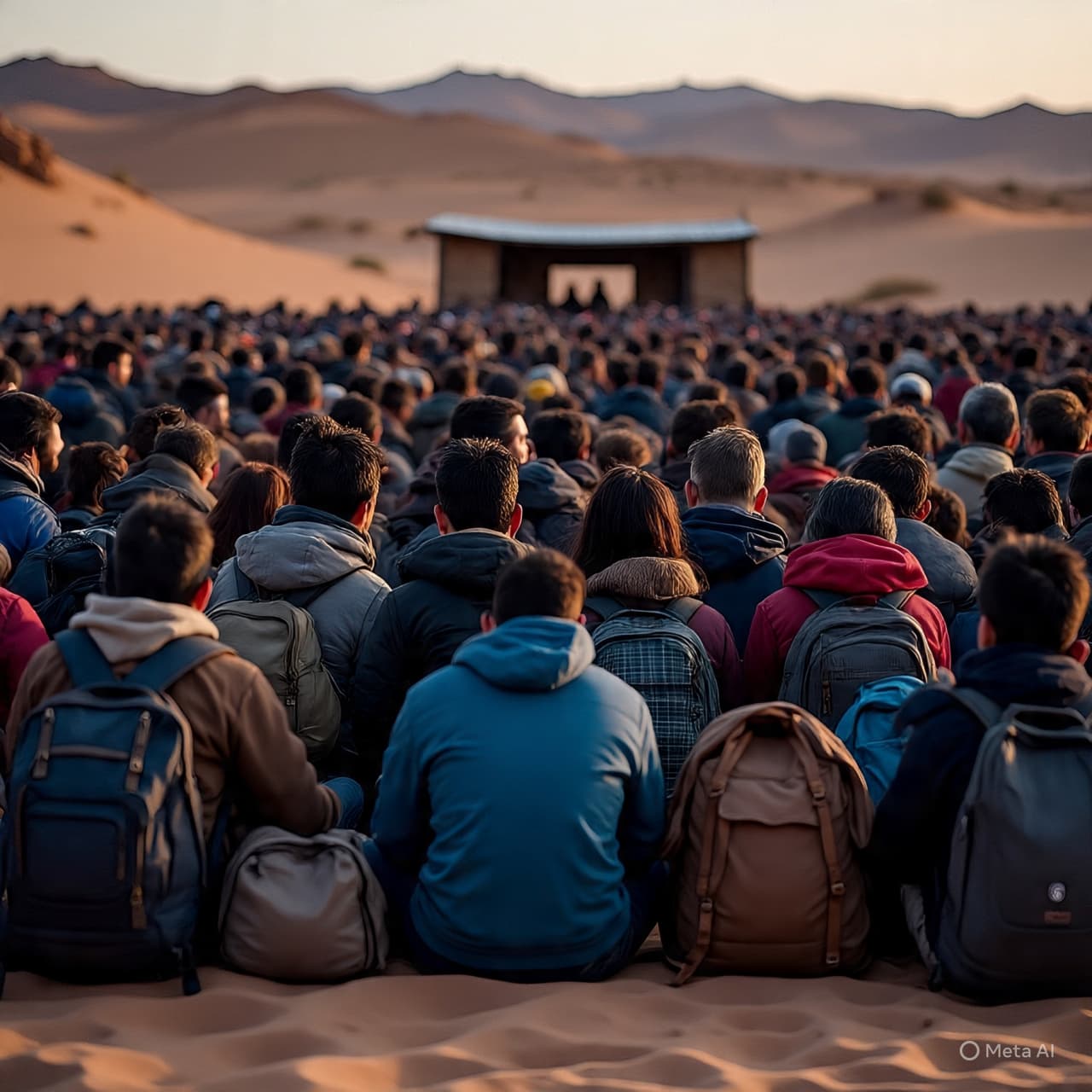
In the dry wind that whispers across the high desert between Chile and Peru, many footsteps now echo with urgency. Families burdened with backpacks and hope, strangers bound by the same uncertainty, crowd near border gates — each one seeking safety, stability, an uncertain tomorrow. The desert’s hush has become the backdrop to a journey made by fear, promise, and trembling faith. And now, a new decision seeks to restore calm: a declaration of emergency, not in war, but at the border between nations and the lives of people on the move.
The government of Peru — under José Jerí — announced on November 28, 2025 that a state of emergency will be declared along the country’s southern border with Chile. Armed forces and police will be deployed, and migration controls intensified.
The trigger: a surge of migrants — primarily from Venezuela — moving north after recent political rhetoric in Chile promising expulsion of undocumented immigrants if a new government takes power. Many migrants, fearing crackdown and mass deportations, began leaving Chile en masse, heading toward Peru.
At the border crossing near Tacna–Arica — the desert path between nations — dozens to hundreds were reported attempting entry into Peru. Some migrants, lacking proper documentation, blocked highways in protest when entry was refused. The tension escalated quickly: vehicles stopped, families in limbo, people unsure of where they belong.
From the Peruvian government’s viewpoint, the emergency declaration aims to protect public security and maintain orderly migration control. The government argues that the sudden influx of people without authorization poses risks not only due to logistics, but also to public safety.
Yet behind the political calculations lie human stories: of people displaced, vulnerable, caught between fear in one country and uncertainty in another. For many of these migrants — fleeing economic, political, or humanitarian crises in their homelands — the hope is not to stir chaos but to find refuge, dignity, and a chance to rebuild. Their hopes and desperation mingle in the dust of border checkpoints.
The unfolding situation reveals a deeper challenge for countries across Latin America: how to balance sovereign controls and national security with compassion, rights, and the dignity of those on the move. When migration surges in times of fear and upheaval, it tests institutions — and the humanity of nations.
As Peru steps into this moment — with troops, border controls, and emergency powers — the world watches not only how borders are defended, but how people are treated. Because in the shifting sands of migration, order and compassion must walk together.
Published by Banx Network. This article is part of the Banx decentralized media programme, powered by the BXE token on the XRP Ledger.


