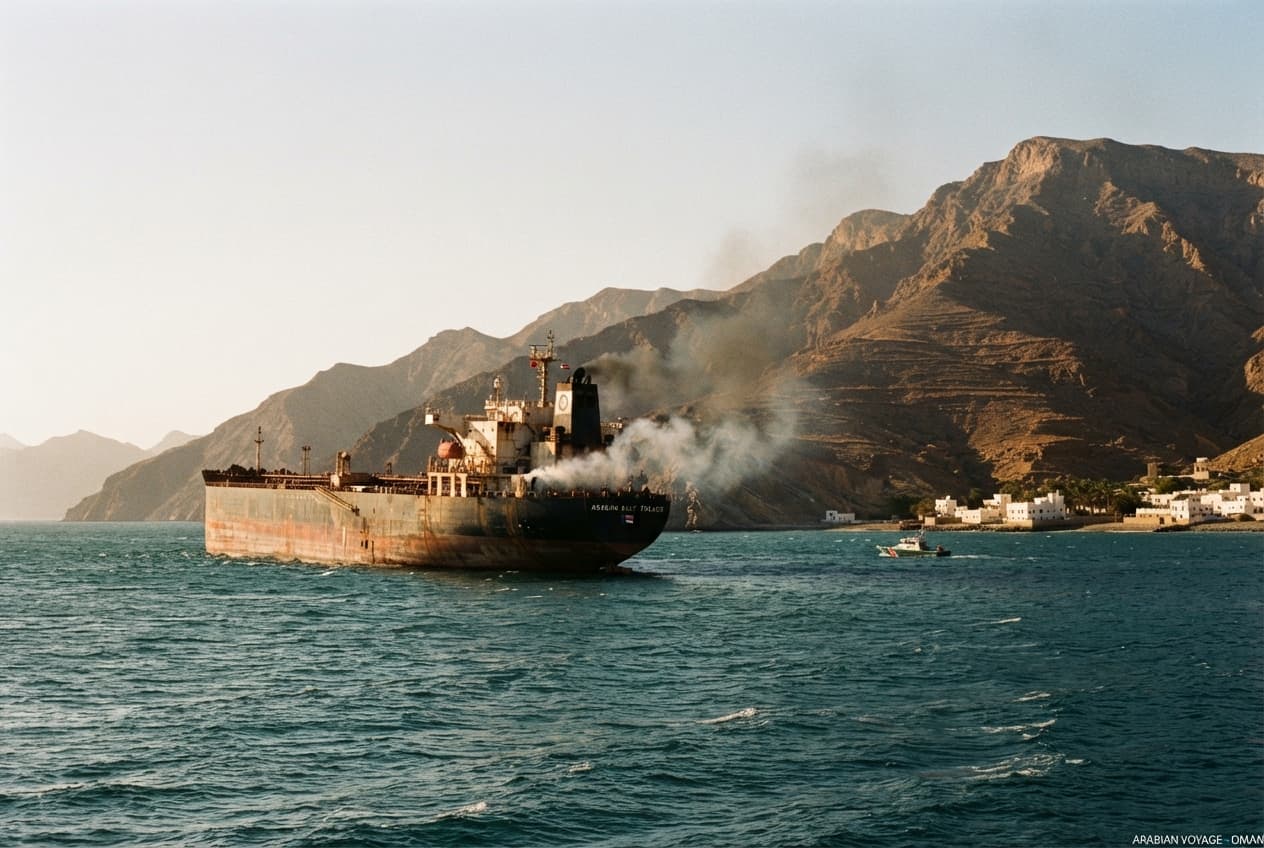
Before dawn, the sea lanes feel like breath—slow, unseen, yet essential. Tankers move across the narrow throat of the Strait of Hormuz, carrying not just oil, but the quiet assurance of continuity. In distant suburbs and cities, far from salt air and steel hulls, that movement is translated into something more ordinary: fuel pumps humming, flights departing, lights staying on.
Lately, that rhythm has begun to falter, not in motion but in certainty.
In Australia, the conversation has turned toward a route that most citizens will never see but depend on daily. Political voices, particularly within the opposition, have framed the situation in stark terms, warning that tensions involving Iran could place the country in a vulnerable position. The concern rests on geography as much as geopolitics: a significant portion of Australia’s refined fuel imports passes through the Strait of Hormuz, a passage that has, in recent weeks, been drawn into sharper focus by escalating regional threats.
The remarks come amid a wider atmosphere of unease shaped by the unfolding confrontation between United States and Iran. Statements from Iranian officials have suggested that critical energy routes could be disrupted if conflict intensifies, while Western governments weigh responses that stretch from diplomacy to deterrence. In this widening circle of tension, the Strait—barely 33 kilometers wide at its narrowest—becomes less a line on a map and more a hinge on which global energy flows quietly depend.
Australia’s reliance on imported fuel, particularly refined petroleum, has long been understood in technical reports and policy briefings. Yet moments like these bring such dependencies into sharper public view. Domestic reserves are limited, and while strategic stockpiles exist under international agreements, the system is calibrated for continuity rather than sudden rupture. A prolonged closure or disruption in the Strait could ripple outward, not as a single dramatic break, but as a series of tightening constraints—delays, rising costs, recalibrated supply chains.
Across markets in Asia and beyond, similar calculations are already underway. Energy traders watch the Gulf with a kind of practiced vigilance, reading signals not only in official statements but in the patterns of shipping traffic and insurance premiums. Each small shift carries the weight of larger possibilities. The global oil market, often described in numbers and charts, reveals itself here as something more fluid and fragile—a network held together by trust as much as infrastructure.
For Australia, the conversation also touches on longer arcs of policy. Efforts to diversify supply routes, expand domestic storage, and invest in alternative energy sources have moved in parallel with these vulnerabilities, though often at a slower, quieter pace than the urgency of headlines. In moments of tension, those efforts appear less abstract, more immediate—threads that may one day determine resilience.
Yet for now, the Strait remains open, its waters busy with the steady passage of tankers. The warnings, though stark, are still conditional, tied to scenarios that have not yet unfolded. Governments continue to monitor, to prepare, to speak in measured tones that attempt to balance caution with reassurance.
By the close of the day, the facts settle into place: opposition figures in Australia have raised concerns over the nation’s fuel security, citing the potential impact of any disruption in the Strait of Hormuz amid rising tensions involving Iran and the United States. Iranian officials have indicated that energy routes could be targeted if conflict escalates, though no closure has occurred. For now, the ships continue to pass, and the quiet movement of oil—so often unnoticed—remains one of the world’s most delicate forms of continuity.
AI Image Disclaimer Illustrations were created using AI tools and are not real photographs.
Sources Reuters Bloomberg The Guardian Al Jazeera International Energy Agency
Published by Banx Network. This article is part of the Banx decentralized media programme, powered by the BXE token on the XRP Ledger.