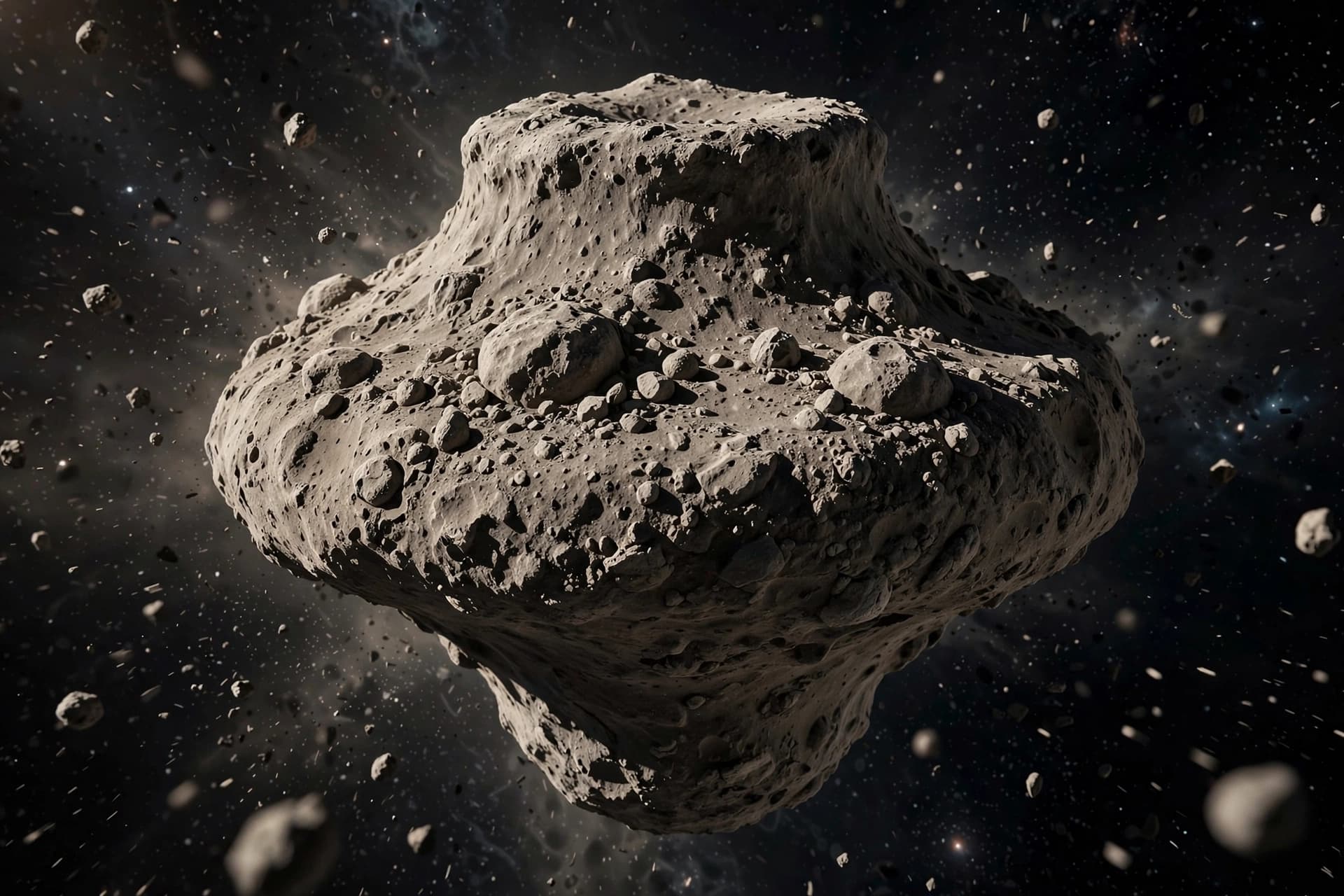
In the quiet of the night, beneath a sky dusted with distant stars, a celestial wanderer met its fragile end. Comet C/2025 K1 (ATLAS), a traveler from the outer reaches of the solar system, has fractured, shedding its icy body into fragments that scatter light across the cosmos. Telescope images capture the delicate remnants drifting in silence, a fleeting testament to the impermanence of even the most magnificent travelers.
Astronomers had watched K1 glide through the inner solar system, its tail of gas and dust trailing like a painter’s brushstroke across the dark canvas. But as it drew closer to the sun, the heat proved relentless. Layers of ice sublimated, internal pressures built, and what once was a singular, gleaming nucleus gave way. The result is a spectacular disassembly, a cosmic choreography of breakup and dispersal, visible across millions of kilometers of space.
This moment is both an ending and a revelation. The comet’s fragmentation allows scientists to study its innermost composition, revealing clues about the early solar system preserved in ice and dust. Each fragment becomes a messenger from the distant past, whispering secrets of the primordial cloud from which the planets coalesced. Humanity, from our tiny vantage point, witnesses this celestial ephemera, reminded of the fragile balance between cosmic forces and the beauty that arises from their interplay.
As K1 fades into scattered starlight, it leaves behind a silent narrative written in ice, fire, and light. In its dissolution, we glimpse both the transience and the splendor of the universe—moments that pass quickly, yet imprint themselves upon our understanding of the cosmos.
AI Image Disclaimer:
“Visuals are AI-generated and serve as conceptual representations.”
Sources:
NASA, European Space Agency, Minor Planet Center, Astronomy Magazine, Space.com
Published by Banx Network. This article is part of the Banx decentralized media programme, powered by the BXE token on the XRP Ledger.