
Key Highlights
- Ceasefire in Iran leads to a shift in political dynamics.
- Political factions vie for legitimacy in the absence of conflict.
- Public sentiment emerges as a key factor in governance.
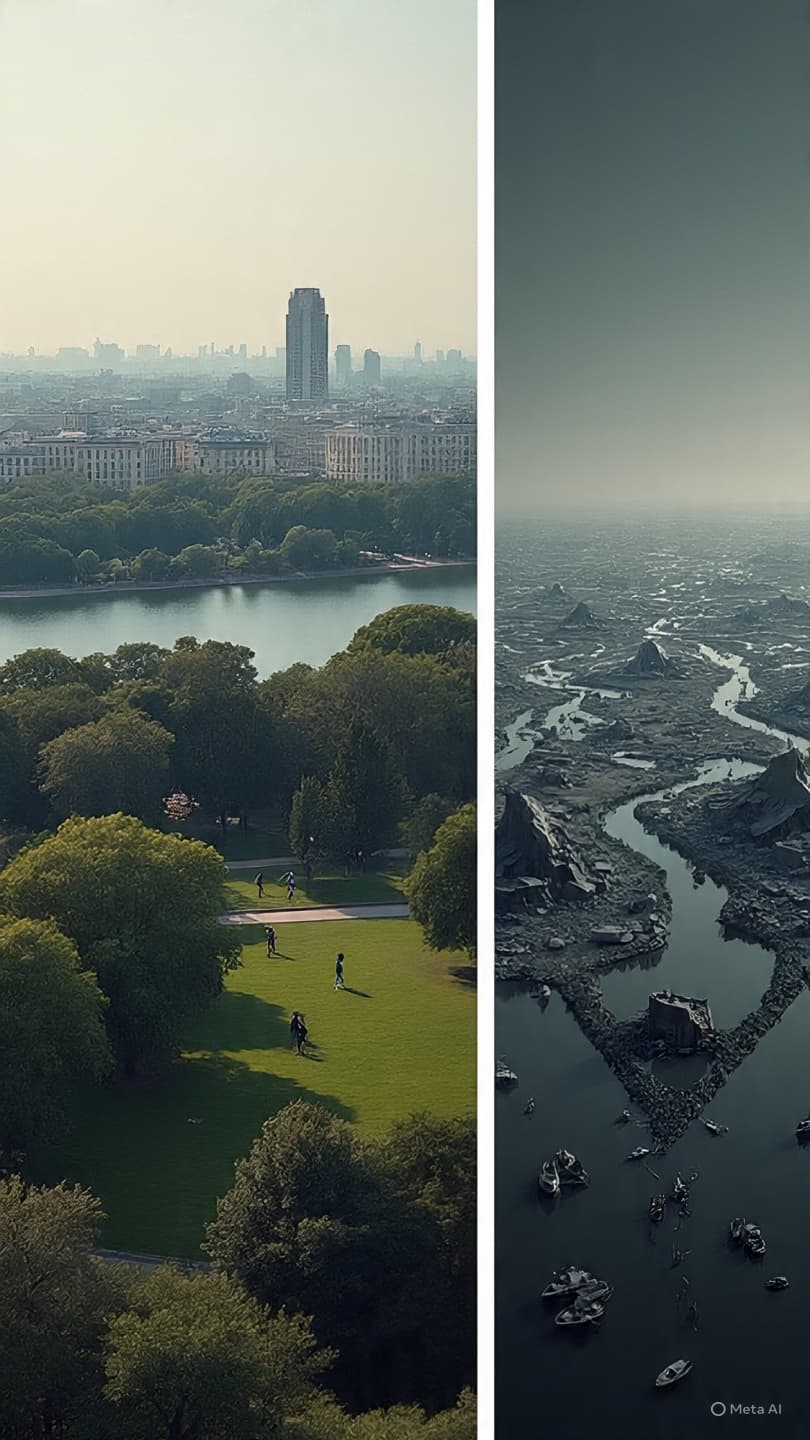
The city seems to breathe differently when the guns quiet down. Streets that once held the echo of urgency begin to settle into a softer rhythm, as if even the air itself is unsure whether to exhale fully. In the pauses between uncertainty and return, political life finds its own kind of motion—less visible than smoke, but no less persistent.
A ceasefire, fragile in its promise and uneven in its reach, has brought a temporary stillness to the conflict zones tied to Iran’s wider regional entanglements. Yet the absence of active fighting has not translated into absence itself. Instead, attention has shifted inward, where ballots, speeches, and televised debates now carry the weight once borne by artillery and drones. The war, in its suspended form, has not disappeared—it has relocated into the language of politics.
Across Tehran’s corridors of governance and influence, the language of security has begun to merge with the language of legitimacy. Officials frame stability not only as a military achievement but as a civic necessity, something to be defended through participation and turnout. Opposition voices, where permitted space, interpret the same pause differently: as a rare opening in which public sentiment might briefly surface above the architecture of control and crisis.
What emerges is a landscape where ceasefire becomes less an ending than a recalibration. Analysts describe a familiar pattern in such moments—where external conflict cools just enough for internal competition to intensify. Political factions, state institutions, and reformist currents all adjust their posture, seeking to define the meaning of the pause before it hardens into narrative.
In provinces and urban centers alike, the atmosphere is marked by a quiet recalibration. Conversations in markets and taxis turn toward prices, sanctions, and the uncertain language of diplomacy. The memory of recent violence lingers not as a headline but as a tone beneath daily life, shaping how promises are heard and how leadership is measured. Even silence, in this context, feels structured—carefully observed, carefully interpreted.
International observers note that such transitions often blur the boundary between external conflict and domestic contestation. A ceasefire may halt the physical expansion of war, but it rarely resolves the political forces that sustain it. Instead, those forces reassemble in different arenas: electoral calendars, institutional debates, and competing visions of sovereignty and security.
As election rhetoric gathers momentum, the conflict’s framing subtly shifts. It is no longer only about territory or deterrence, but about continuity and direction—who can claim to guide the nation through a period where certainty feels temporarily withdrawn. Campaign messages, state-aligned commentary, and independent analysis all converge on the same underlying question: what does stability mean when it is no longer defined by the absence of fire?
Yet beneath the strategic language, there remains a quieter register. Families who followed the conflict through fragmented reports now measure time in smaller units—days without escalation, nights without interruption. For them, the ceasefire is not a concept but a lived pause, imperfect yet tangible. It is within this lived experience that political meaning is ultimately received, reshaped not in halls of power but in the ordinary cadence of survival.
As the ceasefire holds—unevenly, cautiously—the political sphere continues to absorb its consequences. The war has not ended so much as changed its grammar. And in that shift, Iran’s internal political season becomes not separate from the conflict, but one of its continuing expressions: a battlefield where votes replace volleys, and where the future is negotiated in tones rather than thunder.
Published by Banx Network. This article is part of the Banx decentralized media programme, powered by the BXE token on the XRP Ledger.



