The brain is a landscape where damaged pathways can be difficult to restore. Neurons, once lost, do not simply return to their previous place, and diseases affecting the nervous system can gradually alter the architecture of the mind itself. Yet researchers continue to search for ways to encourage the brain to rebuild some of what has been lost.
One emerging approach involves nanoparticles designed to help transform existing brain cells known as astrocytes into neurons. Research reported by Le Monde describes experiments in which nanoparticles were used to encourage this cellular transformation in mouse models related to Alzheimer’s disease.
Astrocytes are an important type of cell within the nervous system. They support neurons and contribute to the environment in which nerve cells function. Their abundance has made them an interesting subject for researchers investigating whether existing cells could potentially be redirected toward other roles.
The idea behind the research is relatively simple in concept but complex in practice: rather than attempting only to replace lost neurons from outside the brain, scientists are exploring whether cells already present within the brain could be converted into neurons.
Nanoparticles can provide a way to deliver biological instructions or other materials to specific cellular environments. In experimental research, scientists can design these tiny structures to interact with cells and influence biological processes.
The experiments described by Le Monde involved animal models rather than human patients. That distinction remains important because results observed in mice do not automatically translate into an effective treatment for people. Further research is necessary before such an approach could be considered for clinical use.
Still, the concept represents part of a broader movement in neuroscience. Researchers are investigating ways to encourage the nervous system to repair itself, preserve remaining neurons or replace cells damaged by neurological disease.
Alzheimer’s disease presents a particularly difficult challenge because its effects extend beyond the loss of individual neurons. The disease involves complex biological processes that develop over time, meaning that restoring neurons alone would not necessarily address every aspect of the condition.
For that reason, cellular conversion approaches are being studied as one possible component of a much larger research landscape. Their importance lies not only in the immediate laboratory results but also in the questions they raise about the brain’s ability to adapt.
The path from an experiment in mice to a treatment for people remains long. But within that distance, researchers continue to explore increasingly precise ways of working with the cells already present in the brain, searching for possibilities that were once difficult to imagine.
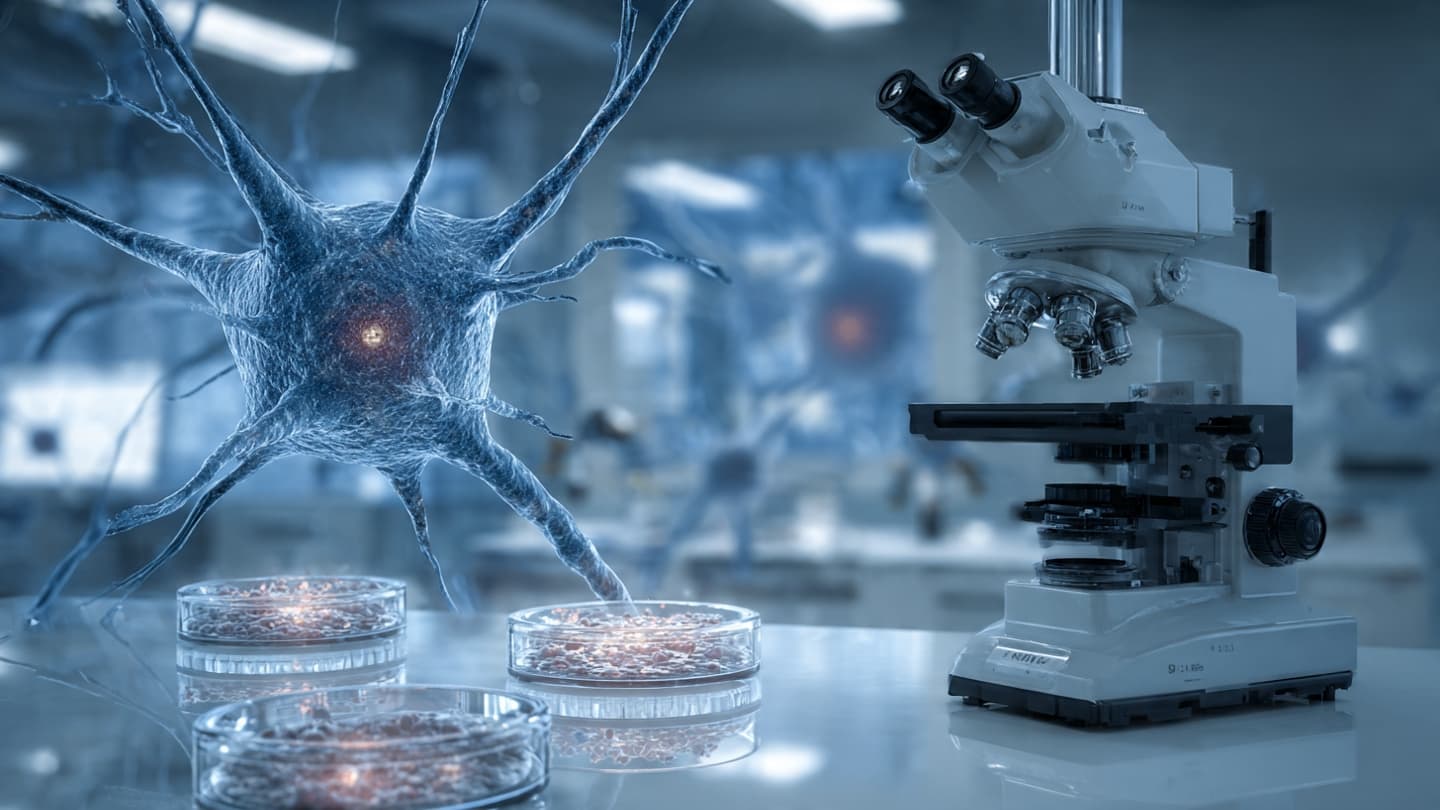
AI Image Disclaimer The visual material for this article was generated using artificial intelligence as a scientific illustration and does not represent an actual microscopic photograph or clinical procedure.
Sources Le Monde
Published by Banx Network. This article is part of the Banx decentralized media programme, powered by the BXE token on the XRP Ledger.