
Key Highlights
- Iran is shifting its trade focus towards the Caspian Sea amid Western sanctions.
- The International North-South Transport Corridor aims to connect India, Russia, and Europe through Iran.
- Investment in Iranian ports is increasing to facilitate growing freight traffic.
[The Caspian Sea's Strategic Importance]
In the early light along Iran’s northern coast, the Caspian Sea often appears less like a geopolitical corridor and more like a place suspended outside urgency. Fishing boats drift near weathered piers, and gulls circle above cold water. In small port cities lined with damp air and fading Soviet-era trade routes, movement unfolds slowly, almost quietly. Yet beneath that stillness, another current has begun to gather strength — one shaped not by weather, but by geography, sanctions, and the long search for economic pathways that remain open.
For years, Iran’s strategic imagination leaned heavily southward, toward the Persian Gulf and the broader maritime arteries connecting Asia, Africa, and Europe. The Caspian Sea, enclosed and distant from global shipping lanes, occupied a quieter corner of national planning. But shifting political realities and mounting Western sanctions have gradually altered that balance. Now the inland sea bordering Iran, Russia, Kazakhstan, Turkmenistan, and Azerbaijan is reemerging as a vital commercial and logistical route in Tehran’s calculations.
[The International North-South Transport Corridor]
At the center of this renewed attention lies the International North-South Transport Corridor, an ambitious trade network intended to connect India to Russia and Europe through Iranian territory. Railways, ports, roads, and shipping lines form the skeleton of the project, stretching from Indian Ocean ports northward through Iran before crossing the Caspian Sea toward Russia. In an era shaped increasingly by fractured alliances and disrupted supply chains, the corridor offers participating countries an alternative geography of commerce — one less dependent on traditional Western-controlled maritime routes.
[Investment in Infrastructure]
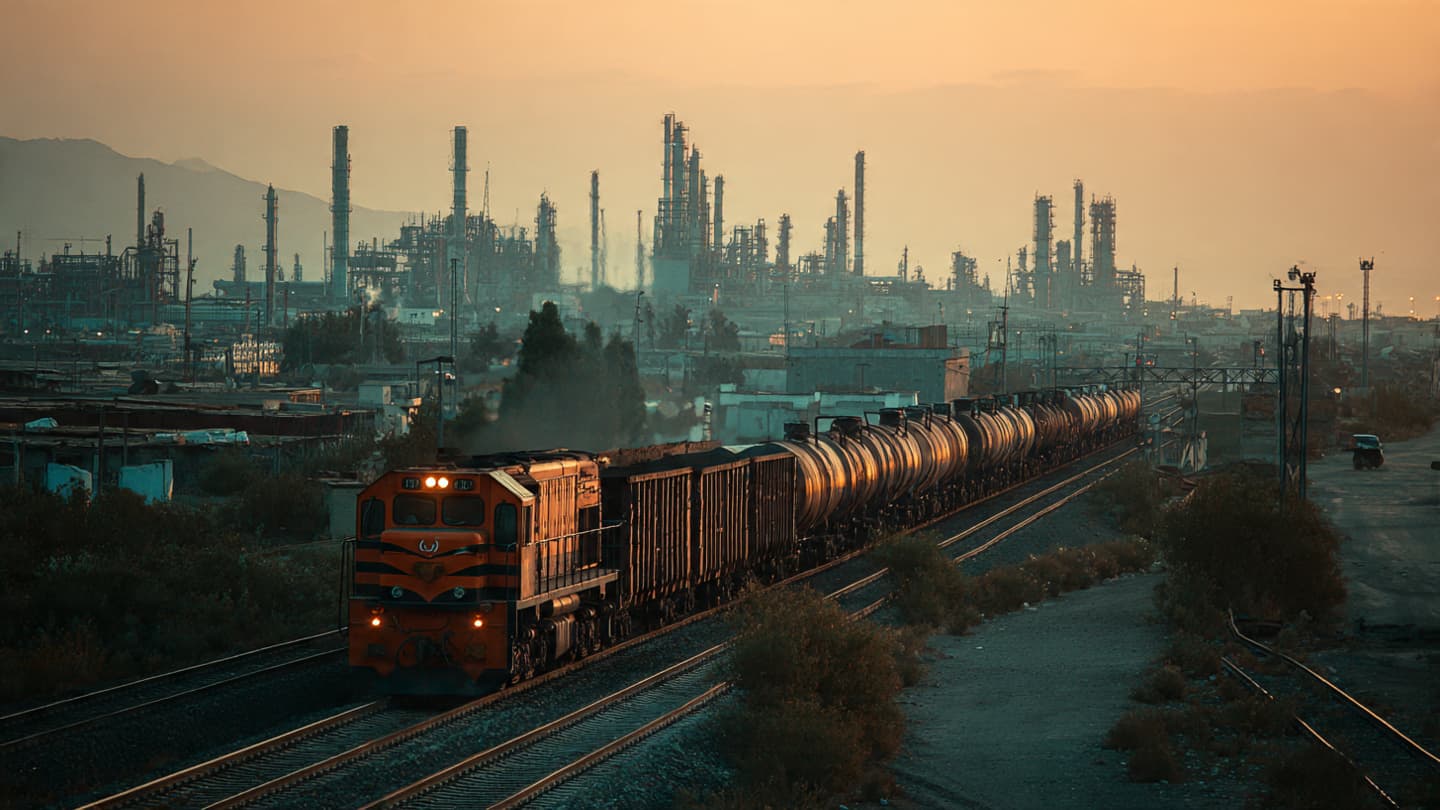
Along the Caspian coast, that vision is slowly becoming physical reality. Iranian ports such as Bandar-e Anzali and Amirabad have seen growing investment in cargo handling facilities, rail links, and storage infrastructure. Freight traffic across the sea has expanded as Russian businesses, facing their own sanctions and trade isolation after the war in Ukraine, search for new channels connecting them to Asian markets. Containers once routed through European systems are increasingly redirected through inland routes that move quietly across rail depots and northern harbors.
[Historical Context]
The Caspian itself occupies a peculiar place in global consciousness. Though called a sea, it is technically the world’s largest inland body of water — vast, enclosed, and bordered by states whose histories remain deeply intertwined with empire, energy, and contested influence. For centuries, merchants crossed these waters carrying silk, timber, grain, and oil. Soviet collapse, regional competition, and evolving pipeline politics later fragmented many of those patterns. What emerges now feels less like the creation of something entirely new than the reopening of old pathways shaped by modern necessity.
[Russia's Role and Challenges]
Russia’s role in this transformation has become especially significant. As Moscow deepens economic cooperation with Tehran, the Caspian corridor has taken on greater strategic value for both governments. Trade between the two countries has expanded in sectors ranging from agriculture to industrial equipment, while joint infrastructure projects seek to strengthen rail connectivity across Iran’s northern provinces. Recent agreements on transport financing and shipping coordination reflect a broader attempt to reduce vulnerability to Western sanctions regimes.
Yet the corridor also reveals the limits and fragility of such ambitions. Infrastructure gaps remain substantial. Rail bottlenecks slow freight movement. Ports require modernization. Political tensions among Caspian states occasionally complicate coordination. And despite growing regional trade, the route still handles only a fraction of the cargo volumes moving through established global shipping networks.
[Conclusion]
Even so, there is symbolism in the renewed attention paid to these northern waters. The Caspian offers Iran not merely commerce, but strategic breathing room — an alternative direction in a period when many traditional economic connections remain constrained. Geography, once overlooked, becomes a form of resilience.
In the port cities along the shoreline, this transformation appears in small, tangible ways. Warehouses expand beside old docks. Freight trains pass through humid coastal mornings. Truck drivers wait near customs depots carrying goods bound for destinations that stretch thousands of miles beyond the horizon.
Published by Banx Network. This article is part of the Banx decentralized media programme, powered by the BXE token on the XRP Ledger.



