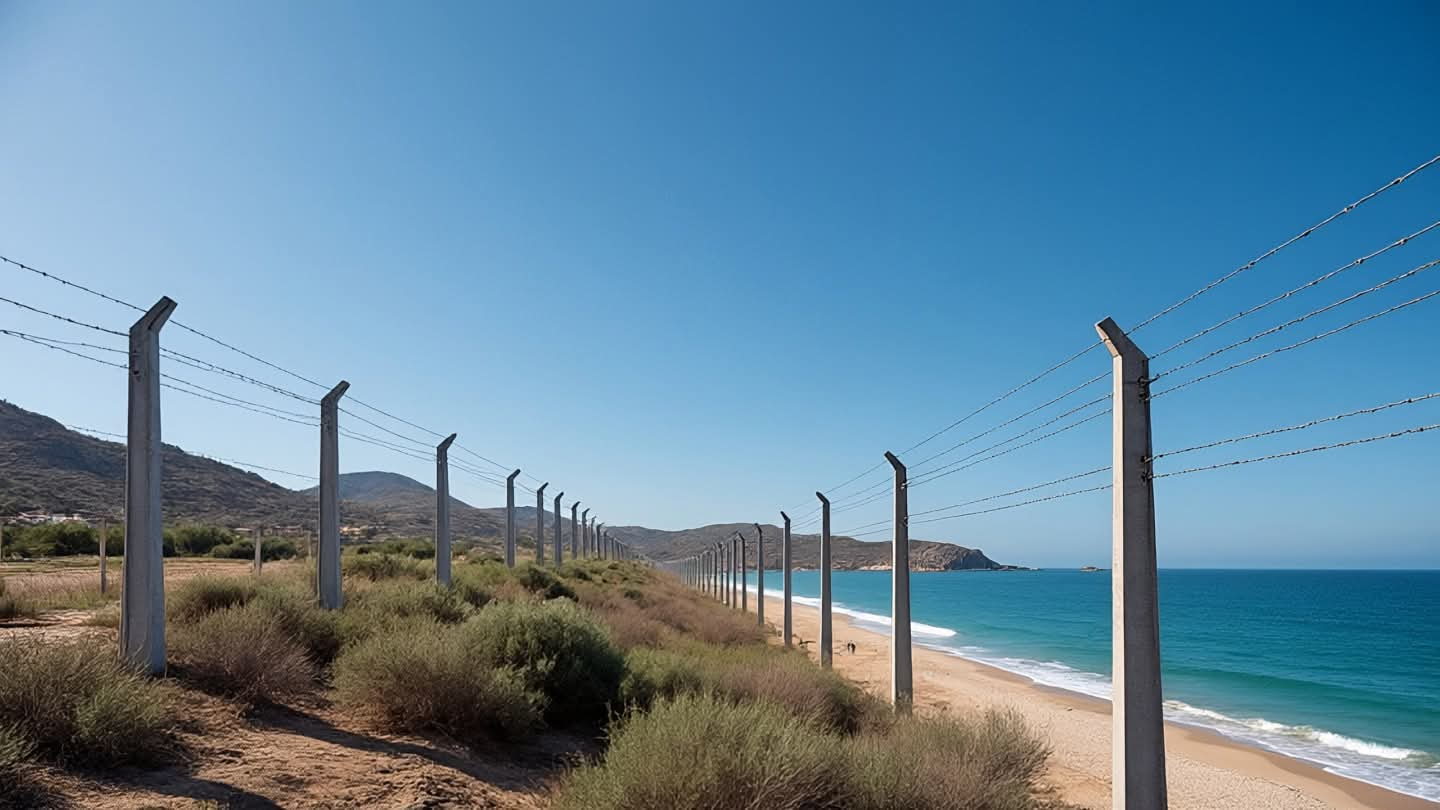
In the far western reaches of Iran, the land begins to fold into mountains.
Villages sit among narrow valleys where the roads bend slowly along the slopes, and the wind carries a quieter rhythm than the hurried capitals of the region. For generations, these hills have been home to Kurdish communities whose lives stretch across borders that were drawn long after their culture had taken root. The mountains do not recognize those lines easily; they move from Iran into Iraq and Turkey with the same unbroken terrain.
Yet in moments of geopolitical tension, these landscapes often become something else: a frontier.
In recent days, reports have suggested that Washington may be exploring a strategy that leans on Kurdish opposition groups inside Iran as part of the growing confrontation with Tehran. Kurdish fighters positioned along the Iran–Iraq border, some operating from bases in Iraqi Kurdistan, are said to be preparing for possible operations against Iranian security forces. The idea, according to analysts and officials cited in international reporting, is that Kurdish resistance could stretch Iran’s military resources and open a new internal pressure point during a period of regional conflict.
For strategists in Washington, the logic is not unfamiliar. Kurdish forces have often been viewed as capable partners in difficult terrain. Their militias have fought in guerrilla campaigns for decades, and in recent history they worked closely with the United States against extremist groups in Iraq and Syria. In theory, encouraging Kurdish activity along Iran’s western frontier could compel Tehran to divert troops away from other fronts, creating strategic dilemmas for the Iranian leadership.
Yet the mountains also hold memories.
Kurdish movements have repeatedly found themselves woven into the larger struggles of states. At times they have been courted as allies by powerful governments; at other moments they have faced abandonment when regional priorities shifted. This history is well known among Kurdish leaders, many of whom approach outside partnerships with cautious pragmatism.
Today’s moment carries similar ambiguity. Kurdish political factions have reportedly formed new coalitions and are coordinating activities along Iran’s border regions, while some leaders have discussed the possibility of confronting Iranian forces if conditions appear favorable. At the same time, governments across the region are watching closely. Turkey, which has long opposed Kurdish militant movements, has repeatedly warned against Western support for such groups, fearing it could energize separatist ambitions beyond Iran’s borders.
There are other risks as well. Encouraging armed Kurdish activity could provoke sharp retaliation from Tehran, not only inside Iran but potentially against Kurdish areas across the border in Iraq. Analysts note that such a dynamic might widen instability in a region that already sits at the intersection of several conflicts.
Some observers warn that the strategy could also fragment the internal politics of Iran rather than produce a clear outcome. Kurdish populations represent a significant minority within the country, but they remain only one part of a diverse society. A rebellion limited to peripheral regions might pressure the state militarily without necessarily reshaping the broader political system.
And so the calculus becomes delicate.
For Washington, Kurdish fighters may appear as a tactical opportunity—forces positioned along a sensitive frontier with experience in insurgent warfare. But the history of Kurdish alliances with external powers is complex, shaped by cycles of cooperation and disappointment. When the balance of regional politics shifts, it is often the communities living in the borderlands who feel the consequences first.
As the current crisis unfolds, Kurdish groups along Iran’s western frontier are reported to be preparing for possible involvement in the conflict, while regional governments weigh the implications. Analysts caution that mobilizing ethnic opposition movements could destabilize Iran’s border regions and provoke wider regional reactions.
AI Image Disclaimer These visuals were generated with AI and are intended for illustrative purposes only.
Sources (Media Names Only) Associated Press Reuters The Guardian The Washington Post The Wall Street Journal
Published by Banx Network. This article is part of the Banx decentralized media programme, powered by the BXE token on the XRP Ledger.