Morning often begins on Earth with the simple act of looking down.
A scientist kneels beside a stretch of weathered rock, brushing away dust, tracing the layered story written in stone. In such moments, the world feels immense and ancient, every grain of sediment hinting at rivers that once flowed, mountains that rose and fell, and climates that shifted through deep time.
For some researchers, this careful attention to the ground becomes something more—a way of learning how to read entire landscapes. And sometimes, those same skills lead the mind to wonder about landscapes far beyond Earth.
For Lauren Edgar, that path began in geology. Long before astronaut training, her work unfolded across deserts, glaciers, and volcanic fields. As a scientist studying planetary geology, she examined Earth not only for its own history but also for the clues it might hold about other worlds.
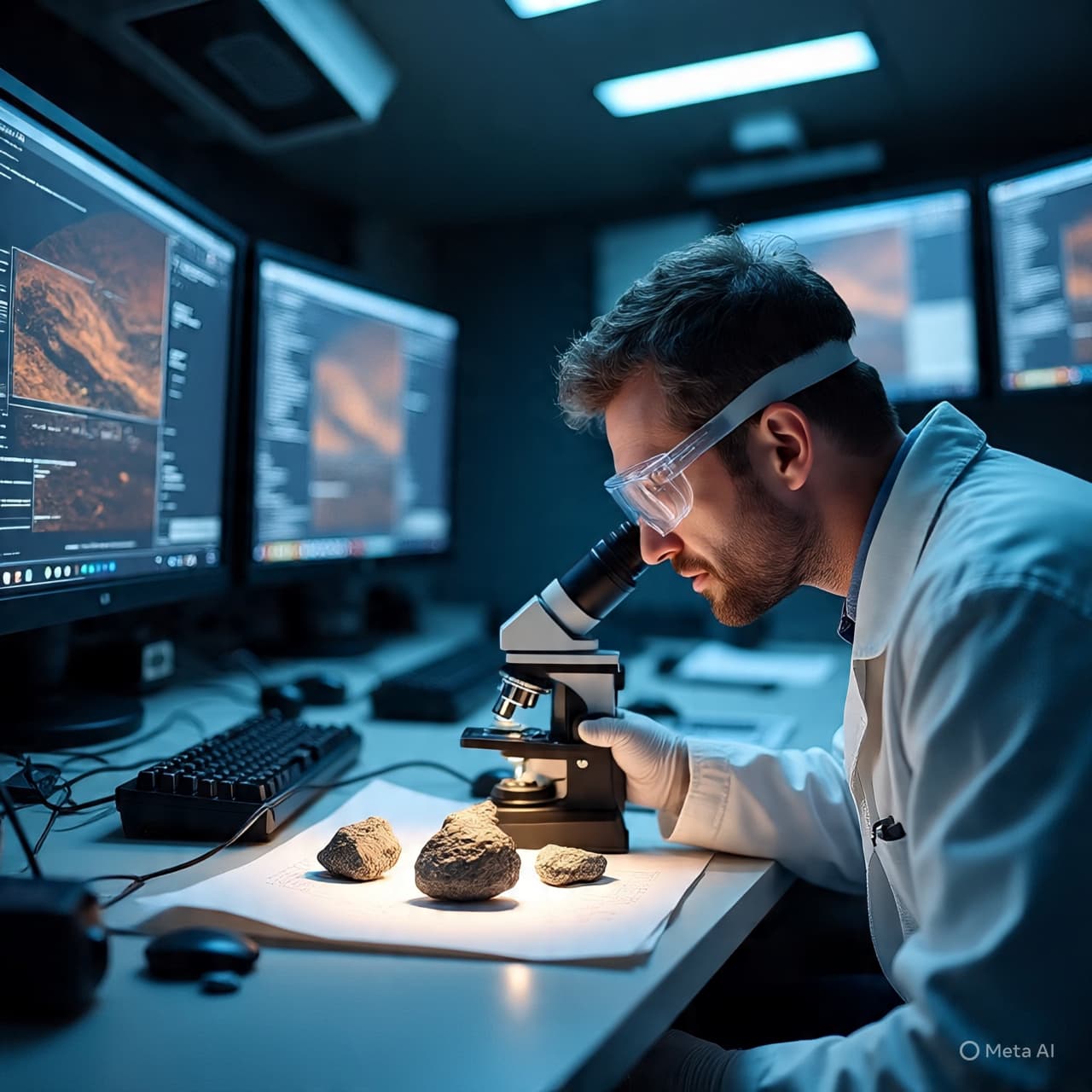
Edgar, who earned her doctorate in geology from the California Institute of Technology, spent years working with rover missions exploring Mars. These robotic explorers—moving slowly across distant terrain—sent back images and data that scientists interpreted from control rooms on Earth. Over time, she helped guide geological investigations on the Martian surface, contributing to efforts to understand how the planet once changed and whether it may have hosted environments capable of supporting life.
Before her selection as an astronaut candidate, Edgar also worked as a research geologist with the U.S. Geological Survey, studying planetary landscapes through both remote sensing and fieldwork in environments that resemble conditions on other worlds—places like Iceland, Antarctica, and the deserts of the American Southwest. These locations serve as analog landscapes, where scientists practice the observational skills that might one day be used on the Moon or Mars.
In 2025, she became one of ten individuals selected for NASA’s newest astronaut candidate class, chosen from more than 8,000 applicants. The selection marked the beginning of an intensive training period lasting about two years, after which candidates become eligible for assignments on future missions to low Earth orbit, the Moon, or potentially Mars.
Her background in geology reflects a growing emphasis within space exploration. As missions return to the Moon and look toward Mars, astronauts are increasingly expected to act as field scientists—observing landscapes, collecting samples, and making decisions in environments where every moment carries both scientific opportunity and operational risk.
For Edgar, those skills were shaped through years of studying how planetary surfaces evolve. During her research career she worked on teams connected to missions such as the Mars Exploration Rovers and the Mars Science Laboratory, where scientists analyze the chemistry and structure of Martian rocks in search of clues about the planet’s past habitability.
More recently, she helped define geological objectives for Artemis III, a planned mission that aims to return humans to the Moon’s surface, particularly the scientifically intriguing region near the lunar south pole. There, researchers hope to study ancient lunar terrain and investigate the presence of water ice that could support longer-term exploration.
Fieldwork on Earth offers some preparation for these ambitions. Teams working in remote environments learn how to observe quickly, prioritize samples, and operate with limited resources—conditions that mirror the realities of exploration beyond the planet.
Yet space adds its own complexities. Geological work on the Moon or Mars must be planned carefully long before astronauts arrive, with each excursion mapped in advance. Time is limited, equipment is constrained, and every observation must contribute to broader scientific goals.
Still, the underlying curiosity remains the same: to understand how worlds form and change.
For scientists like Edgar, the journey from studying rocks on Earth to preparing for orbital flight reflects the evolving relationship between geology and space exploration. In the coming years, astronaut candidates such as Edgar will continue training for missions that could support research in orbit, on the lunar surface, or in future expeditions deeper into the solar system.
NASA selected Edgar in 2025 as part of a class of ten astronaut candidates who will undergo approximately two years of training before becoming eligible for assignment to future missions.
AI Image Disclaimer
These illustrations were generated with AI and represent conceptual visualizations rather than real photographs.
Source Check
Credible coverage and/or primary reporting exist from: Caltech Space.com Dartmouth Alumni Magazine Time The Seattle Times NASA
Published by Banx Network. This article is part of the Banx decentralized media programme, powered by the BXE token on the XRP Ledger.