
In Bangladesh’s current political moment — shaped by mass protest, transition, and a much-anticipated election — one figure has quietly risen to the center of attention: Tarique Rahman, poised to become the country’s next prime minister. His story, like many in South Asian politics, carries echoes of family legacy, exile and return, and a nation seeking both change and continuity.
Born in Dhaka in the mid-1960s into a powerful political family, Tarique Rahman is the eldest son of two of Bangladesh’s most consequential leaders: Ziaur Rahman, a former president and army chief, and Khaleda Zia, one of the country’s most prominent prime ministers. His upbringing was steeped in politics, and his early participation in his party — the Bangladesh Nationalist Party — reflected both familial influence and political ambition.
For much of the early 2000s, Rahman was a key strategist and influential figure within the BNP, especially during coalition governments when his mother led the country. Critics sometimes dubbed him the “dark prince,” referring to his role as a powerful behind-the-scenes operator, even as he did not hold formal office. Allegations of corruption, cronyism and political violence accompanied his rise, and he was implicated in several legal cases during periods when his party was out of power — convictions that his supporters said were politically motivated.
That turbulence culminated in his departure from Bangladesh in 2008. Citing politically charged prosecutions and for medical treatment, he went into self-imposed exile in London, where he would spend nearly 17 years away from domestic politics.
The political landscape he left behind was dominated by Bangladesh’s other major political dynasty, led by Sheikh Hasina. After decades of rivalry between the BNP and Hasina’s Awami League, a youth-led uprising in 2024 brought dramatic change. Hasina’s long rule was toppled, and in the aftermath the BNP found itself resurgent in a transitional political context.
Rahman’s return to Bangladesh in December 2025 was a symbolic turning point. He arrived to cheering crowds and quickly took formal leadership of the BNP following his mother’s death, consolidating his position as the party’s chairman. In the 2026 general election, the BNP secured a sweeping majority, paving the way for Rahman’s likely appointment as prime minister. He personally won seats in multiple constituencies, underscoring both his personal appeal and the party’s organizational strength.
In speeches since his return, Rahman has presented himself as a leader focused on reform, stability and economic renewal, seeking to transcend the bitter polarization of past decades. He has pledged to combat corruption, broaden economic opportunity beyond garment exports, and strengthen democratic institutions — even proposing term limits for future prime ministers to guard against entrenched power.
As Bangladesh stands on the threshold of this new chapter, Tarique Rahman represents both continuity with a powerful political tradition and a possible pivot toward a less fractious future. A long absence, a storied return and a mandate from voters have positioned him not merely as son of a dynasty, but as a central figure in Bangladesh’s evolving democracy.
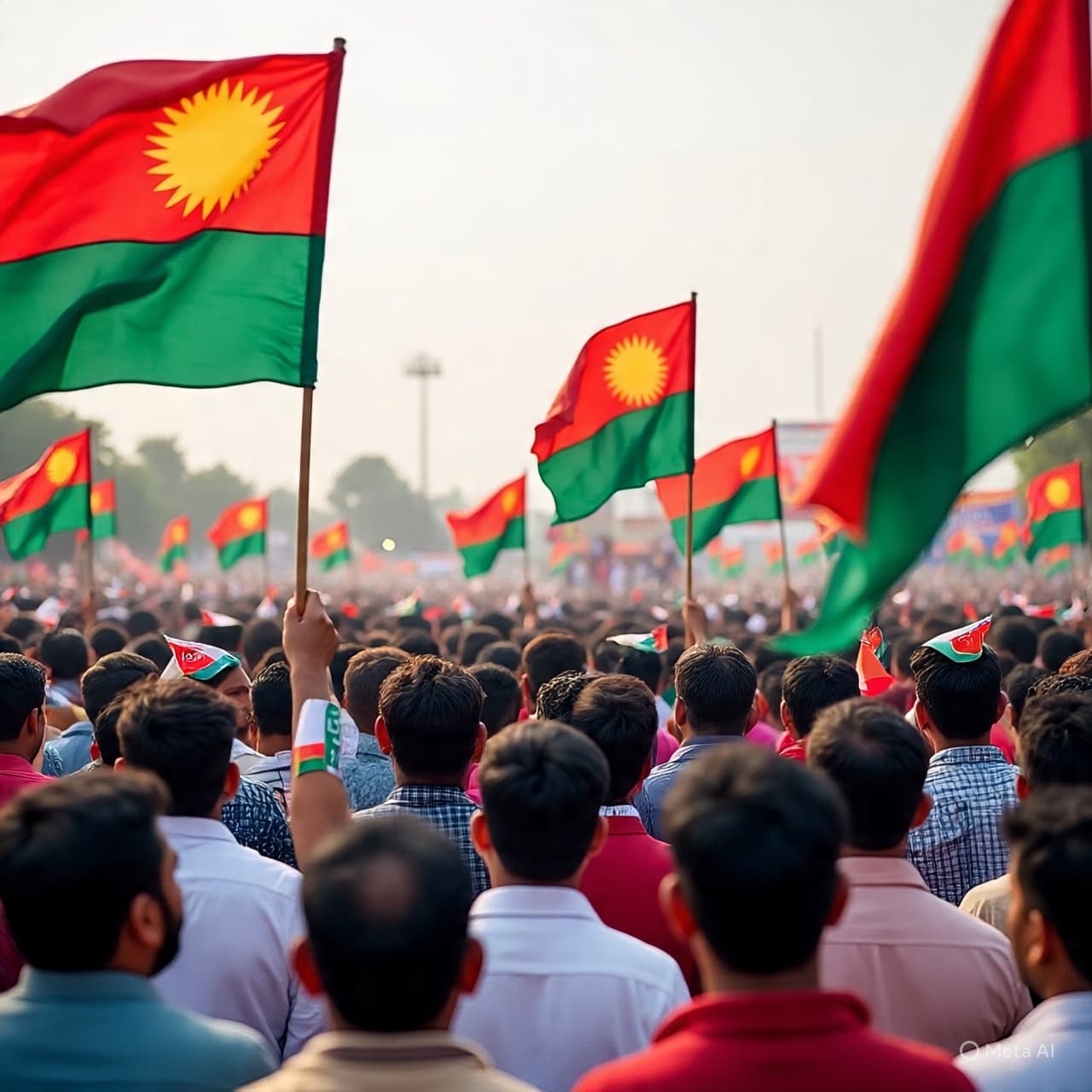
AI Image Disclaimer Visuals are created with AI tools and are not real photographs.
SOURCE CHECK — major credible reporting on this subject comes from:
Reuters The Guardian Al Jazeera Associated Press Financial Times
Published by Banx Network. This article is part of the Banx decentralized media programme, powered by the BXE token on the XRP Ledger.
.jpg&w=3840&q=75 "US Declares Drought Disaster for Parts of Puerto Rico as Dry Conditions Persist")
