In the humble hours between sunrise and midday on a chilly February morning, a slender shaft of fire carved its way skyward, bearing dreams that have long danced on the edge of human imagination. As if in a timeless ballet rehearsed for generations, metal and will joined in harmony to coax four souls from Earth’s embrace toward the silent promise of orbit — reminding us that our tether to the heavens is as much emotional as it is physical.
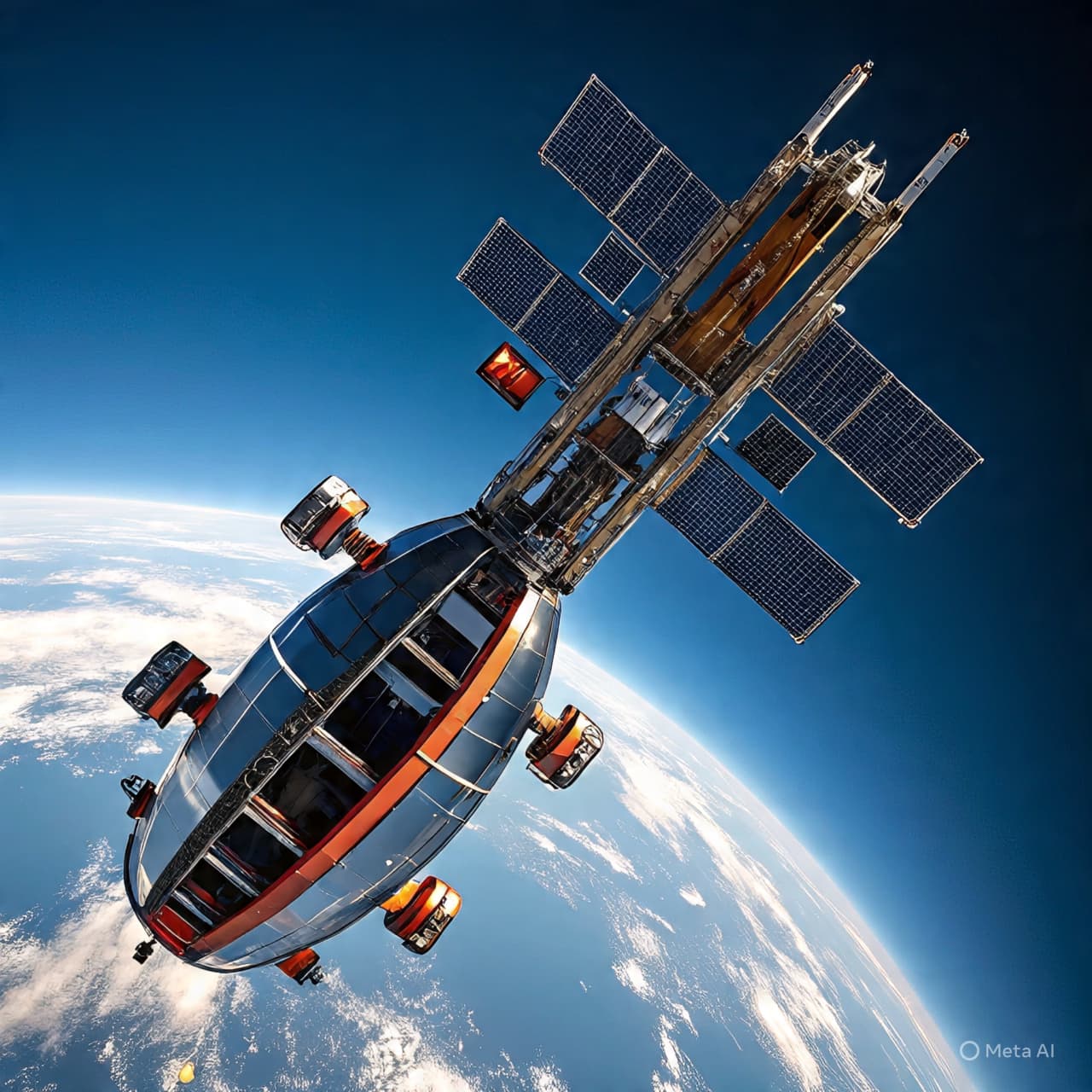
The mission, known as SpaceX’s Crew‑12, delivered its quartet of explorers aboard the Crew Dragon spacecraft Freedom to the International Space Station. Lift‑off from Florida’s Cape Canaveral unfolded without fanfare, yet carried with it the earnest aspirations of engineers, scientists, family members, and curious onlookers alike. After a roughly thirty‑four‑hour voyage through the velvet gulf of space, SpaceX’s Dragon capsule met its celestial partner in a delicate union the afternoon of February 14, 2026, restoring the station’s full complement of crew members and reopening the chapter of joint exploration that had briefly quieted.
Inside that gleaming orbital laboratory, familiar faces awaiting the newcomers offered welcoming gestures that weren’t merely procedural but deeply human. Spaceflight, though forged in equations and engineering plans, remains a profoundly personal venture; the exchange of greetings and shared smiles through airlocks reflected that truth. On board, NASA astronauts Jessica Meir and Jack Hathaway, European Space Agency astronaut Sophie Adenot, and Roscosmos cosmonaut Andrey Fedyaev will live and work alongside Expedition 74 crew members for the coming eight months, extending humanity’s collaborative presence in low Earth orbit.
Their tasks are many: conducting experiments that probe life’s responses to microgravity, maintaining the station’s intricate systems, and quietly preparing insights that may one day guide journeys beyond Earth’s gentle pull. The station itself, a steel‑and‑glass testament to international cooperation, has weathered its own share of challenges this year — including a rare medical evacuation — yet continues to serve as a crucible where science and spirit converge.
And as Freedom nestled into its berth on Valentine’s Day, the moment held a resonance that transcended calendars. It spoke of human curiosity unfettered by distance, of quiet persistence over fear, of a future that beckons — not as an abstract ideal but as a lived reality through these explorers’ hands and hopes.
In the end, that union high above our blue sphere was more than a technical achievement. It was a gentle reminder that, no matter how far we travel, the grasses under our feet, the oceans we cherish, and the skies we gaze upon remain part of the same story we write among the stars.
AI Image Disclaimer Visuals are created with AI tools and are not real photographs.
Sources:
Associated Press (AP) UPI Reuters CBS News Space.com
Published by Banx Network. This article is part of the Banx decentralized media programme, powered by the BXE token on the XRP Ledger.