High above the turning Earth, where night and day pass across metal and solar glass in measured intervals, departures unfold without noise. There is no roar in orbit, no plume of fire against the sky. Instead, there is procedure — deliberate and practiced — and the slow widening of distance between two machines that have shared a single horizon.
The HTV-X1 spacecraft, Japan’s next-generation cargo vehicle, is preparing to depart the International Space Station after completing its first mission. For months, it has remained berthed to the Harmony module, delivering supplies, experiments, and hardware to the orbiting laboratory. Now, its work at the station nears transition.
Developed by the Japan Aerospace Exploration Agency (JAXA), HTV-X1 represents an evolution of Japan’s earlier H-II Transfer Vehicle series. Launched in 2025, it carried thousands of pounds of equipment and research materials for NASA and its international partners. The spacecraft was designed not only for resupply but also for greater flexibility and technological advancement compared to its predecessors.
The departure sequence is careful and choreographed. Using the station’s Canadarm2 robotic arm, flight controllers will detach HTV-X1 from its berthing port on the Earth-facing side of the Harmony module. Astronauts aboard the station monitor systems as ground teams guide the spacecraft through each step. Once released, it will drift slowly away, guided by precise thruster firings that increase separation distance before it resumes independent flight.
Unlike some visiting vehicles that quickly reenter Earth’s atmosphere, HTV-X1 is expected to remain in orbit for an extended period following its departure. During this phase, it will conduct additional demonstrations and experiments, testing technologies that may shape future cargo and exploration missions. Only later will the spacecraft be commanded to reenter, where it will burn up safely over a remote stretch of the Pacific Ocean, disposing of station waste carried inside.
The International Space Station continues its steady rhythm of arrivals and departures — capsules, freighters, crew vehicles — each movement part of a larger choreography that has unfolded for more than two decades. Solar arrays tilt toward the Sun. Modules hum with life-support systems and research activity. And periodically, a visiting craft releases its grip and eases into the wider dark.
HTV-X1’s unberthing is scheduled for March 6, with live coverage planned by NASA and JAXA. The operation will mark the conclusion of its first docking at the station and the beginning of its next orbital phase.
In the quiet of low Earth orbit, separation is simply another form of motion. The station remains. The spacecraft moves on. And above the blue curve of the planet, the exchange continues.
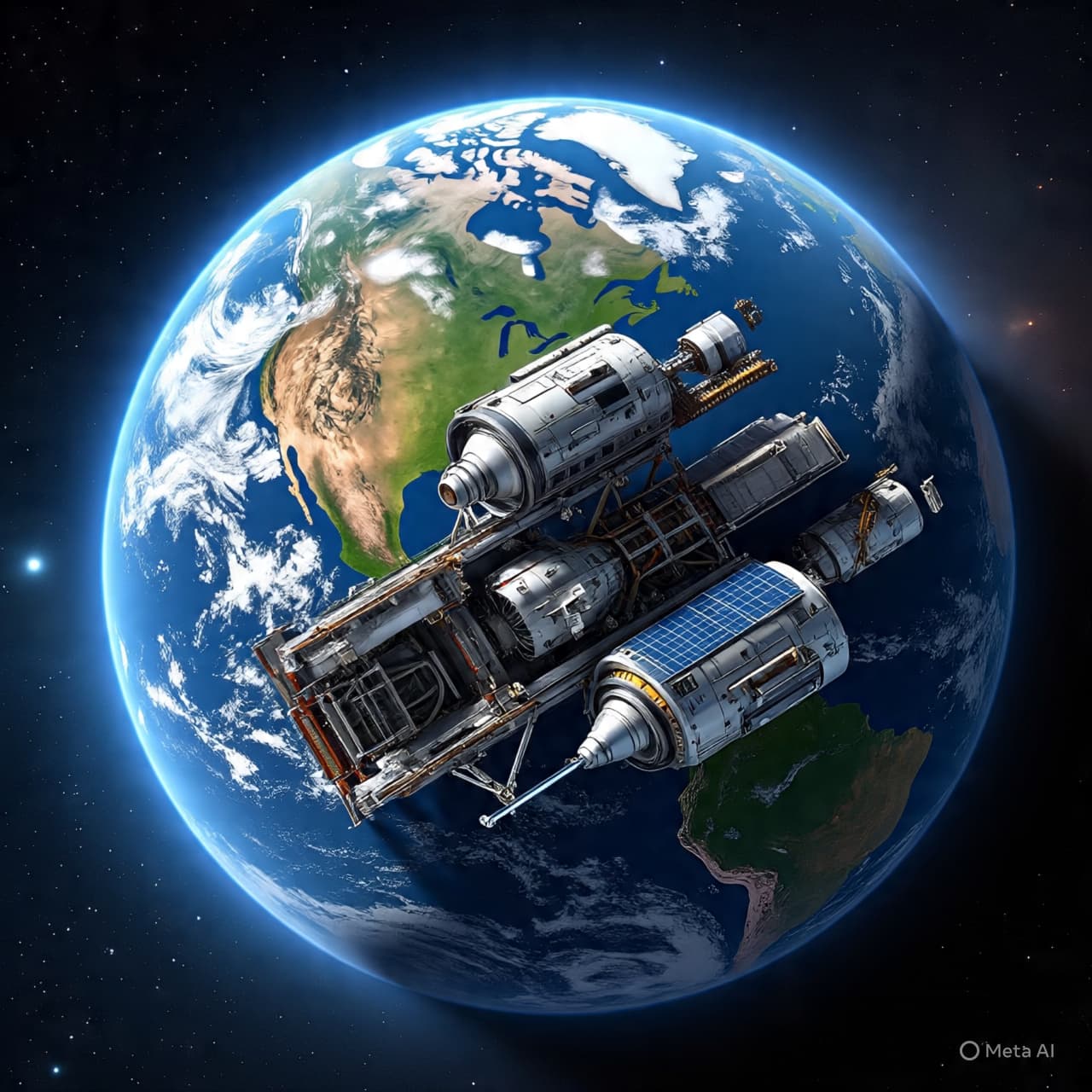
AI Image Disclaimer Visuals are AI-generated and serve as conceptual representations.
Sources (Media Names Only) NASA JAXA Space.com Associated Press Spaceflight Now
Published by Banx Network. This article is part of the Banx decentralized media programme, powered by the BXE token on the XRP Ledger.