
Key Highlights
- Recent Earthquake:A powerful earthquake struck near the Kamchatka Peninsula, prompting scientific investigation.
- Hidden Tsunami Waves:Researchers identified subtle tsunami waves using satellite data, revealing new insights into seismic activity.
- Enhanced Understanding:The findings improve models of tsunami generation and energy distribution following underwater earthquakes.
[Understanding Ocean Movements]
Far from shore, where the ocean appears unbroken and still, movement can pass without notice. The surface may seem calm, stretching outward in a quiet expanse, yet beneath that calm, energy travels—subtle, dispersed, and often invisible to those who stand at the edge of land. Waves form and fade, not always rising into crests, not always announcing their presence in ways the eye can follow.
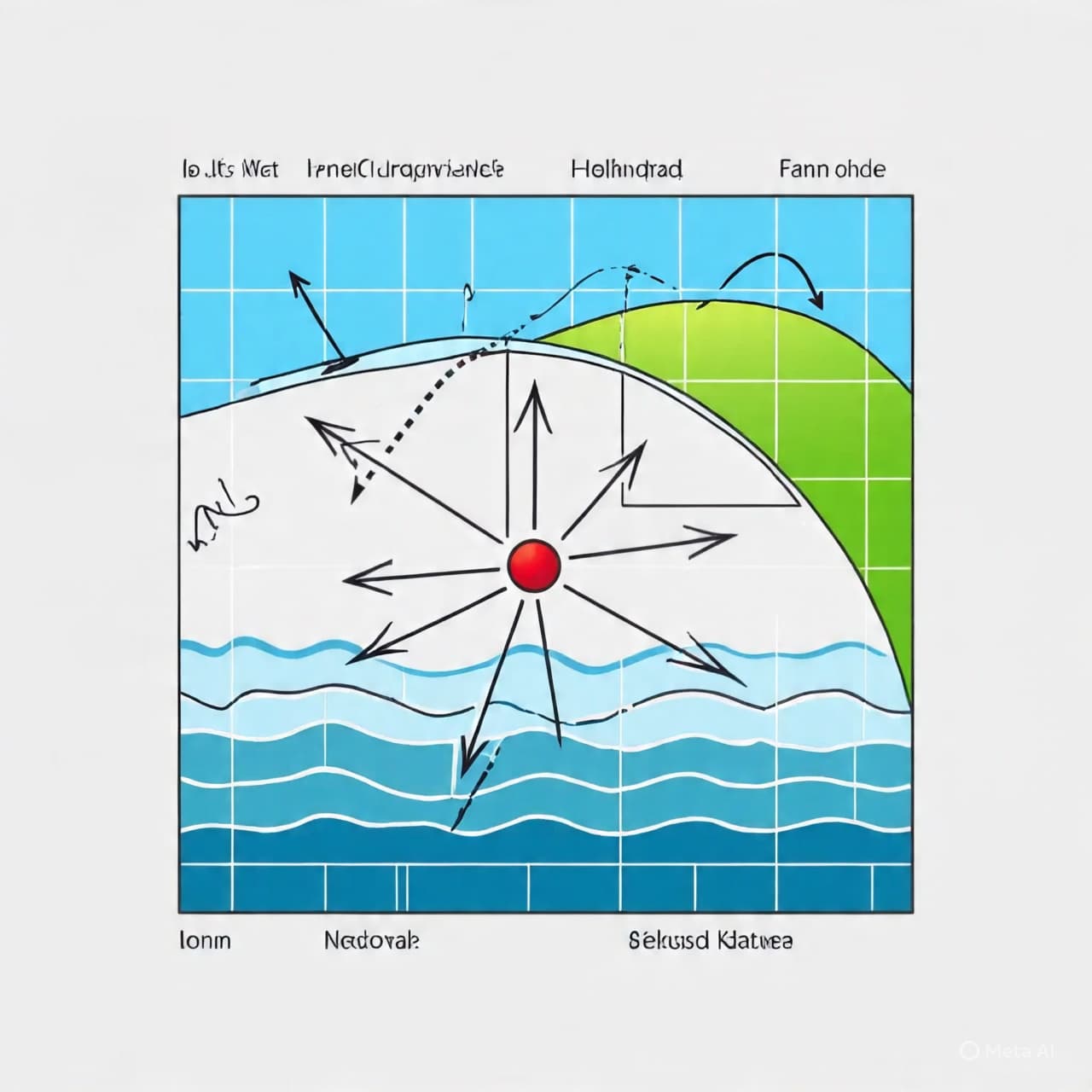
In the aftermath of a powerful earthquake near the Kamchatka Peninsula, scientists turned their attention not only to the seismic signals within the Earth but also to the faint disturbances spreading across the sea. Using satellite data, they identified what are known as “hidden” tsunami waves—long, low undulations that travel across vast distances without forming the dramatic walls of water often associated with tsunamis. These waves are not absent, only understated.
Unlike coastal surges that rise sharply as they approach land, tsunami waves in the open ocean can pass almost unnoticed, their energy distributed across lengths that stretch for kilometers, with heights that may measure only a few centimeters. Yet within these small variations lies a record of the event that set them in motion. By tracking these subtle changes in sea surface height from space, researchers were able to trace the movement of the waves back to their origin. The data offered a new perspective on the earthquake itself, helping to clarify how energy was released beneath the seafloor and how it propagated outward through the ocean.
[Technical Insights]
The process is both technical and interpretive. Satellites measure minute differences in the height of the ocean surface, detecting patterns that would be impossible to observe directly across such distances. These measurements, when assembled over time, reveal the passage of waves that carry the imprint of the seismic event. In doing so, they provide an additional layer of understanding, complementing traditional ground-based observations.
For earthquakes that occur beneath the ocean, this perspective is particularly valuable. Seismic instruments record the movement of the Earth, but the ocean reflects how that movement translates into waves that travel far beyond the epicenter. By observing both, scientists can refine their models of how earthquakes generate tsunamis, improving the ability to identify their sources and assess their potential impact.
The Kamchatka event, in this sense, becomes more than a single moment of rupture. It becomes a pattern traced across water, extending outward in ways that are quiet, continuous, and measurable only through careful attention. There is a certain stillness in this kind of observation. From orbit, the ocean does not reveal its secrets easily. It requires instruments that can detect differences too small for the human eye, and methods that can interpret motion without spectacle. What emerges is not a dramatic image, but a layered understanding—one that recognizes that even the most powerful events can leave traces that are almost invisible.
[Scientific Findings]
Scientists report that satellite altimetry data captured subtle tsunami wave signatures following the Kamchatka earthquake, allowing researchers to reconstruct aspects of the quake’s source and energy distribution. The findings demonstrate how space-based observations can enhance the study of undersea earthquakes and tsunami behavior. This innovative approach not only aids in understanding past events but also prepares scientists for future seismic activity, potentially saving lives through improved tsunami warning systems.
Published by Banx Network. This article is part of the Banx decentralized media programme, powered by the BXE token on the XRP Ledger.



