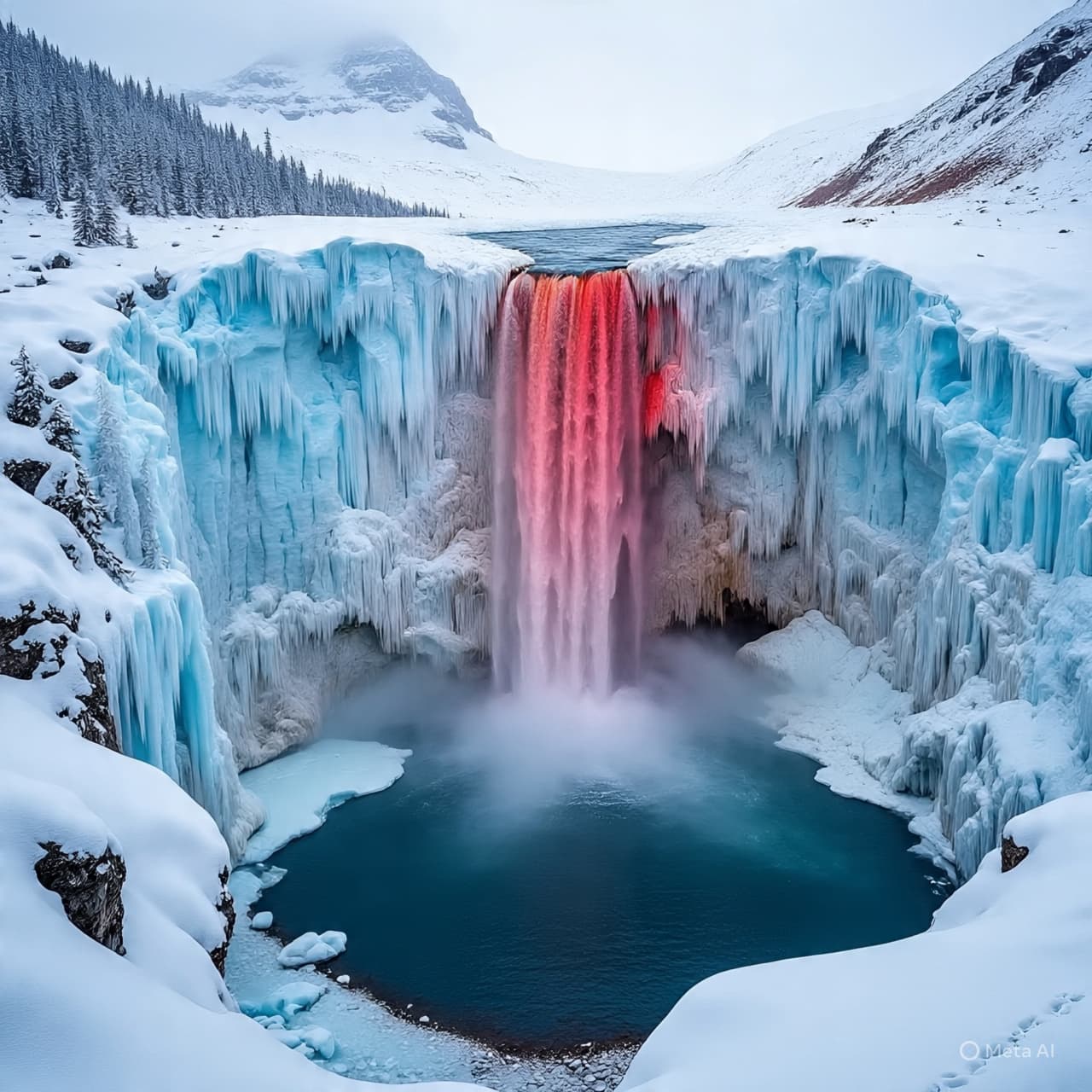
In the stark white expanse of Antarctica’s frozen frontier, there’s a place where the ice seems to weep dark red — a cascade that looks as though the glacier itself is bleeding. This place, known as Blood Falls, is a curious natural spectacle at the edge of Taylor Glacier in the McMurdo Dry Valleys. For more than a century, explorers and scientists have been mesmerized by this eerie waterfall, and only now are the full reasons behind its ominous color coming into focus.
At first glance, Blood Falls evokes visions of blood smeared on snow, but the truth is rooted in geology and chemistry rather than living flesh. Beneath the glacier lies a vast reservoir of ancient, highly salty water, thought to have been sealed off when the Antarctic Ocean once covered the valleys. The intense salinity — much higher than that of ocean water — prevents this brine from freezing even in the extreme cold.
What gives the water its dramatic red hue is iron. The subglacial brine is rich in dissolved iron ions. When this water finally squeezes up through tiny cracks at the glacier’s edge and meets the air, the iron reacts with oxygen in a process similar to the rusting of metal. This oxidation transforms the iron into iron oxides — compounds that are unmistakably red — painting the outflow and surrounding ice with rusty tones.
Recent research has also provided a better understanding of how the brine makes its way to the surface. Long‑term monitoring of the glacier’s movement, temperature and ice deformation shows that pressure changes underneath the ice, caused by the glacier’s weight and seasonal shifts, can rupture sealed channels and trigger bursts of this iron‑rich water. Each burst sends fresh tinges of crimson into the icy landscape.
This dramatic display isn’t just a visual oddity — it represents a rare glimpse into a hidden ecosystem sealed away for millennia, a chemical laboratory beneath a glacier that hints at how life and minerals can endure in extreme isolation. While the striking coloration may appear bleak, the science beneath it tells a story of chemistry, time, and the slow seep of ancient waters emerging to meet the Antarctic air.
AI Image Disclaimer “Visuals are created with AI tools and are not real photographs.”
Sources Gizmodo — Why This Part of Antarctica Bleeds Blood Red Polar Journal — Blood Falls: The Blood‑Red Secret of Antarctica Economic Times/Science — Antarctica’s Red Waterfall Isn’t Blood Indian Defence Review — Scientists Finally Discover What’s Behind Blood Falls Futura‑Sciences — Antarctica’s Blood Falls Explained Scientifically
Published by Banx Network. This article is part of the Banx decentralized media programme, powered by the BXE token on the XRP Ledger.