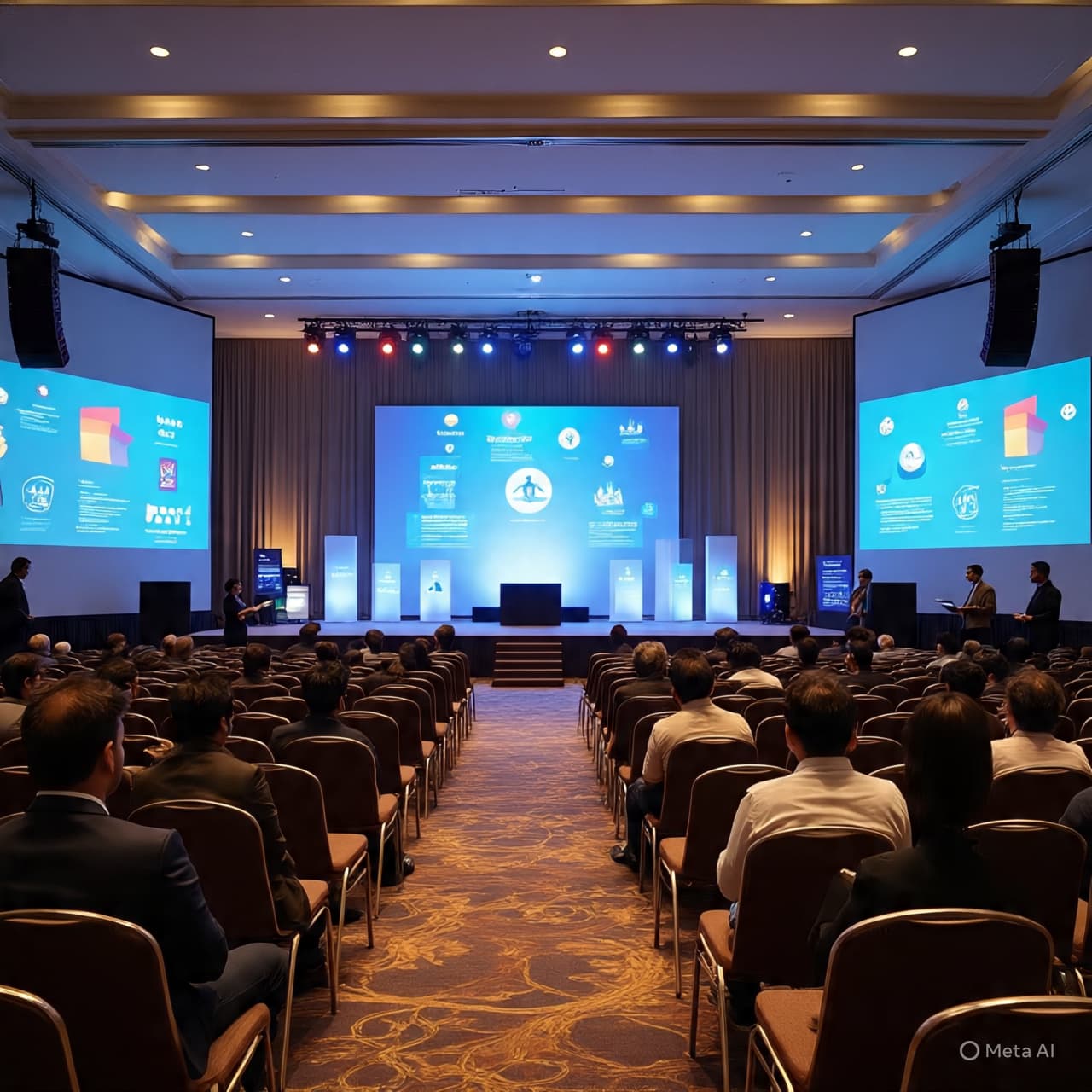
When nations gather to discuss artificial intelligence, the conversation often feels like a glimpse into tomorrow. In New Delhi this week, that tomorrow seemed almost tangible — not as a distant promise, but as a living dialogue unfolding in conference halls, policy briefings, and quiet diplomatic exchanges. The India AI Impact Summit 2026 has become more than a technology forum; it is a mirror reflecting how India sees its role in a rapidly shifting digital world.
Prime Minister Narendra Modi opened the summit with a vision framed not merely in lines of code, but in human potential. He described artificial intelligence as a tool that must remain accessible, affordable, and anchored in democratic values. India, he suggested, does not seek dominance in AI for its own sake, but leadership that includes the Global South — a voice for nations often spoken about, but not always heard. His remarks positioned India as both innovator and mediator in a technology race increasingly shaped by geopolitics.
Healthcare emerged as one of the summit’s most tangible arenas of progress. Union Health Minister Jagat Prakash Nadda unveiled the Benchmarking Open Data Platform for Health, designed to enable AI model training while preserving patient privacy. The platform signals a careful balance: innovation without intrusion, progress without sacrificing personal dignity. In a country where scale is both strength and challenge, such systems could reshape how medical research and diagnostics unfold.
Education, too, found itself at the center of reflection. University leaders and policymakers spoke of transformation — curricula adapting to machine learning, classrooms integrating computational thinking, institutions reimagining themselves for an AI-driven century. The tone was less about disruption and more about evolution, as if India’s academic landscape were quietly stretching to meet a horizon that keeps expanding.
The summit’s global character was unmistakable. António Guterres, Secretary-General of the United Nations, called for inclusive AI governance, urging that technological progress must not widen inequality or concentrate unchecked power. His message resonated within a gathering that seeks to frame AI not only as an economic engine, but as a shared global responsibility.
Yet alongside ambition came reminders of complexity. The IndiaAI Mission issued warnings about phishing attempts targeting summit participants — a quiet indication that even conversations about digital trust must contend with digital risk. Meanwhile, outside the halls of discussion, a protest led by Uday Bhanu Chib of the Indian Youth Congress resulted in brief detention, underscoring how technology gatherings can intersect with domestic political currents.
Logistically, the scale of the event was visible across the capital. Indira Gandhi International Airport recorded an exceptional surge in aircraft movements, reflecting the presence of global executives, policymakers, and researchers converging on the city. The traffic in the skies mirrored the intensity of ideas exchanged on the ground.
Throughout the summit, a consistent theme emerged: India is not merely adopting artificial intelligence — it is attempting to shape its ethical and developmental contours. The discussions moved between technical frameworks and philosophical questions, between data infrastructure and democratic safeguards. If AI is often described as the engine of the future, New Delhi this week felt like a drafting room where that engine’s blueprint is being debated.
As the summit draws toward its conclusion, the announcements remain measured but meaningful: expanded infrastructure, health-tech platforms, educational commitments, and a call for inclusive governance. No dramatic declarations reshaped global markets overnight. Instead, the event offered something steadier — a statement that India intends to be present, principled, and proactive in the unfolding AI era.
AI Image Disclaimer Illustrations were produced with AI and serve as conceptual depictions.
Source Check (Credible Media Identified): Reuters Associated Press The Times of India The Hindu BBC News
Published by Banx Network. This article is part of the Banx decentralized media programme, powered by the BXE token on the XRP Ledger.