

Key Highlights
- Proposal:Indonesia's government is exploring remote work to reduce fuel consumption.
- Context:Rising global oil prices and economic uncertainty prompt this discussion.
- Historical Insight:The pandemic's impact on commuting patterns is a key consideration.
In the rhythm of modern cities, mornings often begin with engines awakening. Streets hum with movement, fuel flowing invisibly through the arteries of daily life. Cars glide through avenues, buses carry quiet conversations, and motorcycles weave through narrow lanes like swift fish in a crowded stream. Energy—particularly fuel—becomes the silent companion of this choreography. Yet sometimes, from far beyond a nation’s shores, winds of uncertainty begin to ripple across that rhythm.
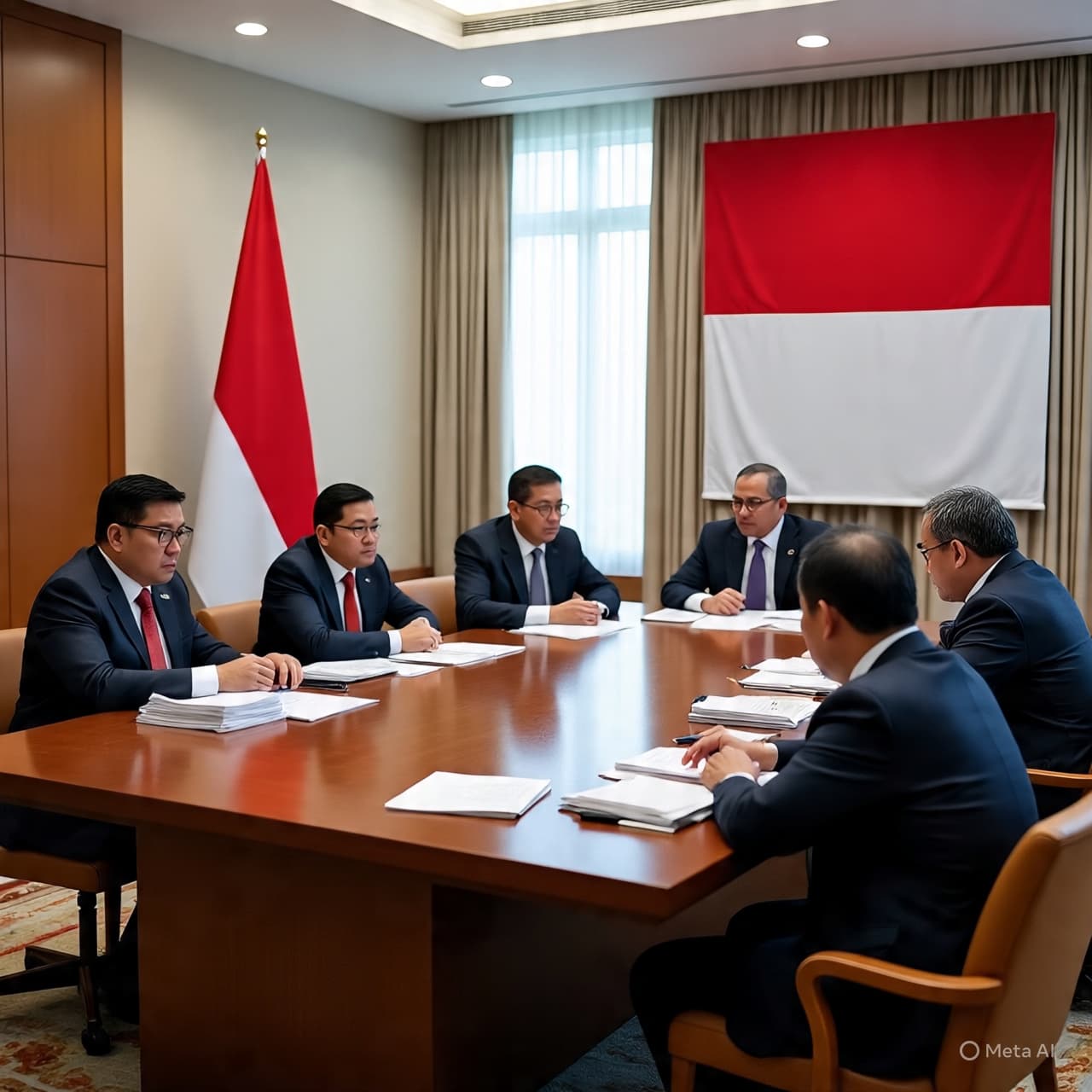
Recently, those distant winds have stirred conversations within the halls of governance in Indonesia. During a cabinet meeting, President Prabowo Subianto asked his ministers to examine possible measures aimed at reducing fuel consumption. Among the ideas raised was a familiar practice that once reshaped working life during extraordinary times: work from home.
The suggestion arrived not as an immediate directive, but as a request for careful study. Global energy markets have shown signs of volatility, influenced by geopolitical tensions and fluctuating oil prices. In such conditions, governments often look for ways to cushion domestic economies against potential shocks. For Indonesia, a nation with vast geography and an ever-moving population, fuel consumption remains closely tied to everyday mobility.
From the president’s perspective, the lesson of recent years still lingers. During the pandemic era, remote work briefly transformed the country’s commuting patterns. Offices fell quieter, roads less crowded, and energy demand shifted in subtle but measurable ways. That memory now returns as a point of reflection: could similar adjustments help reduce fuel use if global pressures intensify?
In cabinet discussions, ministers were encouraged to explore various scenarios. One possibility is the selective implementation of work-from-home arrangements for civil servants. Another involves examining alternative working patterns, including adjustments to office attendance schedules. Each scenario, however, remains at the stage of evaluation rather than policy.
The broader context behind the discussion is a world economy navigating uncertain terrain. Rising oil prices, often influenced by international conflict or supply disruptions, can ripple into domestic inflation and public spending. Governments frequently respond by balancing economic stability with practical measures to manage demand. For Indonesia, maintaining energy resilience while protecting economic growth remains a delicate equation.
Fuel, after all, is more than a commodity; it is the quiet engine behind logistics, transportation, and daily productivity. When its cost or availability shifts, the effects can be felt far beyond gas stations—touching supply chains, food prices, and household budgets.
Within this landscape, the proposal to revisit remote work is less about returning to past routines and more about preparing for uncertain possibilities. By asking ministers to study the idea, the administration signals an intention to anticipate rather than react. The goal, it seems, is not merely conservation but readiness.
For now, the discussion remains a policy exploration rather than a finalized program. The government is expected to review economic conditions, energy projections, and administrative feasibility before considering any broader implementation.
As global currents continue to shape the energy conversation, Indonesia’s response may unfold gradually—through analysis, coordination, and measured decisions. In the quiet deliberations of policymakers, the question lingers gently: how can a nation move forward while using less fuel along the way?
Published by Banx Network. This article is part of the Banx decentralized media programme, powered by the BXE token on the XRP Ledger.




