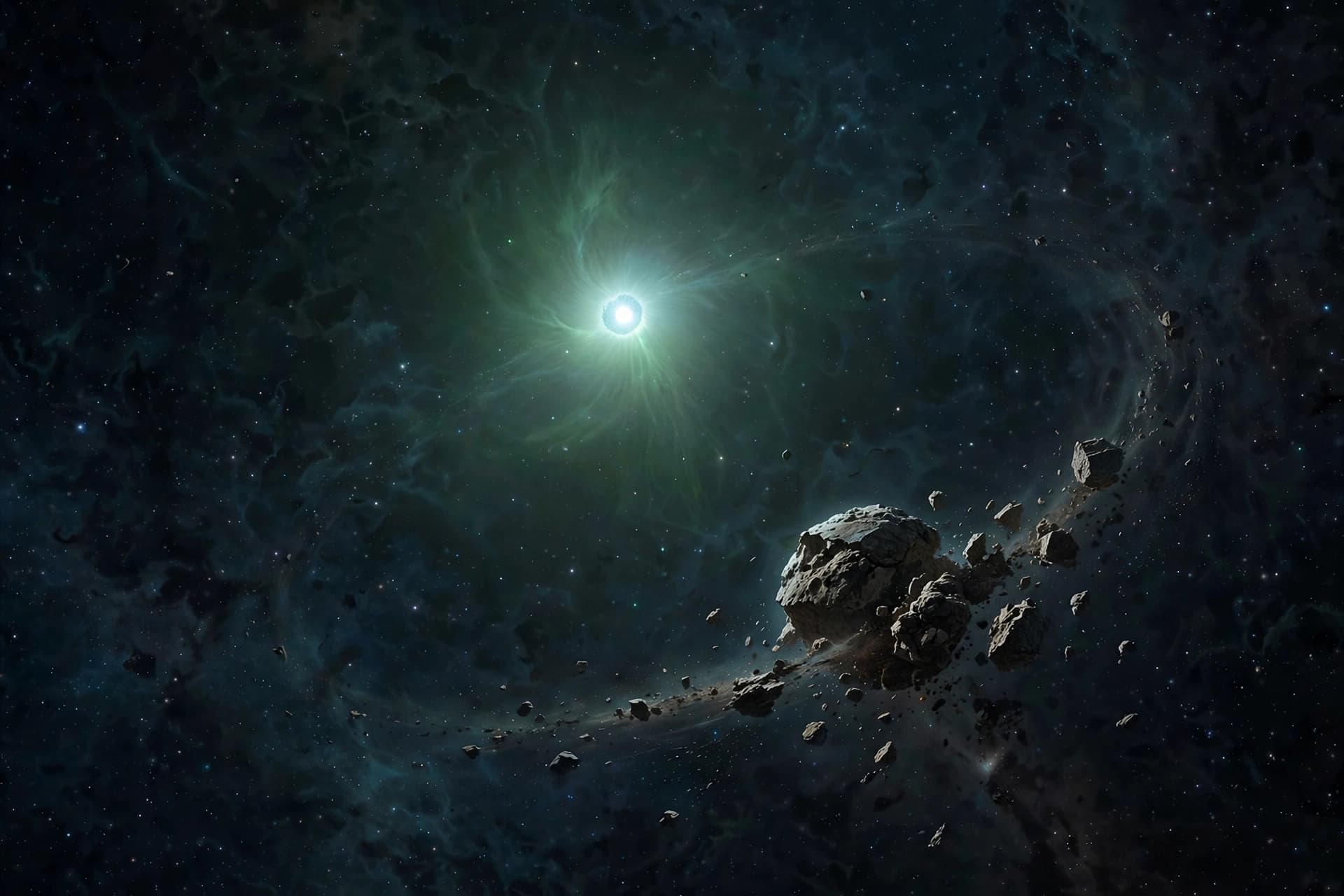
There are places in the universe where matter is pressed into forms almost beyond imagination. Far from Earth, long after massive stars have exhausted their nuclear fuel and collapsed under their own gravity, the remnants become objects so dense that a single teaspoon of their material would weigh billions of tons. These remnants are known as neutron stars, and they represent some of the most extreme environments known to physics.
Inside these compact stars, atomic nuclei are squeezed together under immense gravitational pressure. The familiar structure of atoms dissolves, leaving matter arranged in unfamiliar layers governed by forces that scientists are still working to understand. At the heart of this puzzle lies the nature of nuclear forces, the interactions that bind protons and neutrons inside atomic nuclei.
For decades, physicists have tried to describe these forces with increasingly sophisticated mathematical models. Yet the problem remains deeply complex. The equations that govern nuclear interactions are difficult to solve directly, and experimental measurements on Earth can only approximate the extreme conditions found inside neutron stars.
In recent years, however, a new source of information has begun to reshape the landscape of astrophysics. Observatories designed to detect gravitational waves—ripples in spacetime produced by violent cosmic events—have captured signals from the collisions of neutron stars. These cataclysmic mergers release enormous energy and provide a rare glimpse into the physics of ultra-dense matter.
The resulting data carries subtle signatures of the internal structure of neutron stars. As the stars spiral together and merge, the gravitational waves they emit encode information about how matter behaves at extreme density—information that can help researchers test competing theories of nuclear physics.
Yet interpreting these signals presents a formidable challenge. The data streams are vast and complex, and extracting meaningful patterns requires tools capable of navigating enormous parameter spaces.
This is where artificial intelligence enters the story.
Researchers have developed advanced machine learning systems that can analyze neutron star merger data and compare it with theoretical models of nuclear interactions. By training AI algorithms on simulated datasets and observational signals, scientists can accelerate the process of identifying which nuclear force models best match the behavior observed in gravitational wave events.
In effect, the AI becomes a bridge between astrophysical observation and fundamental physics. It sifts through patterns that might otherwise take years to evaluate, helping researchers narrow down the possibilities for how protons and neutrons interact under extreme pressure.
The approach reflects a broader transformation in modern science. As observational instruments generate ever-larger datasets—from particle accelerators to space telescopes—machine learning tools increasingly help scientists interpret the information embedded within them.
For neutron star physics, the benefits are especially significant. Because these objects represent natural laboratories for ultra-dense matter, understanding their internal structure may reveal insights that cannot be reproduced in terrestrial experiments.
The combination of astrophysical observations and artificial intelligence offers a new path toward that understanding.
Researchers report that AI-driven analysis of neutron star merger data can significantly accelerate the process of refining models of nuclear forces, bringing physicists closer to understanding how matter behaves under some of the most extreme conditions in the universe.
AI Image Disclaimer
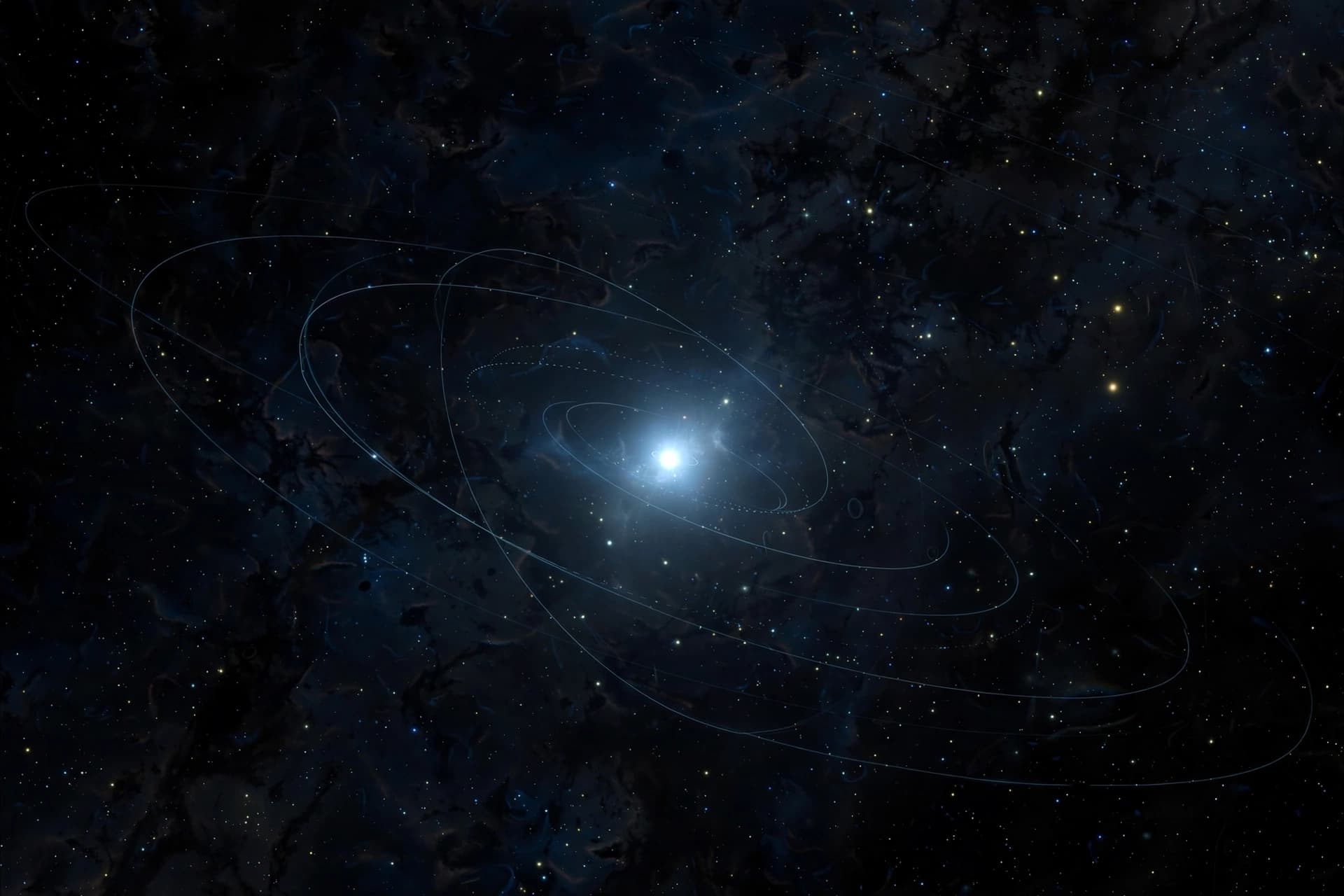
The accompanying visuals are AI-generated conceptual illustrations intended to represent astrophysical phenomena rather than actual telescope imagery.
Source Check
Credible coverage and/or primary reporting exist from: ScienceDaily Phys.org Nature Revie MIT Technology Review New Scientist
Published by Banx Network. This article is part of the Banx decentralized media programme, powered by the BXE token on the XRP Ledger.