In the muted light that drapes over Tehran’s rooftops before dawn, the city seems to inhale slowly, as though gathering its breath for the day’s bustle to come. In the heart of that ancient, sprawling place lies an institution whose presence is felt far beyond its walls, though the pathways to it remain often unseen, muffled by layers of ceremony and silence.
This is the Bayt‑e Rahbari — the Office of the Supreme Leader of Iran — known to some simply as the Bayt. Its name, rooted in a Persian word for “house,” belies the vast reach of influence that radiates from within. For decades, this office has been far more than a residence or a bureau for clerical statutes; it has been described by analysts as the hidden nerve center of the Islamic Republic, a place where decisions ripple outward through the structures of state, society, and security.
The Supreme Leader, Ayatollah Ali Hosseini Khamenei, may not always be visible in public view, especially of late, yet the office he inhabits has grown into an intricate network that extends into the most consequential realms of governance. According to a recent study by United Against Nuclear Iran, the Bayt encompasses a tight core of roughly 4,000 personnel and a broader constellation of some 40,000 affiliated figures embedded across government ministries, the military, economic enterprises, and clerical institutions. Within this architecture, each thread is woven with careful deliberation, ensuring that doctrine and policy remain aligned with the leader’s authority even as public appearances ebb and flow.
To walk through the Bayt is to trace an invisible line through Iran’s contemporary history. Born shortly after Khamenei assumed the mantle of supreme leadership in 1989, the institution grew from chambers filled with clerical advisers into a vast apparatus that bears upon every major organ of the state. Military promotions, strategic directives, cultural policies, and even the contours of religious education are said to pass through or be shaped by its channels. The office does not merely issue instructions; it cultivates loyalty, embeds personnel in ministries and councils, and binds disparate facets of authority into a single formation that resonates with a singular purpose.
Yet for all its breadth, the Bayt’s influence thrives in contradiction — both visible and hidden, declared in doctrine but concealed in its mechanisms. It reaches into seminaries and universities, into economic foundations and media organs, extending the leader’s imprint without always stepping into the broader spotlight. In this sense, the Bayt operates much like a subterranean current, shaping the surface tides without fanfare. Observers note that its role persists even in moments when Khamenei’s own physical presence recedes, testament to a structure engineered to sustain continuity beyond a single individual’s gaze.
Those who study the architecture of power in Tehran speak of the Bayt not as a simple office, but as the center of a state within the state. Its reach into the Revolutionary Guard Corps — itself a potent force in Iranian political life — and its embedding of loyalists in key ministries and councils suggest a cohesion of authority that can outlast episodic changes in personnel or public visibility. In such a setting, shifts in policy or posture are less the result of transient winds than of currents deep and constant, guided by a core that remains largely undisturbed by passing attention.
Walking those corridors, one might hear not the clang of public debate but the steady rustle of pages, the hushed utterances of advisement, and the measured cadence of deliberation. This is power in motion, subtle but sustained, not always broadcast but deeply felt. The Bayt shapes the formal and informal architecture of governance, pulling at strings that both bind and direct the republic’s myriad institutions.
Regardless of the debates it stirs among scholars or policymakers abroad, within Iran it remains a quiet presence — at once foundational and elusive. In the end, the Bayt’s role is a reminder that in every polity, the surface of public life can conceal a depth of unseen force, and that the seat of authority may rest not merely in a singular figure but in the webs of connection that uphold it.
According to reporting and recent analyses, the Bayt‑e Rahbari, the Office of the Supreme Leader of Iran, functions as a comprehensive institutional network extending into the country’s military, political, economic, and cultural institutions. The office ensures continuity of authority and decision‑making even when the Supreme Leader’s public profile changes, sustaining long‑standing influence over Iran’s formal structures of state power.
AI Image Disclaimer
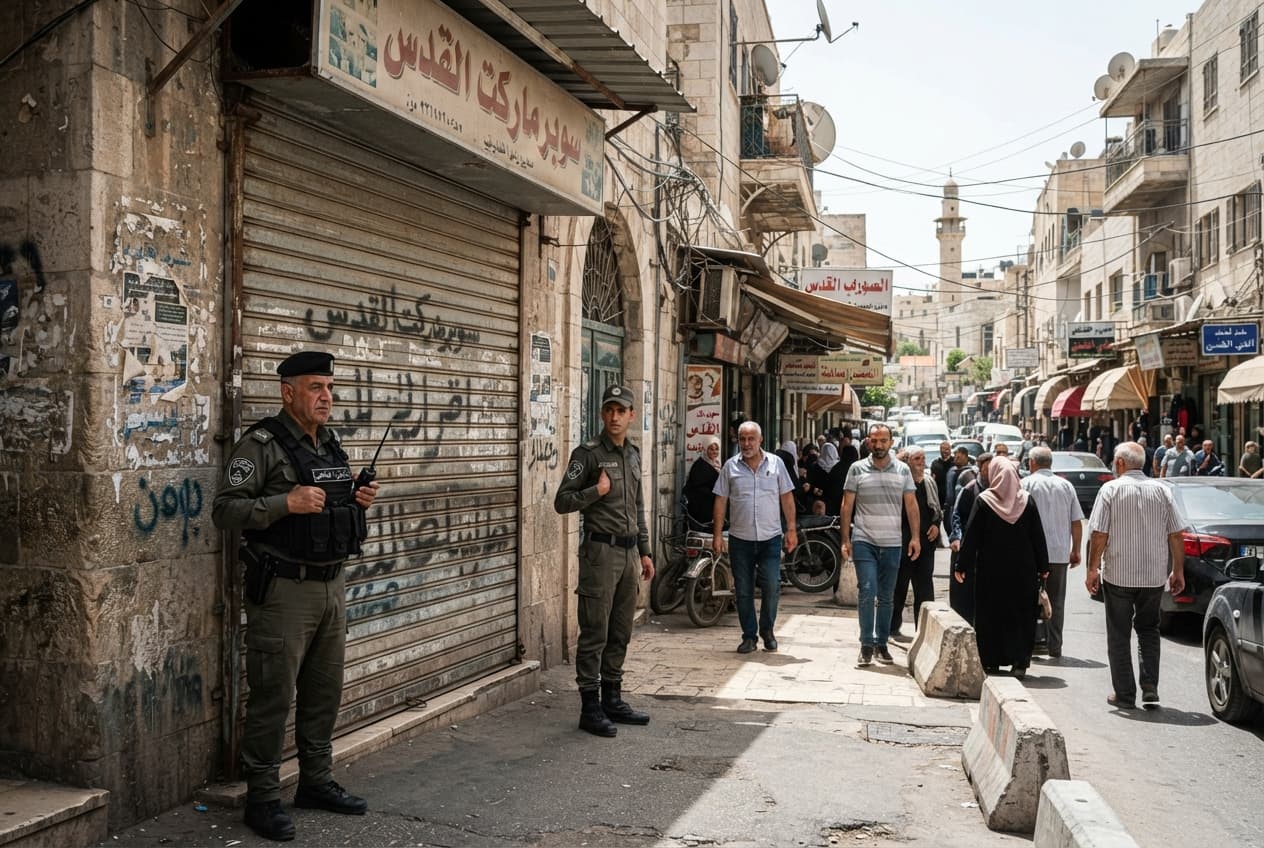
Illustrations were created using AI tools and serve as conceptual representations.
Sources (Media Names Only)
Reuters Associated Press BBC News The Jerusalem Post Fox News
Published by Banx Network. This article is part of the Banx decentralized media programme, powered by the BXE token on the XRP Ledger.