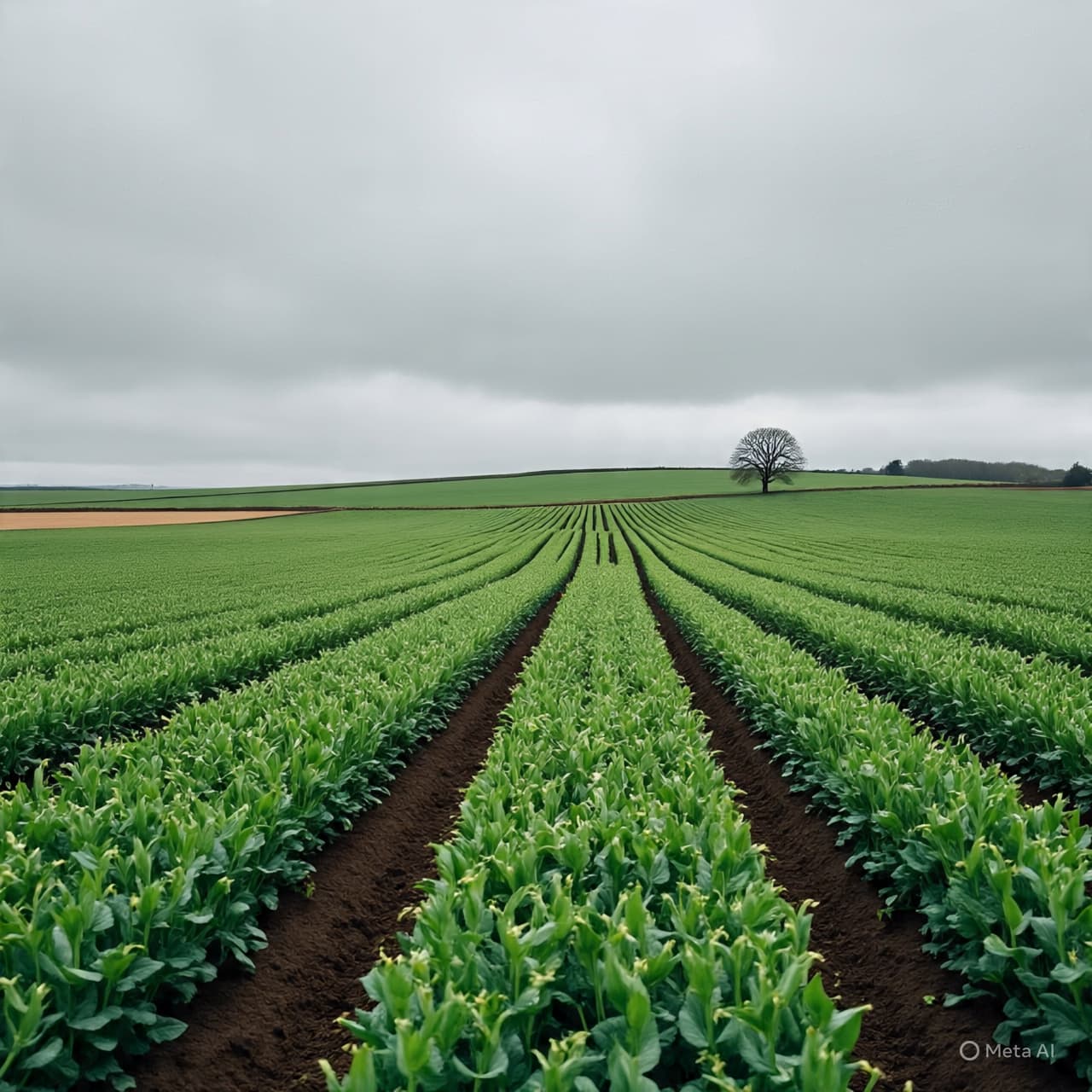
There is a particular stillness that settles over farmland when certainty begins to recede. It is not visible in the soil itself, nor in the rows of crops that continue to follow their seasonal rhythm, but in the spaces between decisions—in what is planted, and what is left unchosen.
The proposed withdrawal of frozen vegetable production by Wattie’s carries that kind of stillness. For decades, its processing lines have acted as a quiet anchor for growers across regions like Canterbury, where fields of peas, sweetcorn, and carrots were cultivated not only with care, but with the assurance of a buyer waiting at the end of the season.
That assurance now feels less certain.
For arable farmers, the implications extend beyond the immediate loss of a contract. Processing agreements have long provided a form of agricultural continuity—predictable demand, stable pricing, and a framework around which crop rotations could be carefully built. Without them, the landscape of planning shifts. Farmers must look elsewhere, often toward crops that may not offer the same returns or agronomic balance.
The disruption deepens when viewed through the lens of seed production. In New Zealand, particularly in Canterbury, arable farming is closely intertwined with seed growing, especially for crops like peas. These seeds are not only for local use but contribute to global supply chains. When processing demand declines, so too does the need for seed, creating a ripple that moves backward through the system—from factory floor to the earliest stages of planting.
For many growers, this is not a single loss, but a layered one. Income from vegetable production may fall, while seed contracts—often tied to those same crops—also begin to thin. The result is a narrowing of options in an already complex environment.
What complicates the transition further is the nature of farming itself. Crop rotations are not easily rewritten. They are systems refined over years, balancing soil health, pest control, and yield. Removing a key crop like processing peas creates a gap that cannot always be filled without consequence. Alternatives exist, but they may carry different risks, costs, or market uncertainties.
Beyond individual farms, the shift signals a broader recalibration of New Zealand’s food system. As domestic processing recedes, imported frozen vegetables are likely to take a larger share of the market. This introduces a quieter, longer-term question—not only about cost, but about resilience, and the degree to which local production can be sustained without a reliable processing base.
The timing adds further weight. Growers are already navigating rising input costs—fuel, fertilizer, and logistics—pressures that have tightened margins across the sector. In such conditions, the removal of a stable buyer does not occur in isolation; it compounds existing strain.
Yet agriculture rarely moves in abrupt lines. The current season will likely continue under existing arrangements, and the full effect may only become visible in the next planting cycle. But decisions are already being made—quietly, deliberately—about what the next season will hold.
In that sense, the fields themselves are beginning to change, even before anything visibly does.
Heinz Wattie’s has begun consultation on exiting its frozen vegetable operations in New Zealand, a move expected to affect hundreds of growers and reshape both arable and seed production across key farming regions.
AI Image Disclaimer
Visuals are AI-generated and serve as conceptual representations.
Sources
Radio New Zealand 1News The Spinoff Farmers Weekly FreshPlaza
Published by Banx Network. This article is part of the Banx decentralized media programme, powered by the BXE token on the XRP Ledger.