In Kyiv, the mornings arrive with a kind of practiced resilience. Cafés lift their shutters. Trams trace their routes. The Dnipro moves steadily past bridges that have known both traffic and tremor. Four years have passed since Russian forces crossed Ukraine’s borders in a full-scale invasion, and time, in war, is counted differently. It is measured not only in seasons but in sirens, not only in headlines but in numbers that attempt to hold the weight of absence.
Since February 2022, the war launched by Vladimir Putin has redrawn maps and altered millions of lives. The United Nations estimates that thousands of civilians have been killed and many more injured, though it cautions that verified figures likely understate the true toll. Entire neighborhoods in cities such as Mariupol, Bakhmut, and Severodonetsk have been reduced to fractured concrete and exposed steel, their names now shorthand for battles that stretched for months.
Ukraine’s own military has mobilized on a vast scale, while Russia has committed hundreds of thousands of troops over the course of the conflict. Precise casualty figures remain contested and politically sensitive, but Western intelligence assessments and independent analysts suggest heavy losses on both sides. Behind each estimate lies a human ledger: families displaced, futures deferred, letters never answered.
Displacement, too, has its arithmetic. According to the UN refugee agency, millions of Ukrainians have fled abroad since the invasion began, seeking temporary protection across Europe and beyond. Millions more remain internally displaced within Ukraine’s borders, moving from frontline regions toward the relative shelter of central and western cities. Train stations have become thresholds between past and present, their platforms crowded with suitcases and quiet resolve.
The economic dimensions of the war unfold in parallel columns. Ukraine’s GDP contracted sharply in the first year of fighting, as ports were blockaded and infrastructure damaged. Though partial recovery has followed, sustained by international aid and the reopening of key export corridors, the cost of reconstruction is projected in the hundreds of billions of dollars. Power plants, roads, schools, and hospitals have been struck, repaired, and sometimes struck again. Each rebuilt substation becomes both a utility and a symbol.
Military aid has flowed steadily from the United States, the European Union, and other partners, amounting to tens of billions of dollars in security, financial, and humanitarian assistance. Advanced air defense systems now guard the skies over major cities, intercepting missiles and drones that continue to test Ukraine’s defenses. Sanctions imposed on Russia have targeted banks, energy exports, technology imports, and individuals close to the Kremlin, reshaping trade patterns and deepening Moscow’s economic pivot toward Asia.
Territory, perhaps the most visible metric of war, has shifted in increments. After rapid Russian advances in the early months of 2022, Ukrainian counteroffensives later that year reclaimed significant areas in the northeast and south. Since then, the front lines have hardened into a grinding contest of artillery and attrition, with villages changing hands at great cost. Maps published each week show movements measured in kilometers, yet those small distances often conceal immense effort.
Four years in, the numbers have accumulated into a stark portrait: tens of thousands dead, millions displaced, cities scarred, economies strained. And yet numbers, for all their clarity, cannot fully contain the texture of lived days. They do not record the way classrooms relocate to basements during air raids, or how weddings are scheduled between curfews, or how farmers sow fields near demined corridors.
As the anniversary passes, officials in Kyiv reaffirm their commitment to restoring territorial integrity. In Moscow, the war is framed as a protracted struggle against Western influence. In European capitals and Washington, debates continue over funding, fatigue, and long-term strategy. The conflict endures not only on the battlefield but in budgets, ballots, and diplomatic corridors.
Four years is both a brief chapter in history and an era in a human life. For children who were toddlers in 2022, this war has been the backdrop of memory. For parents and grandparents, it has reordered assumptions about security on the continent. The statistics will continue to update—incremented by each report, each reconstruction contract, each shift at the front.
But beyond the columns of data lies a quieter truth: that endurance itself has become a measure. In Kyiv’s early light, in Kharkiv’s repaired squares, in villages near the front where generators hum through the night, the war is counted not only by the numbers released in briefings, but by the steady insistence on living despite them. And as the fifth year begins, the arithmetic of conflict remains unfinished, its final tally still unwritten.
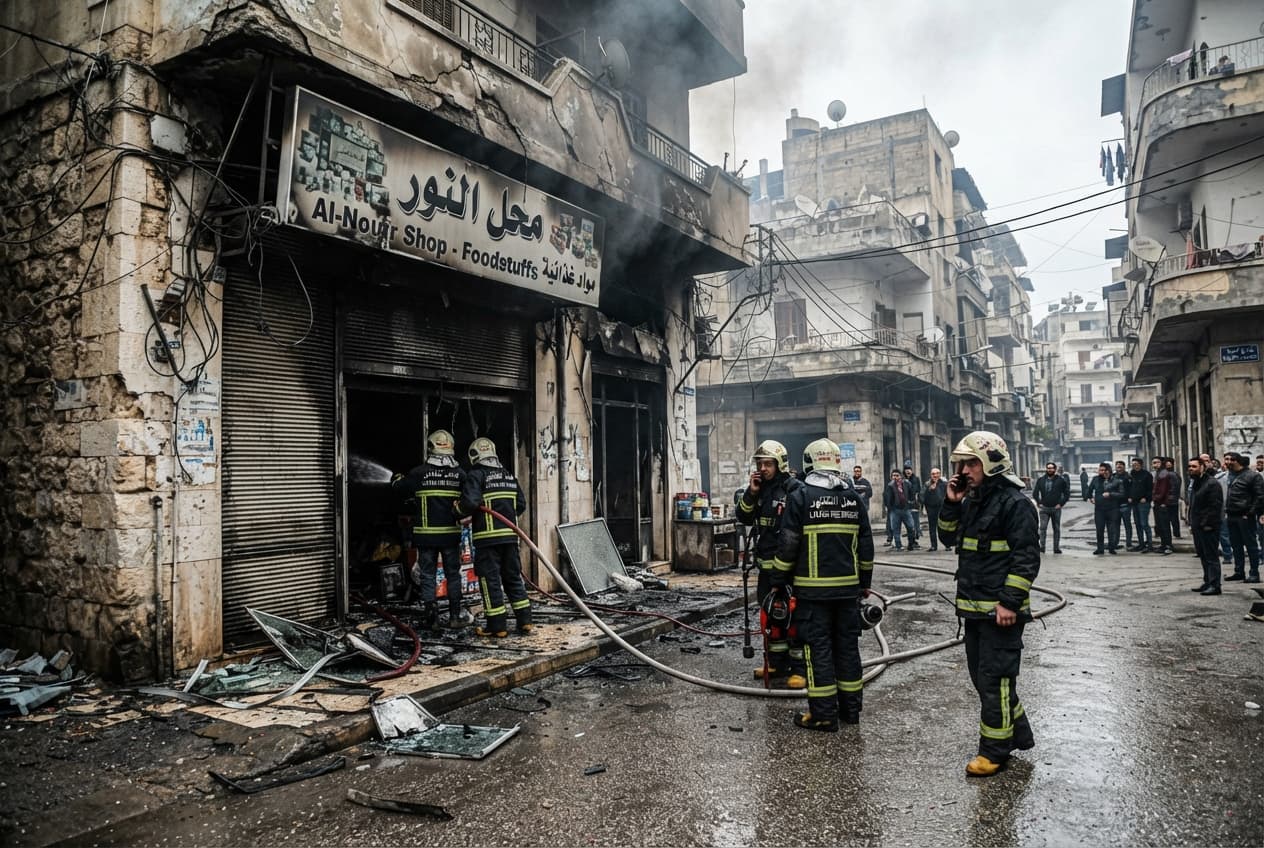
AI Image Disclaimer These images were generated with artificial intelligence and are intended for illustrative purposes only.
Sources United Nations UNHCR World Bank Reuters BBC News
Published by Banx Network. This article is part of the Banx decentralized media programme, powered by the BXE token on the XRP Ledger.