In the soft glow of winter sun reflecting off the steel of distant horizons, President Emmanuel Macron stood before French troops in Abu Dhabi and spoke of a vision anchored in strength and continuity. Just as the gentle rhythm of the sea frames the long history of France’s naval tradition, so too does the promise of a new aircraft carrier now rise from plans on paper toward reality — a symbol of enduring maritime presence in a turbulent world.
For decades, the aircraft carrier Charles de Gaulle has embodied France’s ability to project power across oceans. Commissioned in 2001, it has served as both guardian and ambassador, a moving citadel of French naval might. But time, like the tide, reshapes even the most steadfast of instruments. Macron’s announcement marks the shift from service to successor: France will build a new, larger, and more advanced aircraft carrier, ensuring that its naval legacy carries forward into the mid‑century.
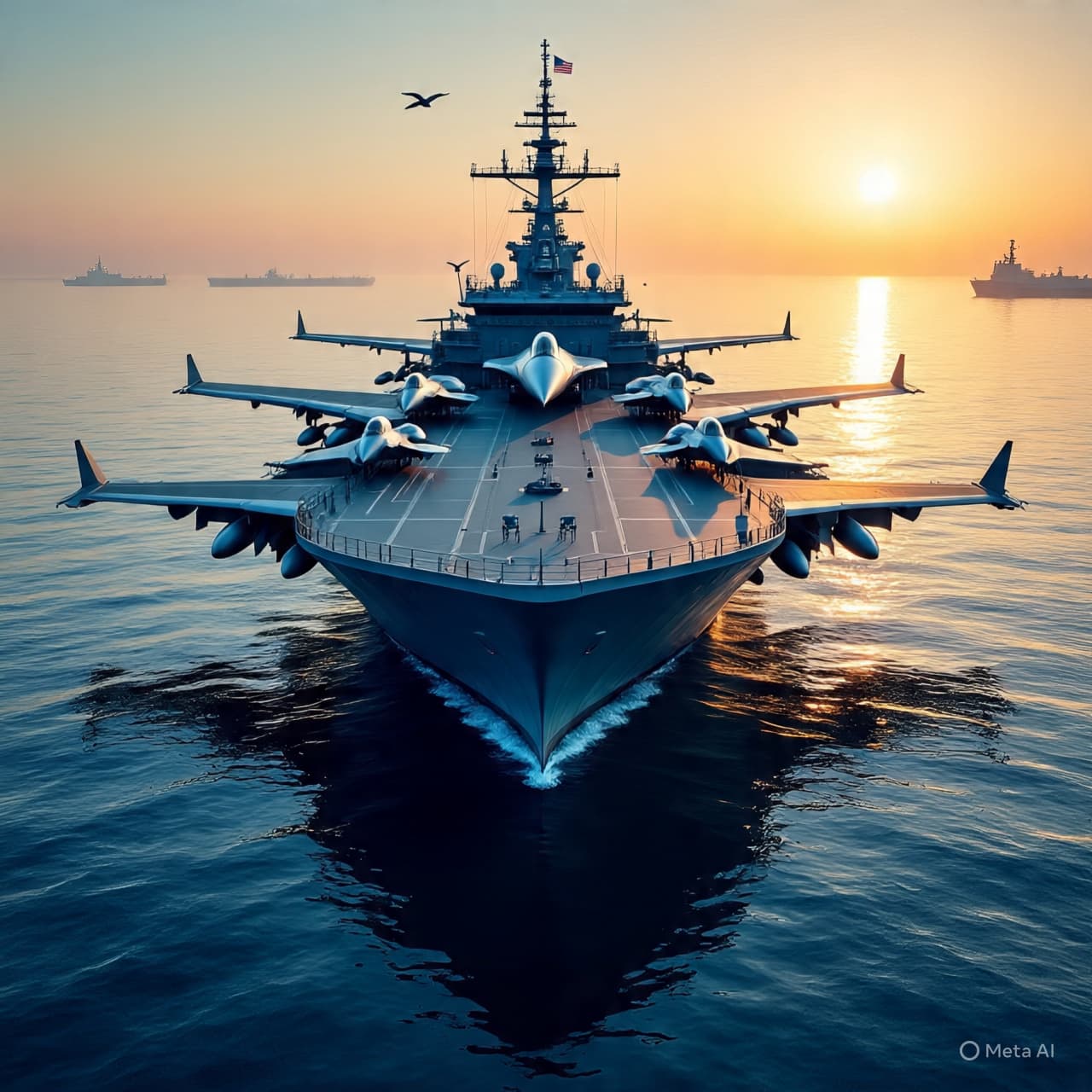
The new vessel, part of the Porte‑Avions Nouvelle Génération (PANG) program, aims to be Europe’s largest warship when completed. Displacing around 78,000 tons and stretching more than 300 meters, it will dwarf its predecessor while hosting some 30 fighter jets and a crew of roughly 2,000 sailors. Nuclear‑powered like the Charles de Gaulle, it represents both continuity and evolution — an affirmation of France’s technical sophistication and strategic ambition.
Macron framed the undertaking as more than a military project. Speaking to the troops, he described it as a testament to France’s industrial heart and collective resolve in “an age of predators,” where strength at sea becomes a pledge for peace on land. The construction — now formally greenlit — is expected to create thousands of jobs and invigorate small and medium‑sized enterprises spread across the defence and maritime sectors.
The announcement comes amid broader discussions about Europe’s strategic autonomy and the imperative of strengthening defence capabilities in an unpredictable global landscape. With ongoing geopolitical tensions, from the war in Ukraine to shifting alliances, the new carrier is part of a larger narrative: a reminder that physical presence — whether in calm waters or contested straits — can speak as powerfully as diplomatic words.
Yet this promise of enhanced capacity is tempered by time. The vessel is projected to enter service by 2038, when its predecessor is expected to retire, underlining the long arc of planning and craftsmanship that such grand maritime ambitions require. In the years ahead, shipyards, engineers, and sailors will turn blueprints into reality, bridging the heritage of the past with the demands of the future.
In that steady journey from announcement to arrival, France’s new aircraft carrier will stand not just as a warship but as an emblem — of technology, tradition, and the enduring tides of national purpose.
AI Image Disclaimer “Visuals are created with AI tools and are not real photographs.”
Sources Reuters Bloomberg France 24 UK Defence Journal Associated Press (via multiple outlets)
Published by Banx Network. This article is part of the Banx decentralized media programme, powered by the BXE token on the XRP Ledger.