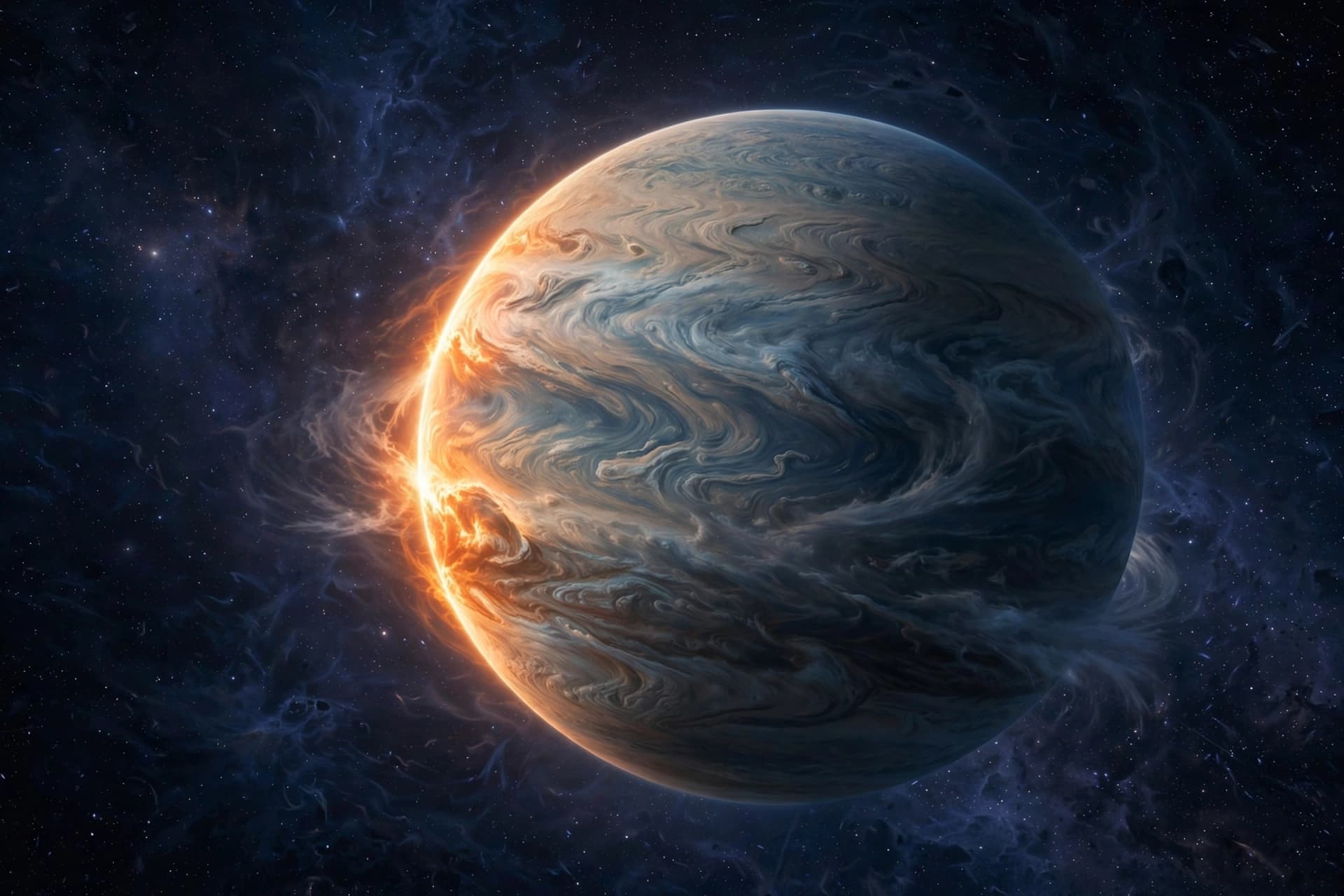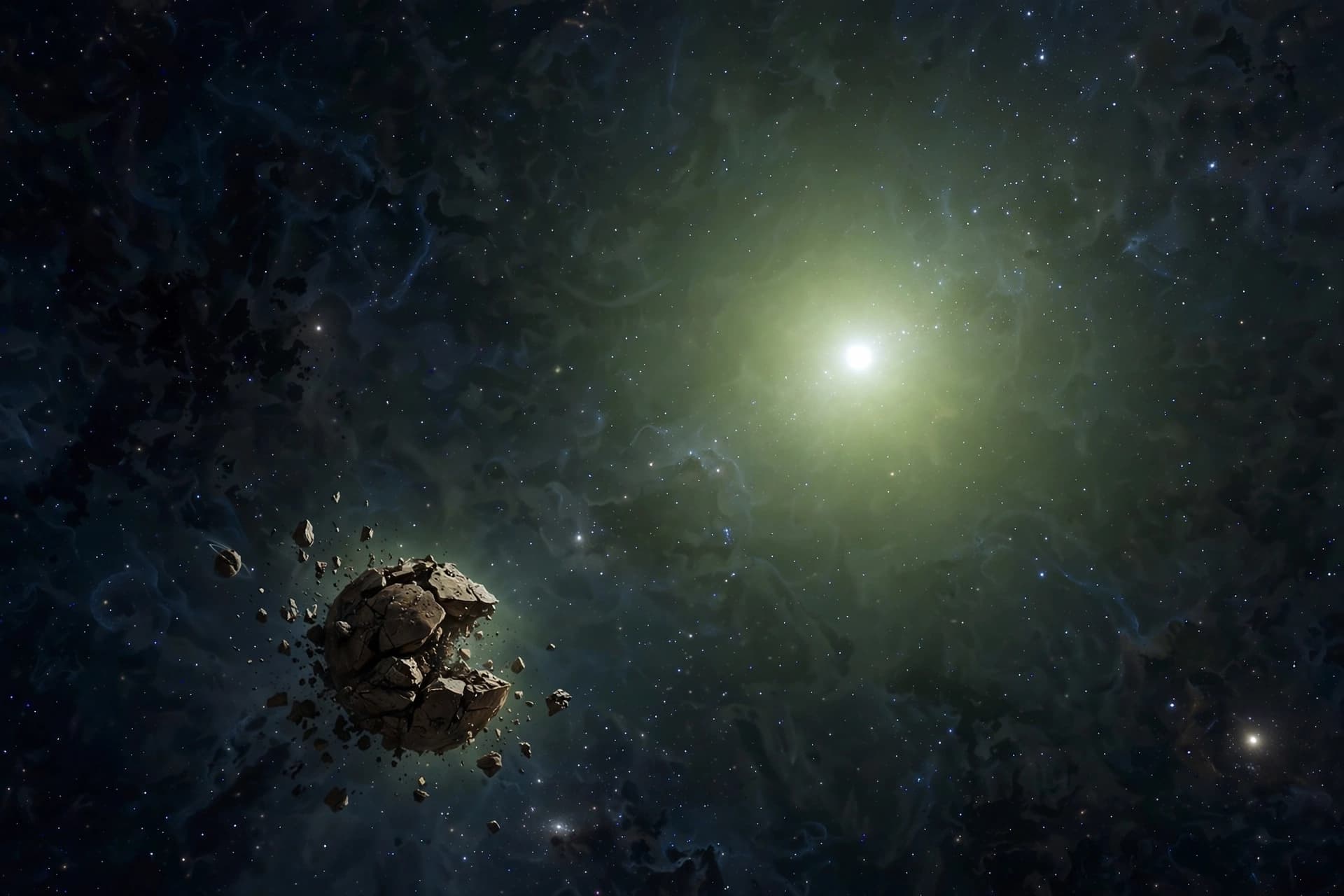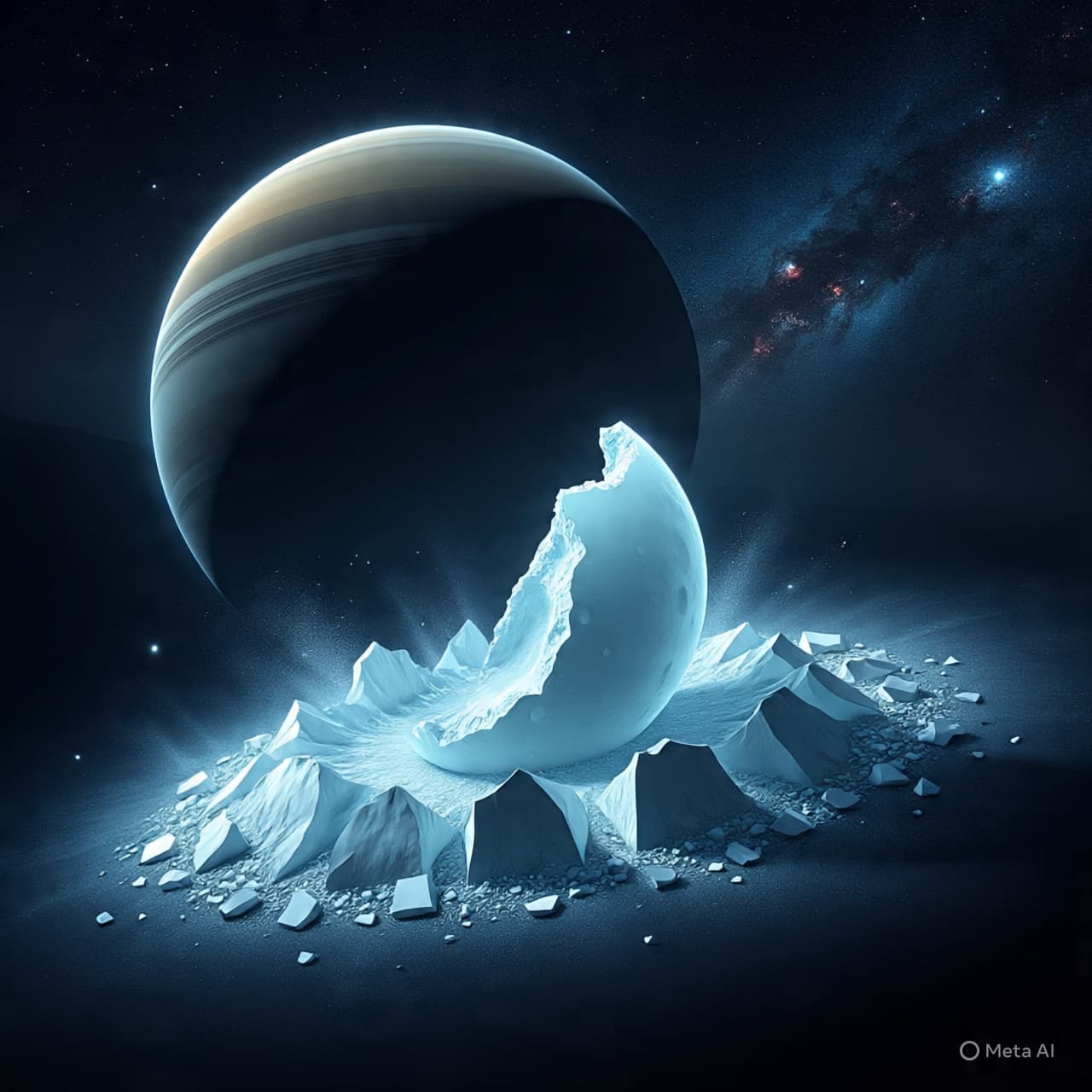
In the vast theater of our solar system, Saturn’s rings stand as one of the most breathtaking sights — graceful, luminous bands of ice and rock circling a giant planet. For decades, scientists have asked a tantalizing question: Where did these rings come from? One compelling idea gaining traction is that they may have been born from a titanic collision involving one of Saturn’s former moons, a dramatic event that scattered ice into orbit and eventually shaped the iconic rings we see today.
The story begins not with the calm beauty of the rings, but with chaos. Traditional explanations once focused on bits of a comet or asteroid torn apart by Saturn’s gravity. But these scenarios struggle to explain why the rings are composed mostly of water ice and why they appear relatively young on cosmic timescales — perhaps only a few hundred million years old, far more recent than the planet itself.
A rising hypothesis suggests that the rings formed when one or more icy moons collided, either with each other or due to destabilized orbits, sending vast quantities of icy debris into Saturn’s vicinity. Computer simulations exploring resonant instabilities among early satellites show that such an impact could scatter chunks of ice into just the right region — within Saturn’s Roche limit, where tidal forces prevent the debris from clumping into a moon and instead keep it dispersed in a flat disk around the planet. Over time, this ice would settle into the intricate ring system we see now.
Another related idea involves a hypothetical lost moon named Chrysalis, which may have interacted with the massive moon Titan long ago. According to that model, Chrysalis’s orbit became unstable and brought it too close to Saturn, where tidal forces tore it apart — a process that not only could have produced the rings but also influenced Saturn’s peculiar axial tilt. While this specific theory remains under debate, it underscores the plausibility of ring formation tied to moon disruption.
The resulting rings are remarkably icy mainly because, in such collisions, the lighter ice in a moon’s outer layers disperses more readily than heavier rocky material, which tends to fall back or form new moons at more distant orbits. Solar system simulations suggest that the same kind of event could also scatter debris that re‑accretes into the mid‑sized moons we see today.
It’s important to emphasize that this is still a hypothesis — a credible and increasingly supported one, but not yet confirmed by direct evidence. Missions like NASA’s Cassini helped reveal the rings’ youth and composition, while future studies and observations may further illuminate Saturn’s violent past. What remains clear is that the rings’ serene beauty belies a likely origin steeped in dramatic celestial upheaval, where moons can be torn apart and transformed into cosmic adornment.
AI Image Disclaimer “Visuals are created with AI tools and are not real photographs.”
📌 Sources
• New research explores the idea that Saturn’s rings formed from icy moon collisions, scattering debris into orbit.
• Modelling suggests an ancient moon’s disruption could also have shaped Saturn’s tilt and ring composition.
• Simulations show collisions among moons could deposit ice into Saturn’s Roche limit, forming the rings.
Published by Banx Network. This article is part of the Banx decentralized media programme, powered by the BXE token on the XRP Ledger.