Picture a cellar on the windswept chalk of southern England — vines stretching across gentle hills, glinting in soft sunlight, their grapes heavy with dew. There, under skies that once seemed too cool for great wine, a quiet revolution has been fermenting. And now — suddenly, unmistakably — the cork pops. The foam rises. This is not just another bottle of bubbly. This is a challenge: to centuries of tradition, to expectations, and to the very idea that only Champagne, in northeastern France, can claim the crown.
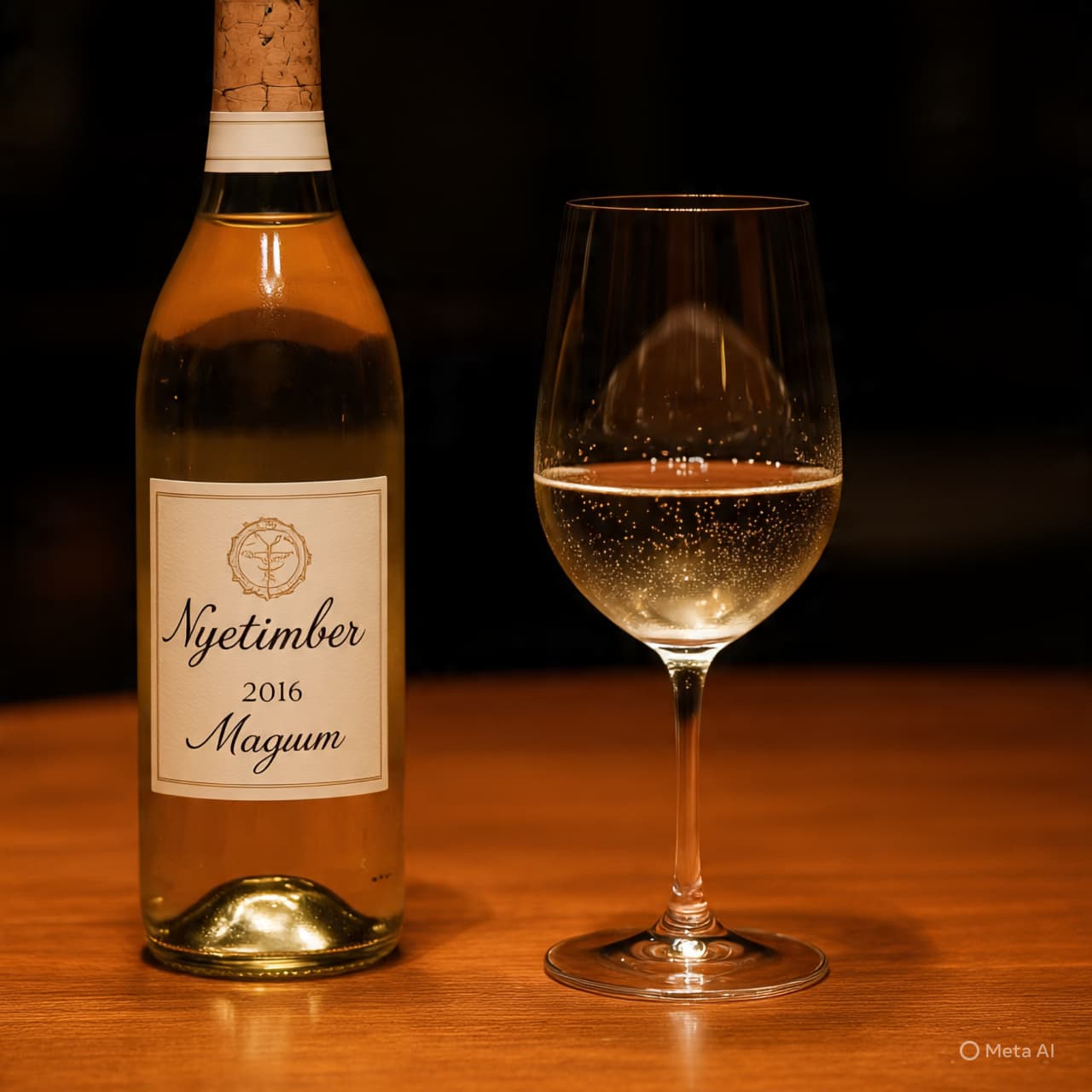
In 2025, the venerable International Wine Challenge (IWC) made history. For the first time ever, the prize for “Champion Sparkling Wine” — long dominated by bottles from France’s Champagne region — was awarded to an English producer: Nyetimber. Their Blanc de Blancs 2016 Magnum scored 97 points in a blind tasting of over 1,000 wines, with judges praising its “mouth-watering acidity, citrus zest, and chamomile with a chalky finish.”
That remarkable achievement was matched by another first: Nyetimber’s head winemaker, Cherie Spriggs, was named “Sparkling Winemaker of the Year” — the first person outside France ever to receive that honor, and only the second woman in the award’s history.
But this isn’t a fluke. A broader shift is underway. In the 2025 Decanter World Wine Awards (DWWA), the UK enjoyed a record-breaking performance: among other honors, an English sparkling wine magnum — Sugrue South Downs “The Trouble With Dreams” 2009 — earned a “Best in Show” medal, the first time a non-Champagne magnum claimed that prestige.
Analysts attribute the rise of English sparkling wines to a convergence of favorable conditions: south-facing chalky soils similar to those in Champagne, advances in viticulture, and even a slowly warming climate that is helping grapes ripen more reliably. Meanwhile, the consistency of critical scores — across major wine critics and publications — shows that the quality perception gap between English fizz and Champagne has narrowed dramatically.
For many wine drinkers, the implications are profound. The appeal of British sparkling wine isn’t just in headlines — it’s in glasses: vibrant acidity, brisk bubbles, subtle citrus and brioche notes; freshness that balances elegance with energy. As one industry observer put it: what once may have seemed a novelty — “English fizz” — has matured into a legitimate contender on the global stage.
So yes — for now, Champagne need not hang up its crown. But the throne is no longer theirs alone. The rise of English sparkling wines like Nyetimber and Sugrue may well mark the start of a new chapter in the world of bubbly — one in which British bottles stand not as underdogs, but as worthy peers. For every toast raised in Paris or London, the same glass could carry truth: the world’s “best bubbly” may now come with a Union Jack label.
AI Image Disclaimer: “Graphics are AI-generated and intended for depiction only, not real photographs.”
Sources (media names): International Wine Challenge; Decanter World Wine Awards; Wine Lister; The Washington Post; Country & Town House.
Published by Banx Network. This article is part of the Banx decentralized media programme, powered by the BXE token on the XRP Ledger.