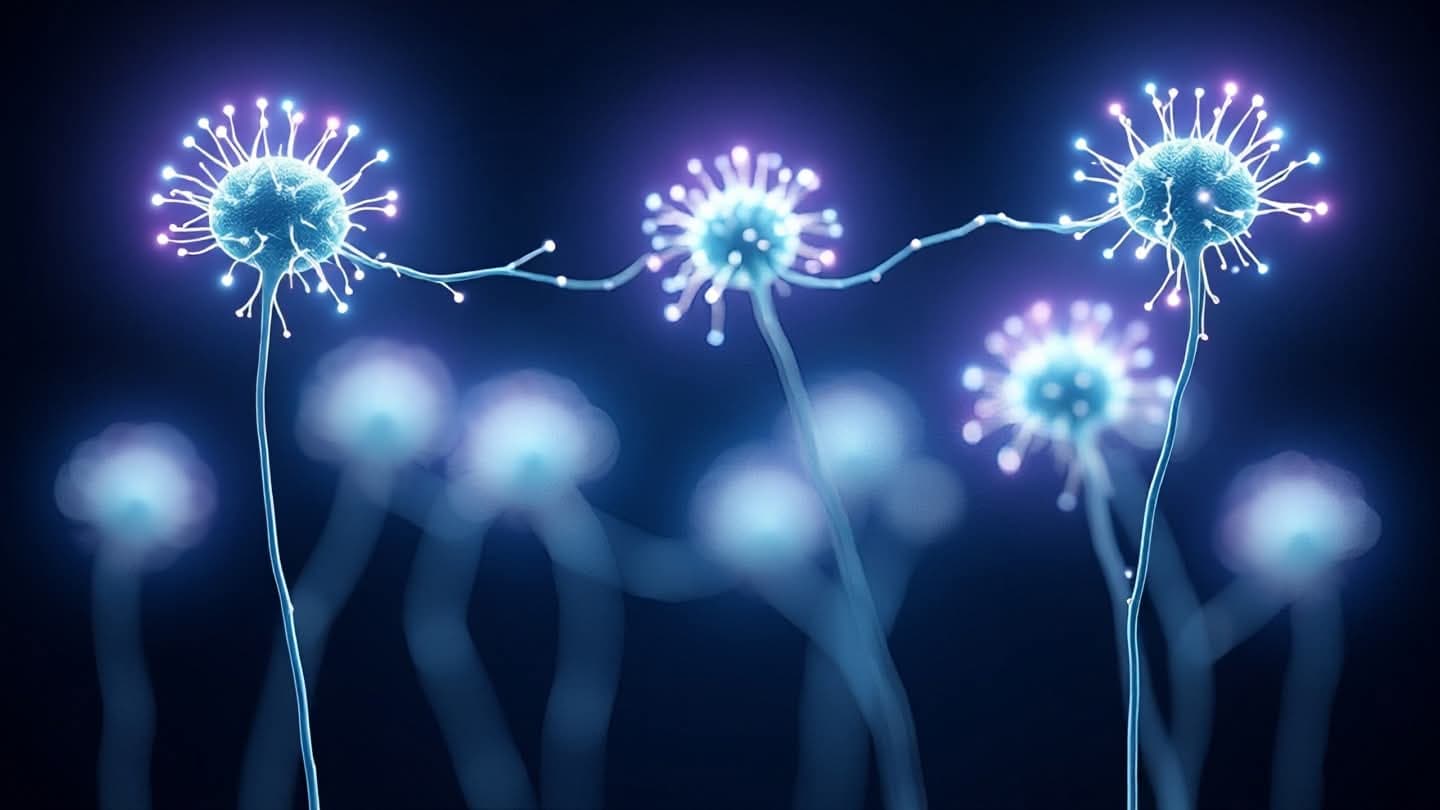
Human connection is a delicate dance, orchestrated by billions of neurons firing in intricate patterns. For decades, the biological basis of social behavior remained a black box, difficult to probe without invasive methods. Now, researchers at the Salk Institute have identified specific neurons that play a pivotal role in controlling complex social interactions, offering a glimpse into the neural circuitry that binds us together.
The study, published in a leading neuroscience journal, used advanced genetic tagging and imaging techniques to map the activity of neurons in mice during social encounters. The team focused on a specific region of the brain known to be involved in social processing, isolating a distinct population of cells that activate when individuals engage in positive social interactions.
These neurons appear to act as a switch, modulating the desire for social contact and the interpretation of social cues. When activated, they promote pro-social behaviors such as grooming and playing; when inhibited, they lead to social withdrawal. This finding suggests that social behavior is not just a diffuse network activity but is driven by specific, identifiable cellular components.
The implications for understanding human conditions are significant. Disorders such as autism spectrum disorder and schizophrenia often involve deficits in social processing. By identifying the specific neurons involved, researchers may be able to develop more targeted therapies that restore balance to these circuits, rather than treating symptoms broadly.
The research also highlights the complexity of the brain. While the study was conducted in mice, the underlying neural mechanisms are likely conserved across mammals, including humans. This cross-species relevance makes the findings a valuable foundation for future clinical research and drug development.
Moreover, the study challenges the notion that social behavior is solely learned. While environment plays a crucial role, the presence of hardwired neural circuits suggests a biological predisposition for connection. This interplay between nature and nurture is central to understanding how we form relationships and communities.
Technological advances were key to this breakthrough. The use of optogenetics, which allows scientists to control neurons with light, enabled precise manipulation of the identified cells. This level of precision was impossible just a few years ago, demonstrating how rapidly the field of neuroscience is evolving.
As the research continues, the team plans to explore how these neurons interact with other brain regions involved in emotion and memory. Understanding these connections will provide a more holistic view of social behavior, moving from isolated cells to integrated networks.
The Salk Institute researchers emphasize that while the findings are promising, further study is needed to translate them into human applications. The work represents a significant step forward in decoding the biological roots of sociality.
AI Image Disclaimer: The images associated with this piece are AI-generated visualizations intended to represent the themes of neuroscience, neural networks, and social interaction.
Sources: Salk Institute for Biological Studies Nature Neuroscience Science Daily Medical News Today Neuron Journal
Published by Banx Network. This article is part of the Banx decentralized media programme, powered by the BXE token on the XRP Ledger.