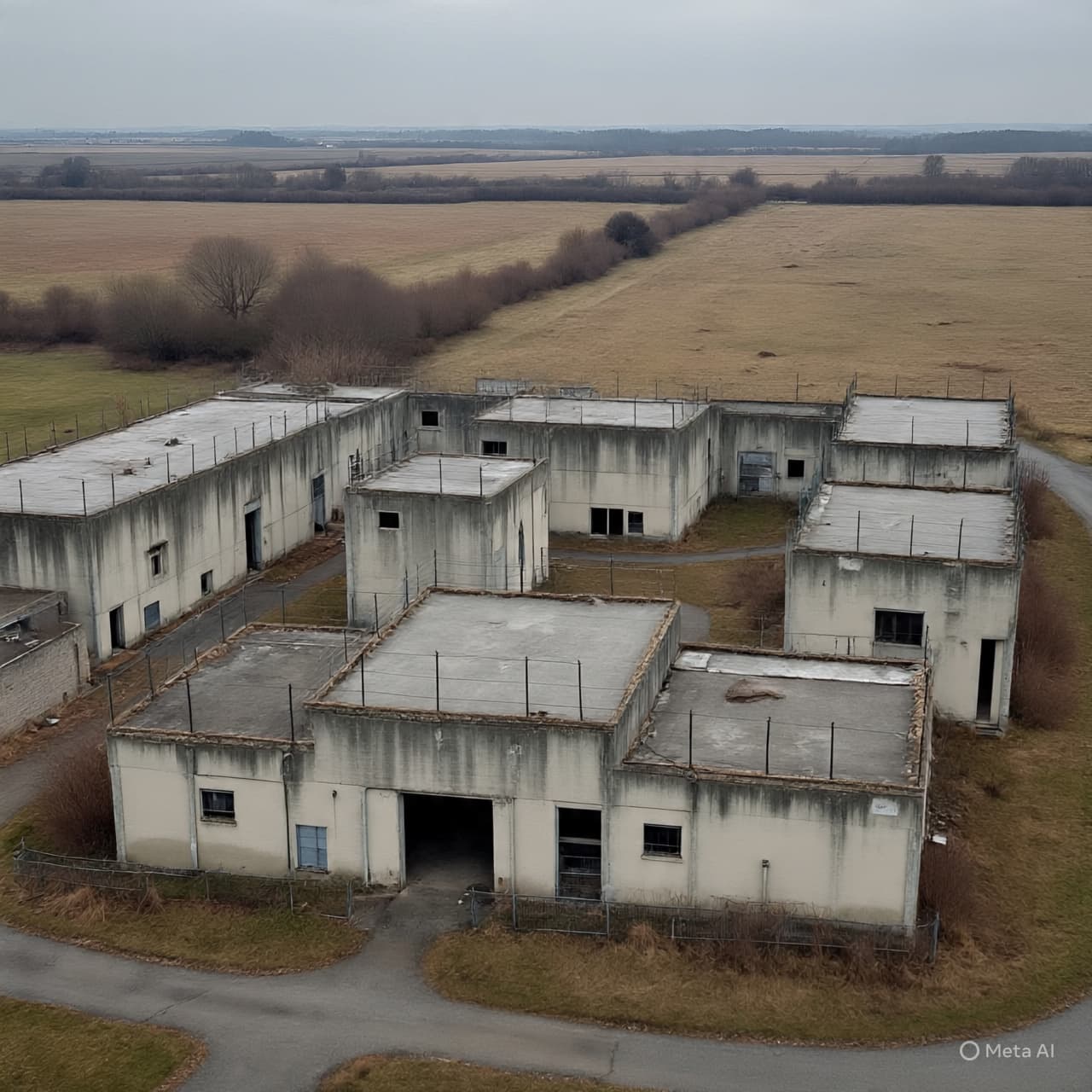
At the edge of town, where hedgerows meet high fences and the past still lingers in concrete watchtowers, a place once shaped by drills and discipline is quietly changing its purpose. The army camp — long familiar yet distant — is now becoming home to strangers arriving not by choice, but by circumstance. For many local residents, the transition has brought not anger, but a softer and more unsettled feeling: anxiety born from uncertainty.
Asylum seekers have begun moving into the former military site following a Home Office decision to expand temporary accommodation amid ongoing pressure on the UK’s asylum system. Officials say the move is intended to ease overcrowding in hotels and provide more stable shelter for people awaiting decisions on their immigration cases. Yet for the surrounding community, the sudden arrival has raised questions that stretch beyond logistics and into everyday life.
Residents describe learning of the change with little warning. Some speak of unease about security, access to local services, and how the site will be managed in the long term. Others worry about the strain on healthcare, transportation, and already stretched local resources. Community meetings have drawn large attendance, not marked by hostility, but by a desire to understand what lies ahead.
Local leaders have echoed these concerns, calling for clearer communication and stronger engagement from central government. Councillors say the issue is not the presence of asylum seekers themselves, but the speed and scale of decisions made without sufficient consultation. They argue that communities need time, information, and support to adapt — not announcements delivered after plans are already in motion.
The Home Office has said that the camp will be run with on-site security, healthcare access, and welfare support. Officials maintain that such facilities are necessary as the number of people seeking refuge continues to outpace available housing options. They also emphasize that the accommodation is intended to be temporary, though similar assurances in other areas have sometimes stretched longer than expected.
Among residents, reactions vary. Some express concern for the men, women, and families arriving with little more than personal belongings and uncertain futures. Others admit fear of the unknown, shaped less by experience than by silence — the absence of detail allowing imagination to fill the gaps.
Charities working with asylum seekers have urged calm, reminding communities that those arriving are not criminals but people fleeing conflict, persecution, or instability. They stress that anxiety often flourishes where communication falters, and that transparency can ease tensions before they harden.
As buses arrive and gates open, the camp begins a new chapter — one not written in commands or uniforms, but in coexistence. Whether that chapter unfolds with trust or lingering unease may depend less on those who arrive, and more on how openly institutions speak to the people already there.
The site stands between past and present, its purpose reshaped by global movement and national policy, while a nearby community waits — quietly — for reassurance.
AI Image Disclaimer Illustrations were produced with AI and serve as conceptual depictions.
Sources BBC News Sky News ITV News The Guardian The Independent
Published by Banx Network. This article is part of the Banx decentralized media programme, powered by the BXE token on the XRP Ledger.