There is a particular kind of equality in water. It does not distinguish between the canals of Bangkok and the streets of Brooklyn, between a monsoon season that arrives as expected and a nor'easter that lingers like an unwanted guest. When the sky opens, the ground beneath us becomes something we no longer recognize—and cities, for all their concrete and engineering, are reminded of their vulnerability.
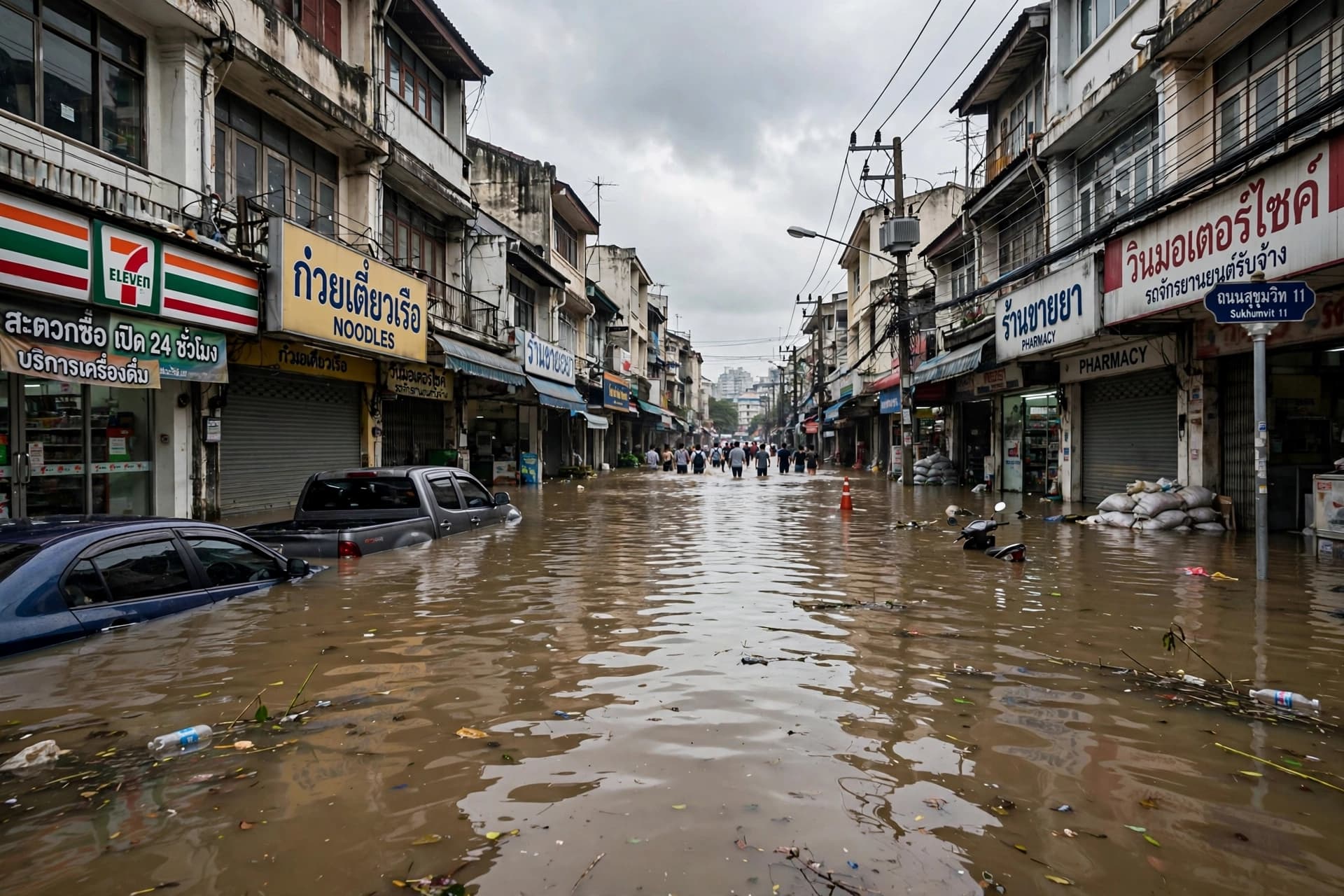
On opposite sides of the world this weekend, two major cities declared states of emergency as water and wind reshaped their daily rhythms. In Bangkok, nearly 300 millimeters of rain fell over 48 hours, flooding all 50 districts and prompting Governor Chadchart Sittipunt to declare the capital a disaster zone. Eight people have died nationwide since September 16, and more than 1.7 million people across 27 provinces have been affected .
In New York, a slow-moving nor'easter brought coastal flooding, winds gusting up to 70 mph, and widespread power outages affecting more than 100,000 households. A 56-year-old New York City Housing Authority employee, Leighton Brown, was killed by a falling tree in Brooklyn while working an extra shift. States of emergency remain in effect for New York City, Long Island, and Westchester County .
The details from both cities carry their own textures. In Bangkok, a 67-year-old shopkeeper described water rising to her waist, saying she had not seen flooding like this in fifteen years. Fifteen major roads were submerged, and flights at Suvarnabhumi Airport were delayed as crew members could not reach the airport. The Thai cabinet declared Monday and Tuesday public holidays for Bangkok and three adjacent provinces to ease the disruption .
In New York, utility crews—more than 5,800 workers—were deployed statewide to restore power. Damage reports included fallen trees on homes, vehicles, and power lines across Long Island and the Hudson Valley. Forecasters warned that another 1 to 3 inches of rain could fall before the system departed, with coastal flooding continuing through high-tide cycles .
There is something worth reflecting on in the simultaneity of these events. Bangkok's floods are part of a monsoon season that has grown more intense, with September rainfall reaching 487 millimeters by the 25th compared to a 1991-2020 average of 269 millimeters for the same period. New York's nor'easter arrived alongside a full Harvest Moon, whose gravitational pull heightened the tides and worsened coastal flooding .
These are not the same kind of storm, but they share a common grammar: water where water should not be, wind where stillness was expected, and the quiet recognition that the systems we build to manage nature are only as strong as the assumptions they were built upon. Both cities will recover. The water will recede. The power will return. But the questions—about preparedness, about infrastructure, about what it means to live in a climate that no longer behaves as it once did—will remain, waiting for the next storm to ask them again.
---
AI Image Disclaimer: The images accompanying this article are AI-generated and are intended for illustrative purposes only.
Sources: RTBF, USA Today, Lohud, CCTV+, VTV, VOV, KBS News, BBC News, NY Post, Bulgarian National Television
Published by Banx Network. This article is part of the Banx decentralized media programme, powered by the BXE token on the XRP Ledger.