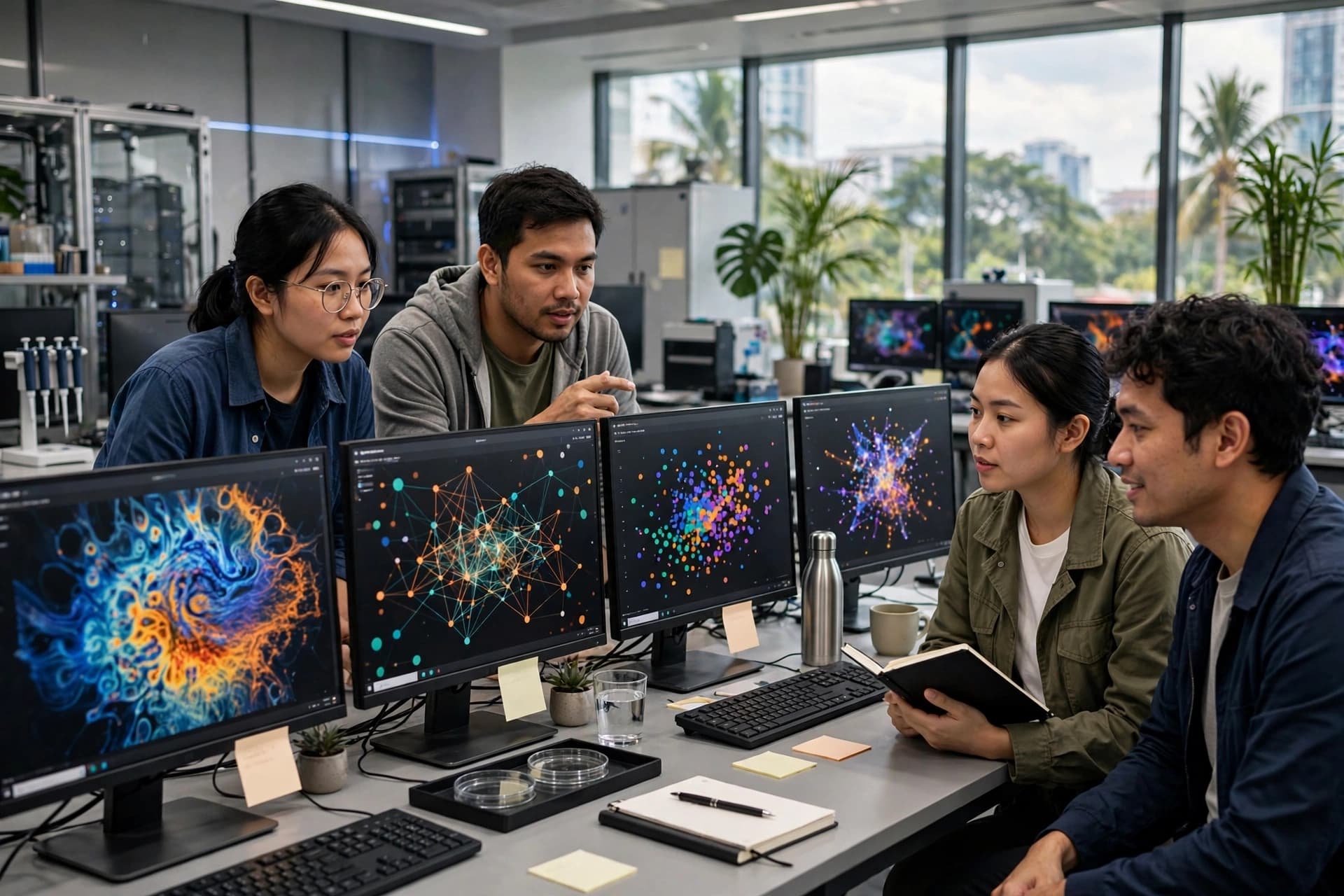
Innovation often unfolds not as a single breakthrough, but as a widening circle. What begins as one intelligent feature gradually gathers companions, forming a network that feels less like software and more like a living system. In that quiet evolution, artificial intelligence is shifting from a solitary assistant into a collaborative presence woven throughout our devices.
Galaxy AI is now expanding into a broader multi-agent ecosystem designed to give users greater choice and flexibility. Rather than relying on a single AI model to interpret every command, the system introduces multiple specialized agents working together. Each agent is built to handle specific tasks — from summarizing content and drafting messages to managing search and contextual recommendations — while coordinating behind the scenes to deliver cohesive results.
For , the move reflects a deeper shift in how smartphones function. Devices are no longer just endpoints for apps; they are becoming intelligent hubs capable of delegating tasks across different AI engines. By broadening the ecosystem, Samsung aims to offer users more control over how their information is processed and which AI capabilities they prefer to engage.
Central to this expansion is deeper collaboration with external AI services, including . Known for its conversational search approach, Perplexity’s integration strengthens Galaxy AI’s ability to provide contextual, citation-based answers directly within the device environment. Instead of navigating separate applications, users may experience AI-driven search and analysis layered seamlessly into daily workflows.
The multi-agent structure also opens pathways for flexibility. In practice, this could mean users selecting different AI providers for different tasks — one optimized for creative writing, another for research, another for translation. Rather than presenting a monolithic assistant, Galaxy AI is positioning itself as an orchestrator of specialized intelligence.
Such flexibility responds to a broader cultural moment. As AI capabilities multiply, so do questions around transparency, customization, and control. Offering choice may become as important as offering power. By decentralizing intelligence into coordinated agents, Samsung appears to be aligning with a future in which ecosystems matter more than individual features.
There are, naturally, technical considerations. Multi-agent systems require careful synchronization to ensure consistency, security, and efficiency. Data handling protocols and user privacy frameworks remain central to adoption. Yet the architectural direction suggests confidence that AI experiences will increasingly depend on collaboration between models rather than reliance on a single source.
The shift also signals competition within the smartphone industry. As artificial intelligence becomes a primary differentiator among flagship devices, ecosystem depth may determine long-term loyalty. Expanding Galaxy AI into a flexible, multi-agent platform positions Samsung not merely as a hardware maker, but as a curator of intelligent services.
In straightforward terms, Galaxy AI is evolving into a multi-agent ecosystem that integrates external AI partners like Perplexity AI, aiming to give users more flexibility and choice in how AI functions across their devices. Further rollout details and supported features are expected as the expanded ecosystem continues to develop.
AI Image Disclaimer Images in this article are AI-generated illustrations, meant for concept only.
Sources
The Verge TechCrunch Bloomberg CNBC Wired
Published by Banx Network. This article is part of the Banx decentralized media programme, powered by the BXE token on the XRP Ledger.