
Key Highlights
- Recent archaeological findings in Pompeii reveal hidden towers.
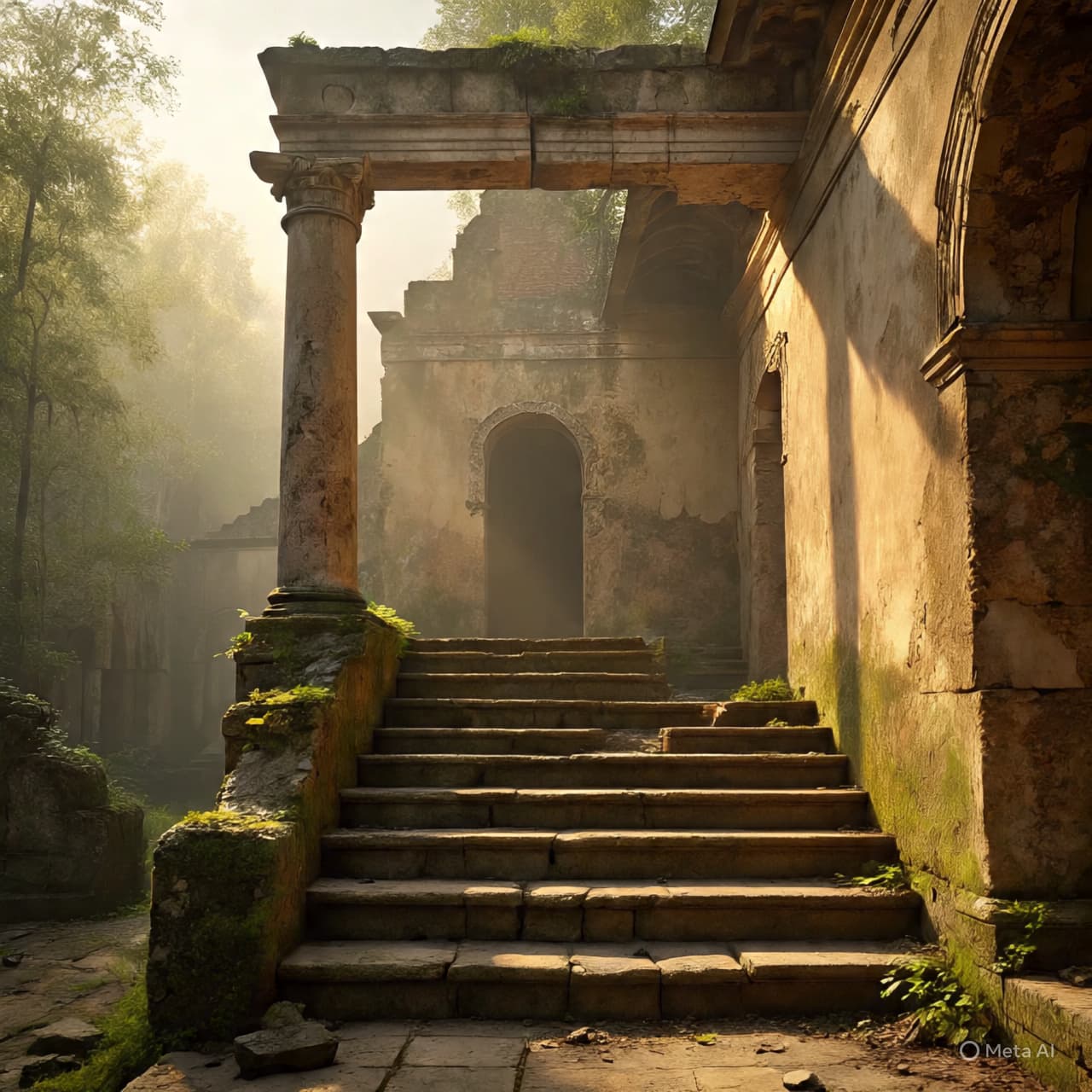
- The House of Thiasus showcases a monumental staircase leading to upper levels.
- Digital reconstruction techniques are enhancing our understanding of ancient architecture.
Archaeological discoveries in Pompeii are reshaping our understanding of this ancient city, revealing a once-thriving urban landscape characterized by towering structures and multi-level homes. Recent research, particularly focused on the House of Thiasus, has unveiled a monumental staircase that leads to what was once a grand upper level, suggesting that Pompeii was not merely a city of single-story homes but rather a vertical urban environment. This new perspective invites us to reconsider the architectural ambitions of its ancient inhabitants.
The eruption of Mount Vesuvius in 79 CE buried Pompeii under layers of ash and pumice, preserving many structures but also leading to the collapse of upper floors. For centuries, archaeologists have unearthed the remnants of this once-vibrant city, but the full extent of its architectural grandeur remained obscured. The recent collaboration between the Pompeii Archaeological Park and researchers at Humboldt University of Berlin, under the POMPEII RESET project, has employed advanced technologies such as LiDAR scanning and 3D modeling to reconstruct these lost upper levels.
The findings from the House of Thiasus are particularly striking. The monumental staircase, which previously appeared to lead to nowhere, has been reinterpreted as part of a multi-level tower that likely featured a wooden staircase and an upper hall with expansive views of the Bay of Naples. This revelation not only enhances our understanding of the structure itself but also highlights the sophistication of Pompeii's architecture, where elite residents could entertain guests and enjoy panoramic vistas.
These digital reconstructions provide a glimpse into the interiors of Pompeii's villas, allowing us to visualize the daily lives of their inhabitants. The reconstructed tower of the House of Thiasus, estimated to rise at least 12 meters above the street, signifies a shift in our perception of Pompeii as a city defined by its horizontal layout. Instead, it suggests a dynamic urban environment where height and grandeur were integral to the architectural identity.
However, these discoveries also serve as a poignant reminder of the fragility of history. The remnants of Pompeii are not just stones and walls; they are echoes of a vibrant past that has been threatened by time, natural disasters, and human neglect. The careful conservation of these sites is crucial to preserving the stories they hold, ensuring that future generations can continue to learn from and appreciate this remarkable city.
As digital archaeology continues to evolve, it breathes new life into the ruins of Pompeii, allowing us to engage with the past in ways previously unimaginable. The story of Pompeii is not merely one of destruction; it is also one of revival and imagination, inviting us to step into the shoes of those who once walked its streets and to envision the bustling life that once filled its towers.
Published by Banx Network. This article is part of the Banx decentralized media programme, powered by the BXE token on the XRP Ledger.



