In the world’s largest archipelago, distance is a familiar concept. From island to island, horizon to horizon, movement has always defined the story of Indonesia. Yet some journeys stretch far beyond geography, reaching into regions bound not by proximity but by principle.
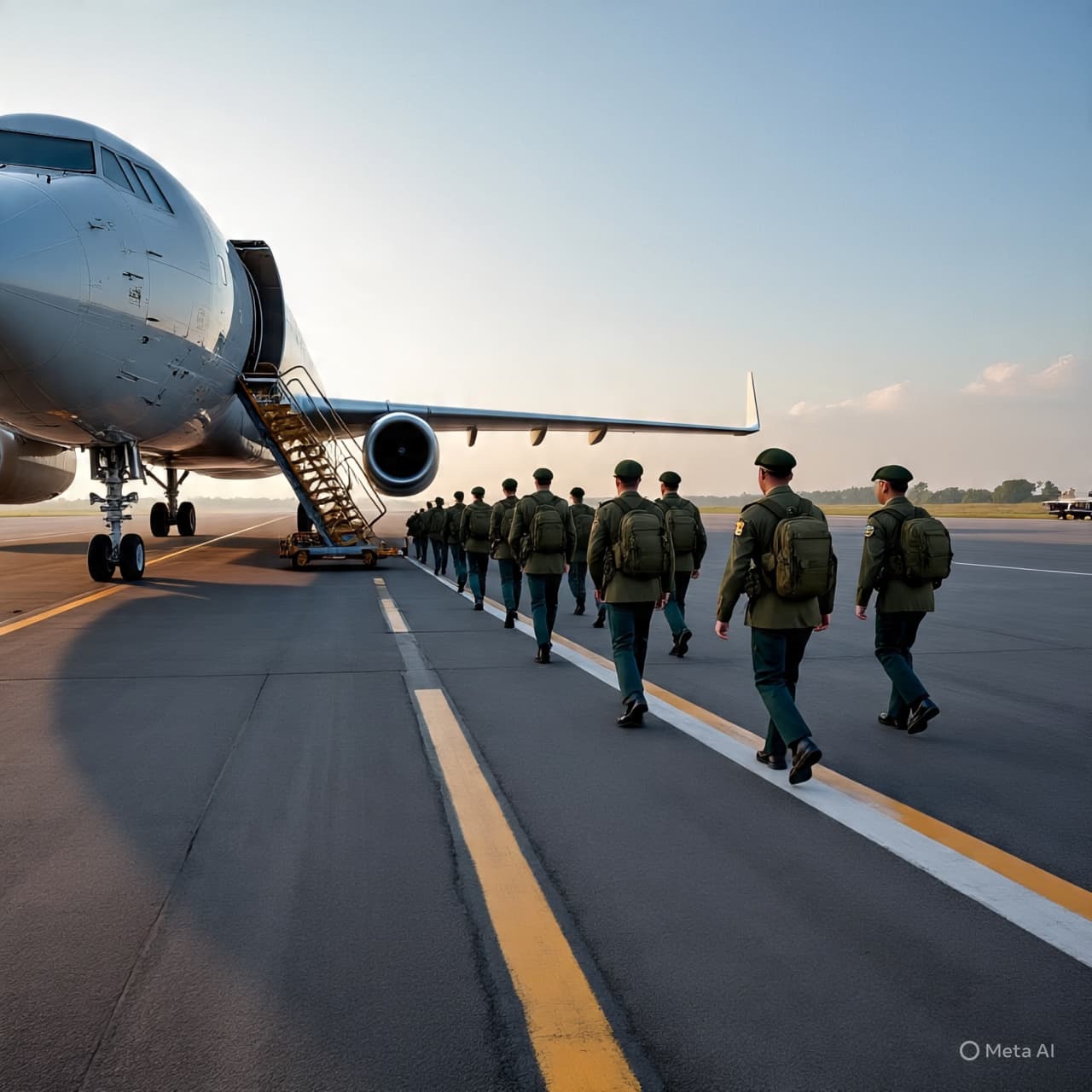
This week, Indonesian authorities announced plans to deploy 8,000 troops in phases to Gaza Strip, a region long marked by conflict and humanitarian strain. The phased approach suggests deliberation—an unfolding rather than a single surge—reflecting both logistical realities and diplomatic sensitivities.
Officials indicated that the deployment would occur gradually, aligning personnel and resources over time. While specific operational details remain subject to coordination and international frameworks, the stated intention centers on support and stability efforts. Such missions typically involve structured planning across security, medical, and logistical domains, especially when entering a fragile environment shaped by prolonged unrest.
For Indonesia, engagement beyond its immediate region carries layered meaning. As a nation that has consistently voiced support for Palestinian self-determination in international forums, Jakarta’s policy posture has often balanced diplomatic advocacy with humanitarian outreach. A troop deployment, even in phases, represents a tangible extension of that stance.
The involvement of the Indonesian National Armed Forces underscores the institutional scale of the commitment. Military deployments abroad require coordination not only within the armed forces but also among civilian ministries, foreign policy officials, and international partners. Each phase signals preparation, evaluation, and adjustment.
For Gaza, where infrastructure has been repeatedly tested and civilian life remains precarious, the arrival of foreign personnel can alter the immediate landscape—introducing new actors into a complex matrix of local authorities, aid organizations, and security considerations. The effectiveness of such a deployment will depend on mandate clarity, cooperation mechanisms, and evolving conditions on the ground.
At home, the announcement may prompt reflection on Indonesia’s broader role in global affairs. As Southeast Asia’s largest economy and a leading voice in the Global South, Indonesia has increasingly positioned itself as a participant in international dialogue rather than a distant observer. Overseas missions, particularly in sensitive regions, reinforce that identity.
Yet distance remains real. The waters between Indonesia and Gaza are vast, measured in thousands of nautical miles and differing political climates. A phased deployment acknowledges that bridging such distance—logistical, cultural, and strategic—requires patience.
In the coming months, as contingents depart in stages, the focus will turn to implementation. Plans on paper must translate into structured presence, and intentions into measurable impact. The announcement marks a beginning rather than a conclusion. Across oceans, one nation prepares to step, gradually, into another’s enduring crisis.
AI Image Disclaimer
Illustrations were created using AI tools and are intended as conceptual representations.
Sources
Government of Indonesia
Indonesian National Armed Forces
Reuters
Al Jazeera
Published by Banx Network. This article is part of the Banx decentralized media programme, powered by the BXE token on the XRP Ledger.