
Key Highlights
- France is reassessing its relationship with Turkey amid evolving European security dynamics.
- The shift is influenced by broader EU strategies to engage Turkey for defense planning.
- Obstacles remain, including historical mistrust and unresolved disputes.
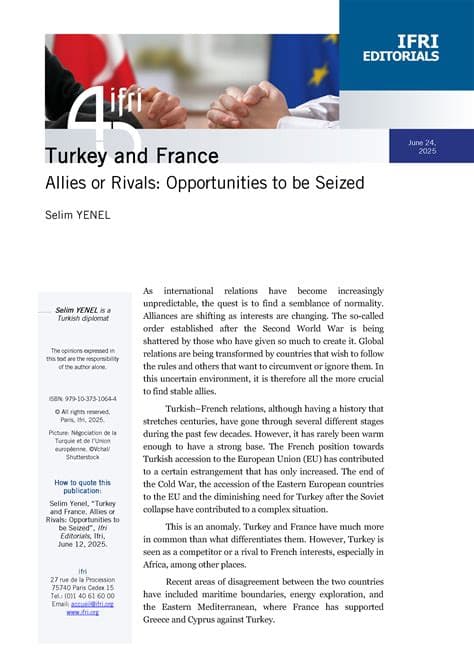
France is currently reevaluating its diplomatic approach towards Turkey, driven by significant shifts in the European security landscape. The ongoing geopolitical tensions, particularly in light of Russia's actions, have prompted European nations to reconsider their strategic partnerships. As a result, France is contemplating whether to initiate a new phase in its historically complex relationship with Turkey, which has often been characterized by rivalry and discord, especially concerning issues in the Eastern Mediterranean.
In recent months, several European Union member states and partners have moved towards a more strategic engagement with Turkey. This shift is part of a broader initiative to enhance defense planning and deter potential threats, particularly from Russia. Analysts suggest that France's potential reset in relations with Turkey could signify a departure from its previous, more stagnant diplomatic channels. The French government is weighing the benefits of fostering a more pragmatic and cooperative relationship with Ankara.
Experts argue that for any reset to be effective, it must evolve beyond mere diplomatic gestures into structured cooperation. This would involve establishing frameworks for collaboration on security matters and addressing regional issues that are critical to European interests, such as the stability of the Black Sea region. The discussions around this potential reset indicate a desire for more systematic cooperation, moving away from the traditional crisis management approach that has characterized Franco-Turkish interactions in the past.
However, significant challenges remain that could hinder the progress of this diplomatic thaw. France is unlikely to abandon its long-standing positions on various disputes with Turkey, particularly those related to energy exploration and military engagements in the Eastern Mediterranean. Additionally, historical mistrust, often exacerbated by political tensions between French and Turkish leadership, poses a substantial barrier to achieving a meaningful rapprochement.
As France navigates these complexities, the outcome of its reassessment will likely depend on both domestic political considerations and the evolving geopolitical context in Europe. The potential for a reset in Franco-Turkish relations could have far-reaching implications for regional stability and security, particularly as Europe seeks to bolster its defenses in an increasingly uncertain world.
Published by Banx Network. This article is part of the Banx decentralized media programme, powered by the BXE token on the XRP Ledger.



