
Key Highlights
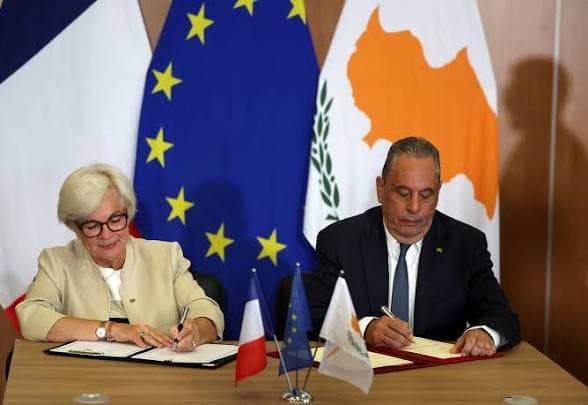
- France and Cyprus signed a military agreement on June 8.
- Turkey accused France of violating international law.
- The agreement allows French troops to operate in Cyprus.
France has firmly rejected Turkey's criticism regarding a recent military agreement with the Republic of Cyprus, which allows for the deployment of French troops on the island. The agreement, signed in Nicosia on June 8, establishes a framework for French forces to train and operate in Cyprus, granting them access to military facilities for logistics and transit purposes. This move has been met with strong opposition from Turkey, which claims that the agreement breaches international law and alters the delicate balance of power in the region.
In a statement, the Turkish Defense Ministry expressed its discontent, arguing that the military pact aims to unilaterally change the status quo in Cyprus. Turkey has warned that it will respond forcefully to any perceived threats against Turkish Cypriots, emphasizing its commitment to protecting the interests of the Turkish community on the island. The ongoing division of Cyprus, which has persisted since 1974, remains a contentious issue, with the island split between the internationally recognized Republic of Cyprus and the Turkish-backed northern region.
The military agreement comes at a time of heightened tensions in the Eastern Mediterranean, where geopolitical rivalries have intensified. France's involvement in Cyprus is seen as part of a broader strategy to strengthen its military presence in the region, particularly in response to Turkey's assertive actions in maritime disputes. The French government has reiterated its support for Cyprus and its sovereignty, framing the military pact as a necessary step to enhance security in the area.
Analysts suggest that the agreement could further complicate relations between Turkey and France, both of which have been engaged in a series of diplomatic spats over various issues, including energy exploration and military operations in the Mediterranean. The situation remains fluid, with both nations likely to continue their respective postures as they navigate the complexities of regional politics.
As the international community watches closely, the implications of this military agreement extend beyond Cyprus, potentially influencing the dynamics of power in the Eastern Mediterranean. The response from Turkey will be critical in shaping the future of relations in the region, as both nations seek to assert their influence amidst ongoing tensions.
Published by Banx Network. This article is part of the Banx decentralized media programme, powered by the BXE token on the XRP Ledger.



