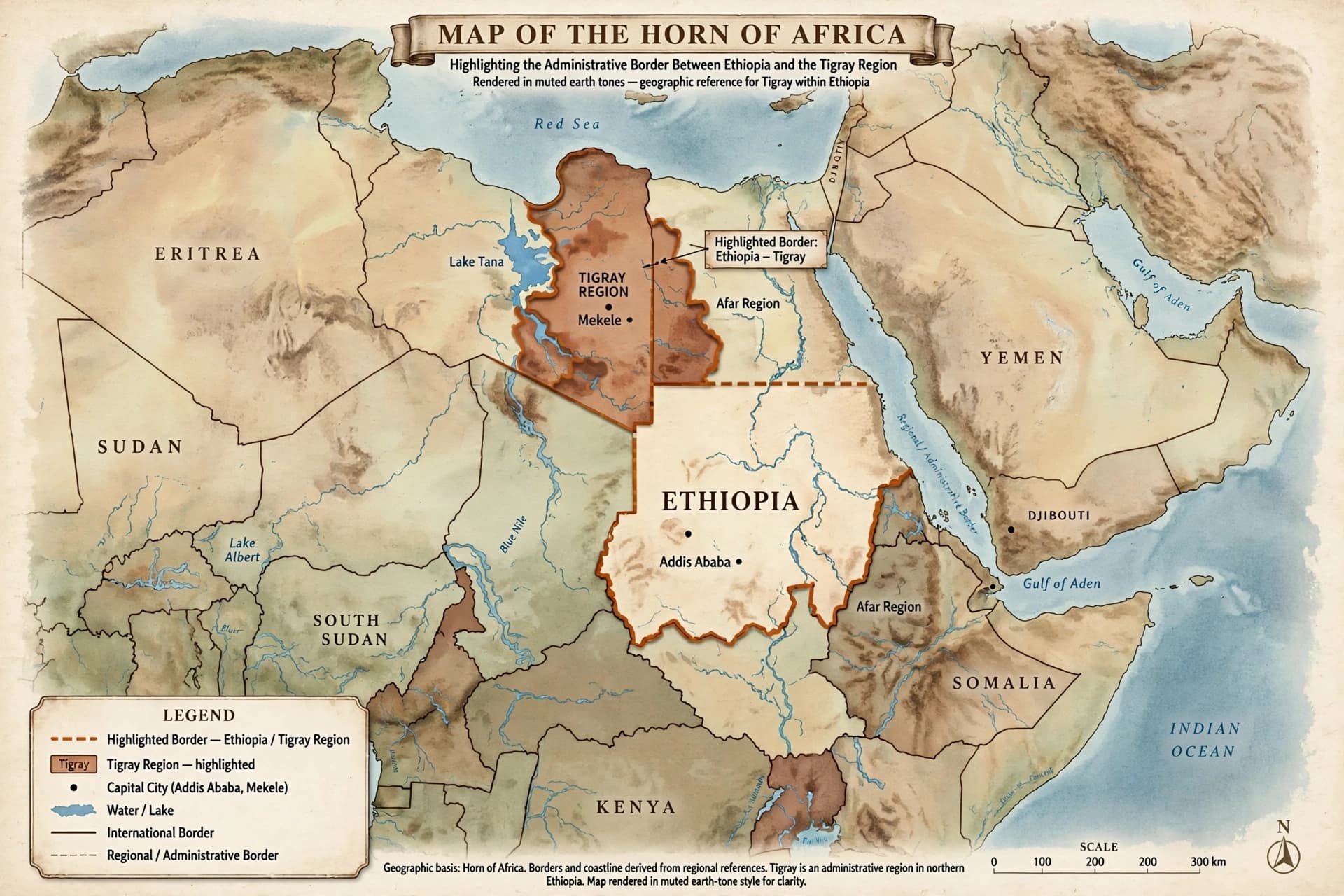
In the Horn of Africa, where history and politics are deeply intertwined, the fragile peace between Ethiopia’s federal government and the Tigray region faces renewed strain. Recent accusations from both sides of launching military offensives have reignited fears of a return to full-scale conflict. This escalation, marked by shelling and troop movements, threatens to unravel the progress made since the 2022 peace agreement, casting a shadow over the stability of the entire region.
Tigray’s interim administration has accused Ethiopian federal forces of initiating attacks in western Tigray, including areas near the border with Sudan. These allegations are accompanied by reports of drone strikes and artillery fire, which have caused civilian casualties and displacement. The federal government, meanwhile, has claimed that Tigrayan forces are preparing their own offensive, citing intelligence reports of military buildup and mobilization. This mutual suspicion creates a volatile environment where mistrust can quickly spiral into violence.
The roots of this tension lie in the unresolved issues of the two-year civil war that ended with the Pretoria Peace Agreement. While the accord halted major combat operations, many underlying grievances, such as territorial disputes and the status of contested areas, remain unaddressed. The lack of full implementation of the peace deal has left both sides wary of the other’s intentions, making any military movement a potential trigger for renewed hostilities.
International observers and regional bodies have expressed deep concern over the developments. The African Union and the United Nations have called for restraint and dialogue, urging both parties to adhere to the terms of the peace agreement. However, the effectiveness of these appeals is limited by the lack of enforcement mechanisms and the complex political dynamics at play. The risk of external actors, such as Eritrea, becoming involved further complicates the situation.
For the people of Tigray and Ethiopia, the prospect of another war is devastating. Many communities are still recovering from the humanitarian crisis of the previous conflict, with limited access to food, healthcare, and basic services. A renewal of fighting would exacerbate these hardships, leading to further suffering and displacement. The human cost of political failure is borne most heavily by those who have already endured so much.
The economic implications are also significant. Instability in the region disrupts trade, investment, and development projects, hindering Ethiopia’s growth prospects. Neighboring countries, reliant on cross-border commerce, face similar risks. The international community has a vested interest in preventing a relapse into conflict, not only for humanitarian reasons but also for regional stability and security.
Efforts to de-escalate the situation include diplomatic engagements and monitoring missions. However, the lack of trust between the federal government and Tigray’s leadership makes progress difficult. Both sides must demonstrate a genuine commitment to peace through concrete actions, such as withdrawing troops from contested areas and allowing humanitarian access. Without these steps, the cycle of accusation and retaliation is likely to continue.
The current tensions between Ethiopia and Tigray serve as a stark reminder of the fragility of peace in post-conflict societies. While the fear of a new war is palpable, there remains hope that dialogue and international support can prevent a return to violence. The path forward requires courage, compromise, and a shared vision for a stable and prosperous future for all Ethiopians.
AI Image Disclaimer: The images accompanying this report are AI-generated artistic interpretations intended to convey the mood of political tension and uncertainty, not actual photographs of military actions or leaders.
Sources: The Soufan Center, Crisis Group, France 24, Shabelle Media, DW Africa
Published by Banx Network. This article is part of the Banx decentralized media programme, powered by the BXE token on the XRP Ledger.