There are anniversaries that arrive like quiet footnotes in history, and then there are those that return like an echo that never quite fades. Four years after Russian troops crossed Ukraine’s borders in a full-scale invasion, the date carries the weight of memory and the uncertainty of tomorrow. It is not merely a mark on the calendar. It is a reminder of lives rearranged, cities reshaped, and a continent that has learned to live with a war that once seemed unthinkable.
When Russia launched its full invasion in February 2022 under the direction of President , the world watched with disbelief. What many assumed would be a swift and decisive campaign instead hardened into a grinding conflict. Now, four years on, Moscow says its “goals” have not yet been achieved — a phrase that feels both declarative and unresolved.
For Ukraine, the anniversary is less about symbolism and more about survival. President has continued to frame the war as a defense not only of territory but of sovereignty and democratic choice. Over the past four years, Ukraine has endured waves of missile strikes, shifting front lines, and mounting casualties. Entire communities have been displaced. Infrastructure has been battered. Yet Kyiv remains standing, both physically and diplomatically, buoyed by Western military and financial support that has become a central pillar of its resistance.
For Moscow, the language of unfinished objectives suggests a campaign still in motion. Russian officials maintain that their strategic aims — often described as securing influence, reshaping Ukraine’s alignment, and protecting perceived security interests — remain valid. But the costs have been substantial. Sanctions have reshaped Russia’s economic relationships, redirecting trade flows and tightening domestic constraints. Military losses, though not fully transparent, are widely assessed by Western intelligence as significant. The war has altered Russia’s standing in Europe and accelerated NATO’s evolution, including the expansion of the alliance.
Internationally, the conflict has reverberated far beyond the battlefield. Energy markets were jolted in the early years of the invasion. Grain exports from Ukraine, once a cornerstone of global food supply chains, became entangled in naval blockades and fragile agreements. Diplomatic forums have repeatedly returned to the war, even as other global crises compete for attention. The conflict has become both a defining geopolitical fault line and, for many outside the region, a persistent background hum.
Yet anniversaries also invite reflection on endurance. Ukraine’s armed forces have adapted, integrating Western systems and recalibrating strategies. Civil society has mobilized in ways that blur the line between front line and home front. In Russia, state narratives emphasize resilience in the face of what officials describe as Western pressure. Each side speaks of resolve. Each measures time differently: in reclaimed villages, in fortified positions, in policy debates in distant capitals.
As the fourth year closes, there is no clear horizon. Talks of negotiations surface intermittently but remain tentative and fraught. The battlefield continues to shift in incremental ways rather than dramatic breakthroughs. And the phrase “goals not yet achieved” lingers — open-ended, heavy with implication.
History rarely moves in straight lines. Four years after the invasion began, the war in Ukraine stands as a testament to the unpredictability of modern conflict and the endurance of national will. The date may pass with ceremonies and statements, but the reality on the ground remains active, unresolved, and deeply consequential.
The anniversary does not deliver closure. It delivers continuity — of struggle, of strategy, of uncertainty. And as both Kyiv and Moscow look ahead, the question is no longer how the war began, but how and when it might finally end.
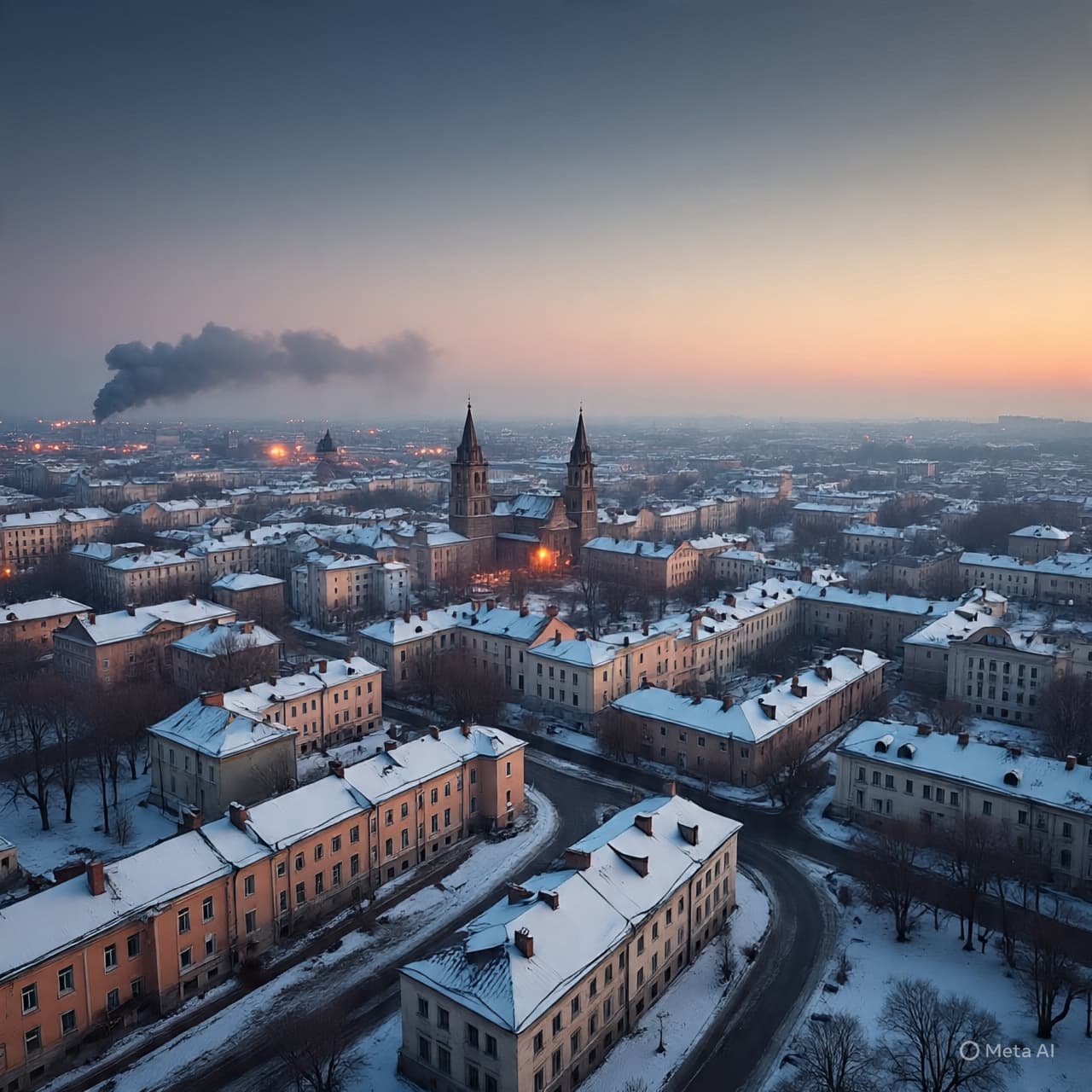
AI IMAGE DISCLAIMER Visuals are created with AI tools and are not real photographs.
SOURCES Reuters Associated Press BBC News The New York Times Al Jazeera
Published by Banx Network. This article is part of the Banx decentralized media programme, powered by the BXE token on the XRP Ledger.