
Key Highlights
- Discovery:Astronomers have identified missing baryonic matter in the universe.
- Methodology:The warm-hot intergalactic medium was detected through X-ray absorption lines.
- Implications:This finding enhances our understanding of cosmic structure and galaxy formation.
Recent astronomical research has made a groundbreaking discovery regarding the elusive missing matter in the universe. For decades, scientists have grappled with the mystery of baryonic matter—ordinary matter that makes up stars, planets, and living beings—which has been largely unaccounted for. Recent observations suggest that this missing matter exists in the form of warm-hot intergalactic gas, a finding that not only resolves a long-standing discrepancy in cosmological models but also enriches our understanding of the universe's composition.
The concept of missing matter stems from the Big Bang theory, which predicted a specific amount of baryonic matter created in the early universe. However, observations of galaxies and stars have only accounted for about half of this expected amount, leading to various hypotheses about its whereabouts. Some scientists speculated that this matter could be hidden in black holes, while others proposed that it might exist in diffuse clouds that are too faint to detect. The quest to locate this missing matter has become one of the most significant challenges in modern astronomy.
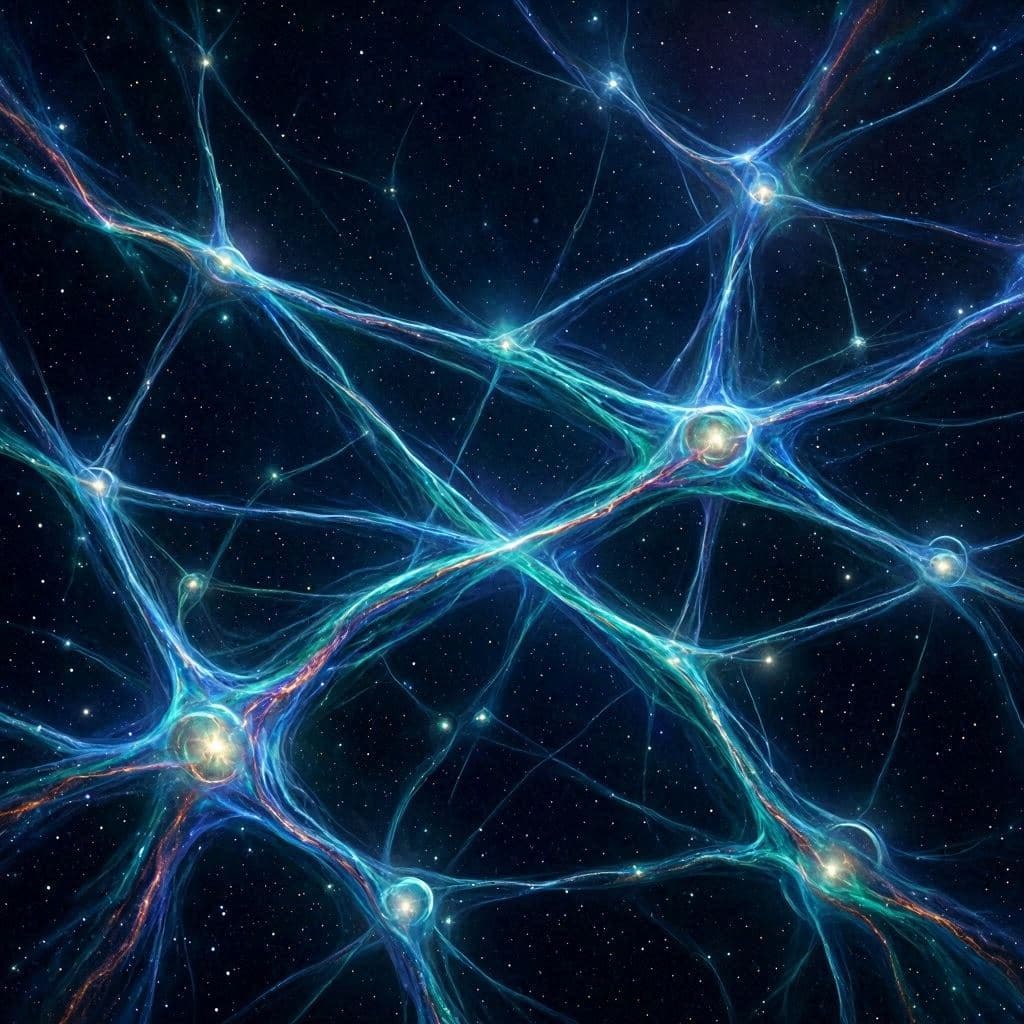
Recent studies have shifted focus to the intergalactic medium—the vast space between galaxies. Here, gas is heated to millions of degrees due to shockwaves from supernovae and galaxy collisions. This warm-hot intergalactic medium (WHIM) is particularly challenging to detect because it does not emit visible light. Instead, it absorbs specific wavelengths of X-rays from distant quasars. By analyzing these absorption lines, scientists can infer the presence and quantity of this gas, effectively allowing them to 'see' what is otherwise invisible.
The confirmation of this warm-hot intergalactic gas fills a critical gap in our understanding of cosmic structure. It indicates that matter is not solely concentrated in galaxies but is distributed throughout the cosmic web, which serves as a scaffold for the universe. This discovery validates existing structural models and reinforces confidence in current cosmological theories, marking a significant victory for theoretical physics.
For the scientific community, this finding is a welcome resolution to a long-standing tension between observation and theoretical predictions. However, it also raises new questions about the properties of this gas and its role in galaxy evolution. Understanding how this gas cools and falls into galaxies to form new stars is crucial for unraveling the history of cosmic growth. Each answer leads to further inquiries, highlighting the complexity of the universe.
Technological advancements have played a pivotal role in making this detection possible. Space-based X-ray telescopes, such as Chandra and XMM-Newton, have provided the sensitivity required to observe these faint signals. Future missions promise even greater precision, enabling more detailed mapping of the cosmic web. This technological progress extends our senses, allowing us to perceive the previously invisible aspects of the universe, showcasing human ingenuity in the pursuit of knowledge.
The philosophical implications of this discovery are profound. Knowing that we have accounted for the ordinary matter of the universe offers a sense of completeness, yet it also underscores our limited understanding of dark matter and dark energy, which constitute the majority of the cosmos. This finding serves as a reminder that while we have solved one mystery, the universe remains largely unexplored, and humility is essential in the face of such vastness.
Public engagement with astronomy often highlights spectacular phenomena like black holes or exoplanets. However, the discovery of missing matter represents a quieter triumph of persistence and logic. It illustrates that scientific progress is achieved through the careful accumulation of evidence. Sharing these stories fosters appreciation for the rigor and beauty of scientific inquiry, inspiring future generations of thinkers.
In conclusion, the identification of missing matter marks a significant milestone in our ongoing journey to comprehend the cosmos. It completes a chapter in the narrative of the universe's composition, and as exploration continues, there is hope that more hidden structures binding the cosmos together will be uncovered, deepening our connection to the stars.
Published by Banx Network. This article is part of the Banx decentralized media programme, powered by the BXE token on the XRP Ledger.



