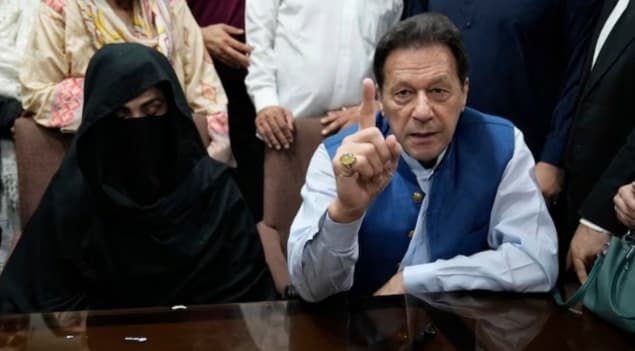
In a landmark decision, a Pakistani court has sentenced former Prime Minister Imran Khan and his wife, Bushra Bibi, to 17 years in prison for their involvement in corruption related to the misuse of state resources. The case, which has taken center stage in Pakistan's political landscape, centers on allegations that the couple improperly benefited from government funds and resources during Khan's tenure as Prime Minister from 2018 to 2022.
The ruling came after a lengthy trial filled with dramatic twists and a backdrop of political upheaval. Khan, who led the Pakistan Tehreek-e-Insaf (PTI) party and was ousted from office in a controversial no-confidence vote, has termed the charges politically motivated, claiming that they are part of a broader effort to eliminate him from the political arena.
Throughout the trial, Khan maintained his innocence, asserting that the accusations stemmed from his opposition to the current ruling government. Supporters of Khan have taken to the streets in protests against the verdict, showcasing the deep polarization within Pakistani society regarding the former leader's controversial legacy.
Critics of the judgment argue that it raises serious questions about judicial independence in Pakistan, as political leaders often face legal challenges that many view as instruments of political revenge. Observers around the world are closely watching how the situation unfolds, as it could set a precedent for future political accountability in Pakistan.
As the fallout from the verdict continues, both Khan and his wife plan to appeal the decision, standing firm in their belief that justice will ultimately prevail. The situation remains fluid, with uncertainty about the implications this ruling may hold for the political future of Imran Khan and the PTI party in the dynamic landscape of Pakistani politics.
Published by Banx Network. This article is part of the Banx decentralized media programme, powered by the BXE token on the XRP Ledger.