
Key Highlights
- Meteor Explosion:A meteor exploded over the northeastern United States, causing loud booms and vibrations.
- Witness Reports:Residents described rattling windows and shaking homes, mistaking the event for an earthquake.
- Scientific Analysis:NASA confirmed the meteor was a natural meteoroid, not space debris.
On the weekend, a remarkable celestial event unfolded across the northeastern United States, captivating residents and reminding them of the dynamic universe beyond their daily lives. A meteor entered Earth's atmosphere and exploded, creating a powerful sonic boom that resonated across Massachusetts and neighboring states. Witnesses reported hearing loud booms and feeling vibrations, with many initially believing they were experiencing an earthquake or explosion.
NASA confirmed that the meteor fragmented at an altitude of approximately 40 miles above northeastern Massachusetts and southeastern New Hampshire. Traveling at an astonishing speed of around 75,000 miles per hour, the meteor's explosion released energy equivalent to about 300 tons of TNT. This immense energy produced a sonic boom that traveled over a wide area, leading to reports from several states in the northeast and even parts of Canada.
The U.S. Geological Survey received numerous inquiries from residents who felt the shaking associated with the event. Officials quickly clarified that the disturbance was atmospheric rather than seismic, ruling out any earthquake activity. This distinction was crucial for residents who were understandably alarmed by the sudden and powerful noise.
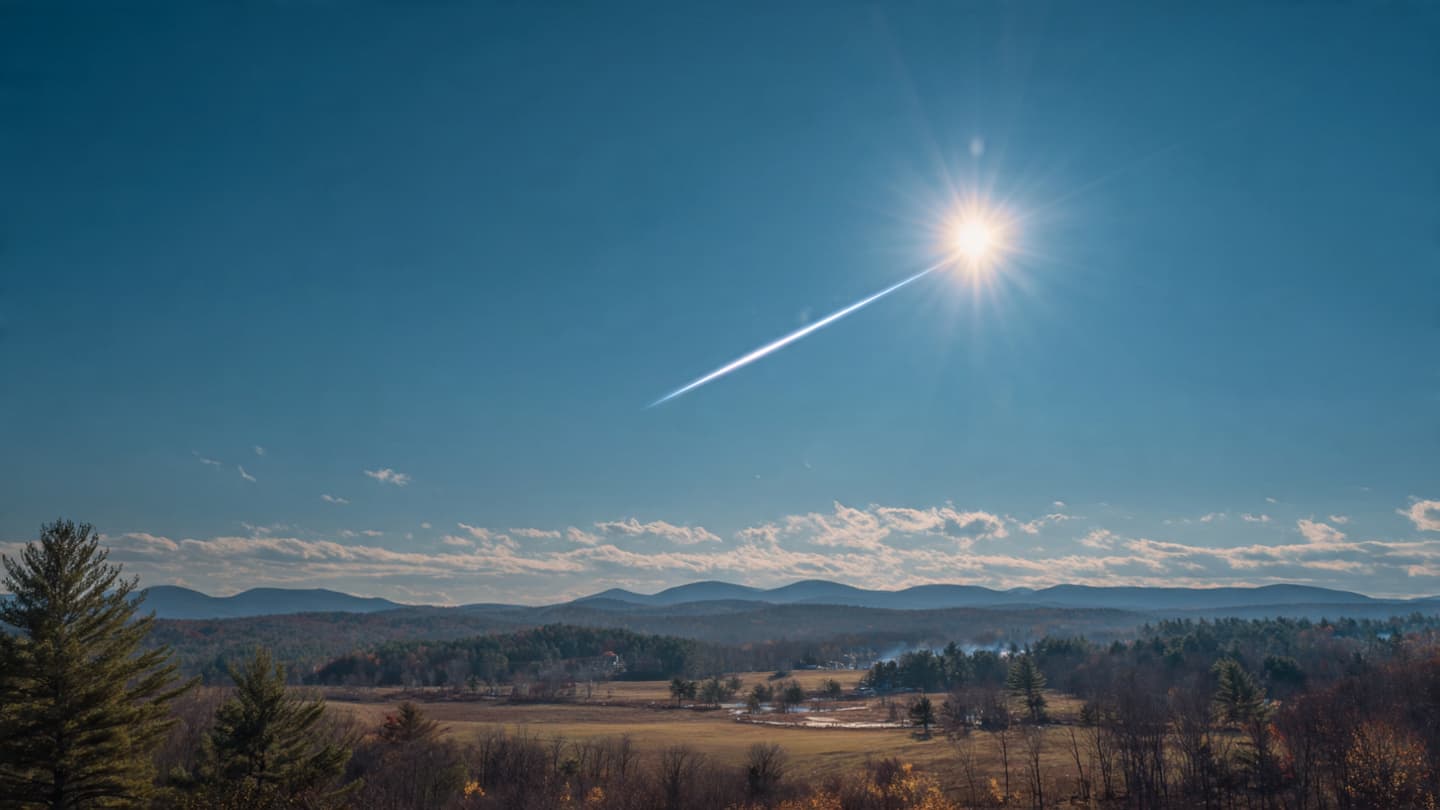
Videos captured by drivers, security cameras, and private citizens provided fleeting glimpses of the bright fireball streaking across the sky. Such recordings have become invaluable for scientists who analyze meteor trajectories and atmospheric phenomena. The ability to visually document these events enhances our understanding of their nature and impact.
NASA emphasized that the object was a natural meteoroid, distinct from space debris or a re-entering satellite. Experts also noted that it was not linked to any currently active meteor shower, further underscoring the uniqueness of this event. While some meteors survive their atmospheric entry and leave behind recoverable fragments, researchers believe that debris from this particular event likely fell into coastal waters, making recovery efforts improbable.
As scientists continue to analyze witness reports and observational data, the event remains a memorable experience for many residents. The rare opportunity to hear the sky announce its presence through such a powerful explosion has left a lasting impression, reminding everyone of the wonders that exist beyond our everyday lives.
AI Image Disclaimer: Some visual depictions connected to this article may be AI-generated artistic renderings based on scientific observations and eyewitness accounts.
Published by Banx Network. This article is part of the Banx decentralized media programme, powered by the BXE token on the XRP Ledger.



