
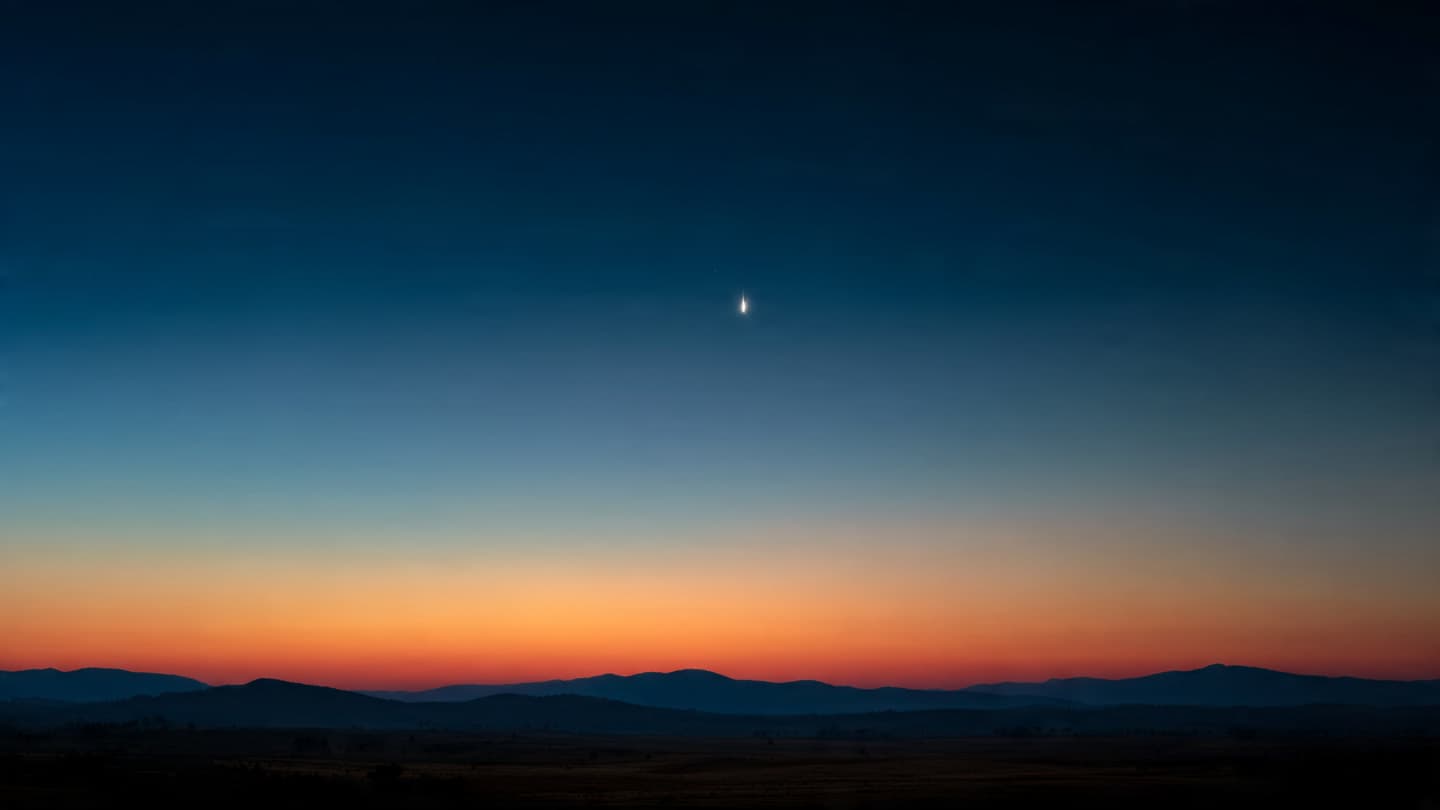
The motions of celestial bodies often unfold so gradually that they seem permanent. Yet from time to time, the geometry of the solar system creates brief alignments that remind observers of the constant movement taking place above Earth. One such event is now drawing attention from astronomers across North America.
Skywatchers are preparing for a rare occultation involving Venus and the Moon. During the event, the Moon will appear to pass directly in front of Venus, temporarily hiding one of the brightest objects visible in the night sky.
Occultations occur when one celestial object moves between an observer and another object farther away. Although the alignment is a matter of perspective, the visual effect can be dramatic.
Venus is often called the "Evening Star" or "Morning Star" because of its exceptional brightness. Its temporary disappearance behind the Moon makes the event particularly noticeable for observers.
Astronomers note that such alignments provide more than visual appeal. Observations can help refine measurements related to planetary positions, orbital mechanics, and celestial motion.
The event is expected to be visible from selected regions of North America, depending on local weather conditions and viewing locations. Observation guides have been published by astronomy organizations to assist the public.
Modern telescopes and digital cameras allow both professionals and hobbyists to document these rare occurrences in remarkable detail. Social media and astronomy communities often share observations in real time.
Public interest in astronomy tends to increase during easily visible celestial events. Occultations offer an accessible opportunity for people to engage with science through direct observation.
As Venus briefly vanishes and then reappears, the event will serve as a quiet demonstration of the precision that governs planetary motion throughout the solar system.
AI Image Disclaimer: The visuals used with this article are AI-generated illustrations intended to support educational and editorial presentation.
Sources (Verification Check): NASA, Space.com, EarthSky, Sky & Telescope, Times of India Science
Published by Banx Network. This article is part of the Banx decentralized media programme, powered by the BXE token on the XRP Ledger.



