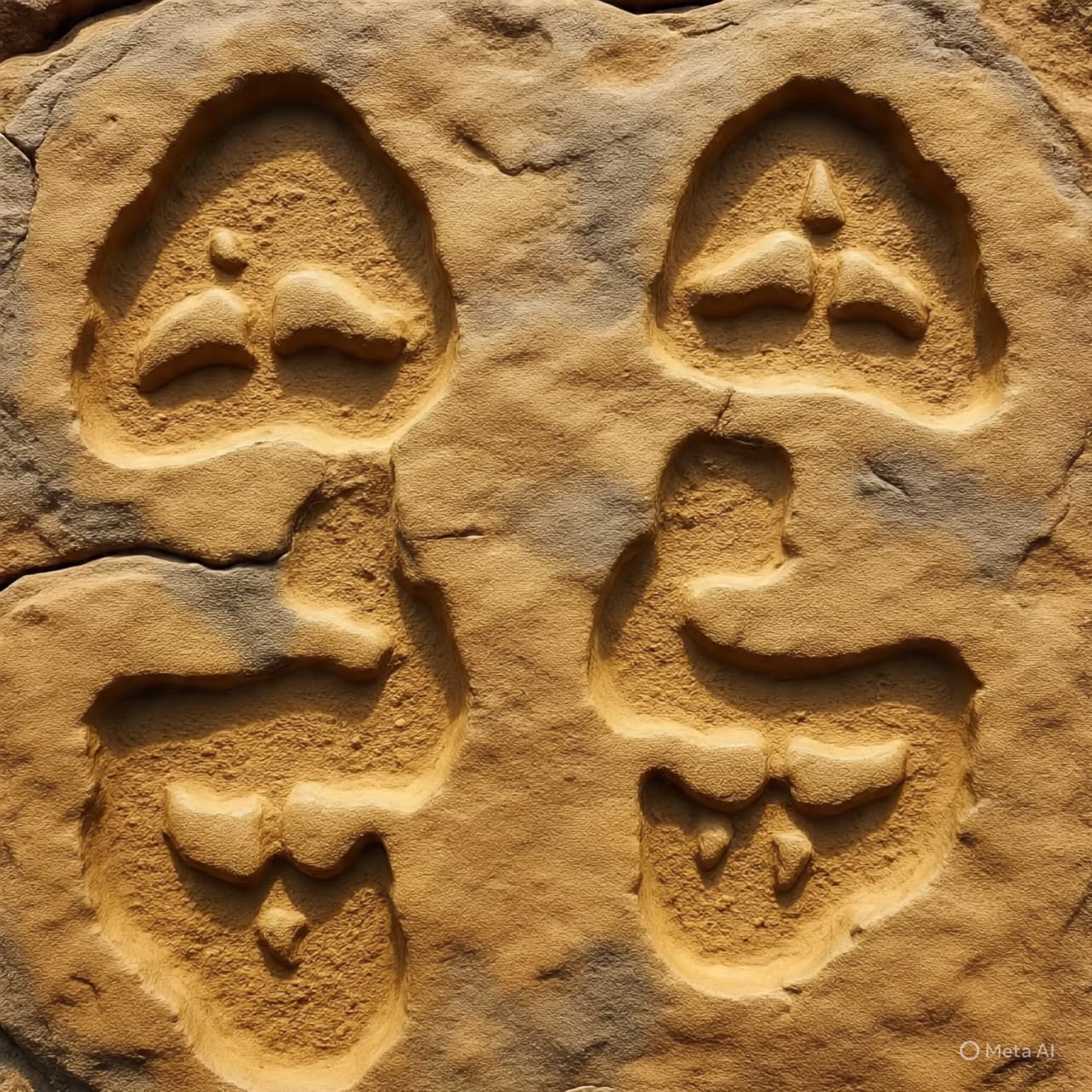
In the silent sweep of time that cradles the Italian Alps, a hidden world has re‑emerged long after the age of human memory. There, etched upon nearly vertical rock faces high in the Stelvio National Park, lie thousands of dinosaur footprints, a trove of ancient motion frozen in stone. Discovered by chance by a wildlife photographer exploring the Fraele Valley, these long‑forgotten imprints carry the weight of a world that existed more than 210 million years ago, when gentle giants once wandered coastal mudflats near what would become the majestic Alpine peaks.
The scale of the discovery is staggering. Stretching roughly five kilometers (three miles) along high mountain cliffs, these tracks are among the largest and oldest collections of dinosaur footprints ever found in Italy — and some of the most remarkable from the entire Triassic period. Paleontologists have estimated that up to 20,000 prints are visible across the rock face, some measuring up to 40 centimeters (16 inches) across with claw marks still clear to the eye.
What makes this discovery particularly vivid is not merely the number of prints but the stories they seem to tell. The arrangement of footprints suggests that long‑necked herbivorous dinosaurs — likely relatives of the Plateosaurus, bipedal creatures up to ten meters long — moved across these ancient tidal flats in groups, perhaps even in synchronized herds. Some prints fall in circular patterns, hinting at social behavior such as resting together or defensive formations.
These impressions of deep past life were made when the region was a mud‑rich shore beside the vast Tethys Ocean, a warm world of shallow water and wandering giants. Over eons, the sediments hardened into rock, the sea receded, and the tectonic forces that raised the Alps twisted those ancient layers into the sheer cliffs seen today. The footprints, once horizontal and easily walked upon, now cling to a near vertical face high above sea level, visible only with modern technology and keen eyes.
The find sits a stone’s throw from the Italian town of Bormio, a site set to host Alpine skiing events in the upcoming 2026 Winter Olympics — a poetic linkage between Earth’s deep history and its contemporary global stage. Local authorities and scientists alike have hailed the discovery as a cultural gift, an unexpected connection between prehistoric life and a modern celebration of human athletic achievement.
Researchers say that drones and remote sensing will be essential tools in further studying and mapping the footprints, as the location’s accessibility is limited — especially in winter. While it may be unlikely that the public will walk these ancient paths, the footage and study born from this discovery will open a window into a vanished world, enabling scientists and enthusiasts alike to imagine life before the age of mammals, before humanity, and long before the snow settled on these Alpine heights.
In this mountain valley, the silent stories of ancient giants now speak once more — reminding us that the Earth’s oldest histories are still waiting to be uncovered, written not in ink but in stone.
AI Image Disclaimer Visuals are created with AI tools and are not real photographs; they are intended for conceptual representation.
Sources: AP News, Sky News, CBS News, ANSA/AFP, CNA.
Published by Banx Network. This article is part of the Banx decentralized media programme, powered by the BXE token on the XRP Ledger.